Last week, in my ongoing series of unravelling thought-provoking phrases, I broke down a line from Tulsa King: “Your past will become your future if you don’t deal with it.” If you missed it, here’s the link: [https://daboisastrgledt.wordpress.com
/2025/03/02/your-past-future/]. Today is just another Sunday, and the entry leans more toward analysis than personal experience—though, like many, I’ve played out these ideas in my mind. But there’s a deeper layer to explore.
This time, I’m diving into something I heard while watching Succession. Sure, I scratched the surface of ambition and power last week, but only to set the stage for a bigger question: How much control do we have over our lives?
Some people are born at the starting line, others are miles behind, and a rare few defy all odds to make it to the top. Life isn’t a race where everyone gets a fair start. Some are born in Jamaica, destined to run. Others in the rice fields of China were born to harvest. Can they switch roles? Maybe—but the odds aren’t exactly in their favour.
For the football fans, think of it like José Mourinho winning the Champions League with Porto—against all odds. Or Dirk Nowitzki and the Mavericks shocking the basketball world in 2011. It happens, but it’s rare. The same applies to business, money, and power—I guess.
Now, imagine a world where the most intense games aren’t played on a field but in boardrooms, political backrooms, and the corridors of power. This is the world Succession paints—a universe where ambition and insecurity collide, mirroring real-world high-stakes arenas.
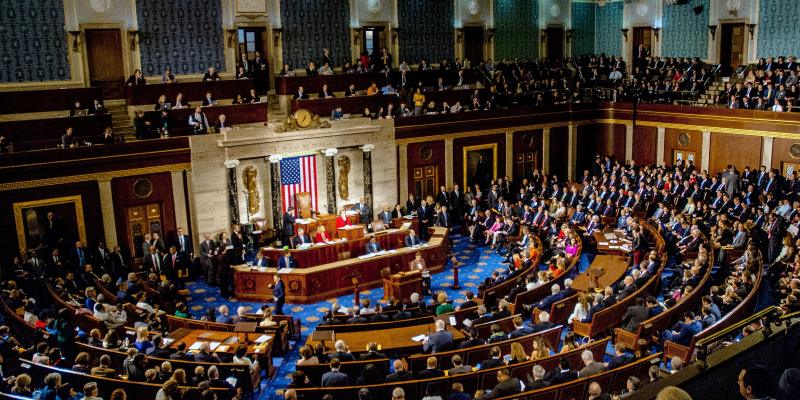

At the centre of it all stands a patriarch—a man whose ruthless vision and commanding presence reflect the titans of our era. His heirs, each grappling with the weight of legacy, embody the universal struggle between forging one’s identity and living under the shadow of expectation. In reality, we know this same battle play out in corporate boardrooms and political dynasties, where negotiations are as much about personal triumph as they are about influence. Politics often feels like theatre; A performance where the audience only sees the polished act on stage. The real decisions and actions happen behind the curtain, and the public only learns about them much later—if at all.
Without spoiling the show’s twists, today’s discussion revolves around a phrase delivered by that same patriarch:
“You make your own reality. And once you’ve done it, apparently everybody’s of the opinion that it was all so fucking obvious.”
Logan Roy—cold to the bone, one of those old men we might refer to as “puppet master” who’s been pulling the strings for decades. Usually, I jot down the exact timestamp, the episode and the season of quotes like this—if I found them on screen—, but sometimes I’m too absorbed in the story and couldn’t care much as long as I have it saved. Anyway, really, who wouldn’t want to be in Roy’s—especially Logan—shoes? Just for a day. They control the world—some by sheer force of will, others by simply existing in the right place. Penthouses in the sky, security details, cars that cost more than most people make in a lifetime. No waiting in airport lines—they have helicopters for short trips, and private jets for the long ones. I mean, It’s like Disney World—though harsher but still as entertaining.

That’s life, right? Well… not exactly. Because even in their world, suffering still exists. The only difference? Their pain is drowned in expensive champagne. Which, let’s be honest, sounds like a better version of suffering than most of us get.
Your Reality
Let’s take a closer look at today’s phrase and what it really means. “You make your own reality. And once you’ve done it, apparently everyone’s of the opinion that it was all so fucking obvious.”
What do you think? I see narcissism, sure. But I also see a man who has built something—through toil, strategy, or sheer force of will—that no one else can fully grasp. Logan Roy’s reality is one he constructed himself. Imagine standing in his shoes: You’re 80. Death isn’t far off. Yet, you still sit at the helm of Waystar Royco, the fifth-largest media conglomerate in the world. Thousands of employees depend on the empire you built. But more than that, you have the power to shape public thought, to bend perception, to influence the course of history. You’re at the top of the world—or at least, that’s how it looks from the outside.
Now, the question: Who do you leave your baby to? Sell it and retire? Unlikely. After decades of control, stepping back to watch someone else make decisions—ones you don’t approve of—would be unbearable. Hand it to your children? The same children you deliberately kept on the sidelines, who, deep down, you know aren’t ready? Or do you take the third and most pragmatic route—aligning yourself with another titan, someone as ruthless as you, to hold onto power for as long as your body allows?
Here’s how I see it: If I were in Logan Roy’s position—a leader hardened by years of high-stakes decisions—every move I made would be calculated, precise, and ruthless.

Calculated Courage: Every choice would be deliberate, and each risk weighed with meticulous precision. And yet, once the dust settles, people would claim the outcome had been obvious all along. That’s the irony of power—when you win, the path suddenly looks inevitable. But the truth is, it never was. As Donald Trump once put it: “Admit nothing, deny everything. Always declare victory, no matter what the outcome.”
Narrative Control: Power isn’t just about holding the reins—it’s about controlling the story. Once success is achieved, the myth of inevitability spreads. The world rewrites history to make it seem like things had to happen this way. That’s the trick: the past is just another version of the present, rebranded to fit the victor’s narrative.
Emotional Armor: Vulnerability? A luxury I can’t afford. Internal doubts, and insecurities—those are irrelevant when the stakes are this high. Creating your own reality isn’t just a business strategy; it’s a survival mechanism. And in this world, mistakes aren’t just mistakes. They are liabilities. And liabilities are eliminated—literally and figuratively.
The Reality of Another
Now, let’s flip the coin. Imagine that someone close to us—a friend, a family member—has made that long-coveted breakthrough. What do we do? Do we congratulate them? Do we envy them? Or do we do both at the same time? Regardless of our emotions, one thing is certain: we will seek their attention more than ever. We’ll try to prove ourselves, to position ourselves as valuable allies, hoping to be recognized as potential partners.
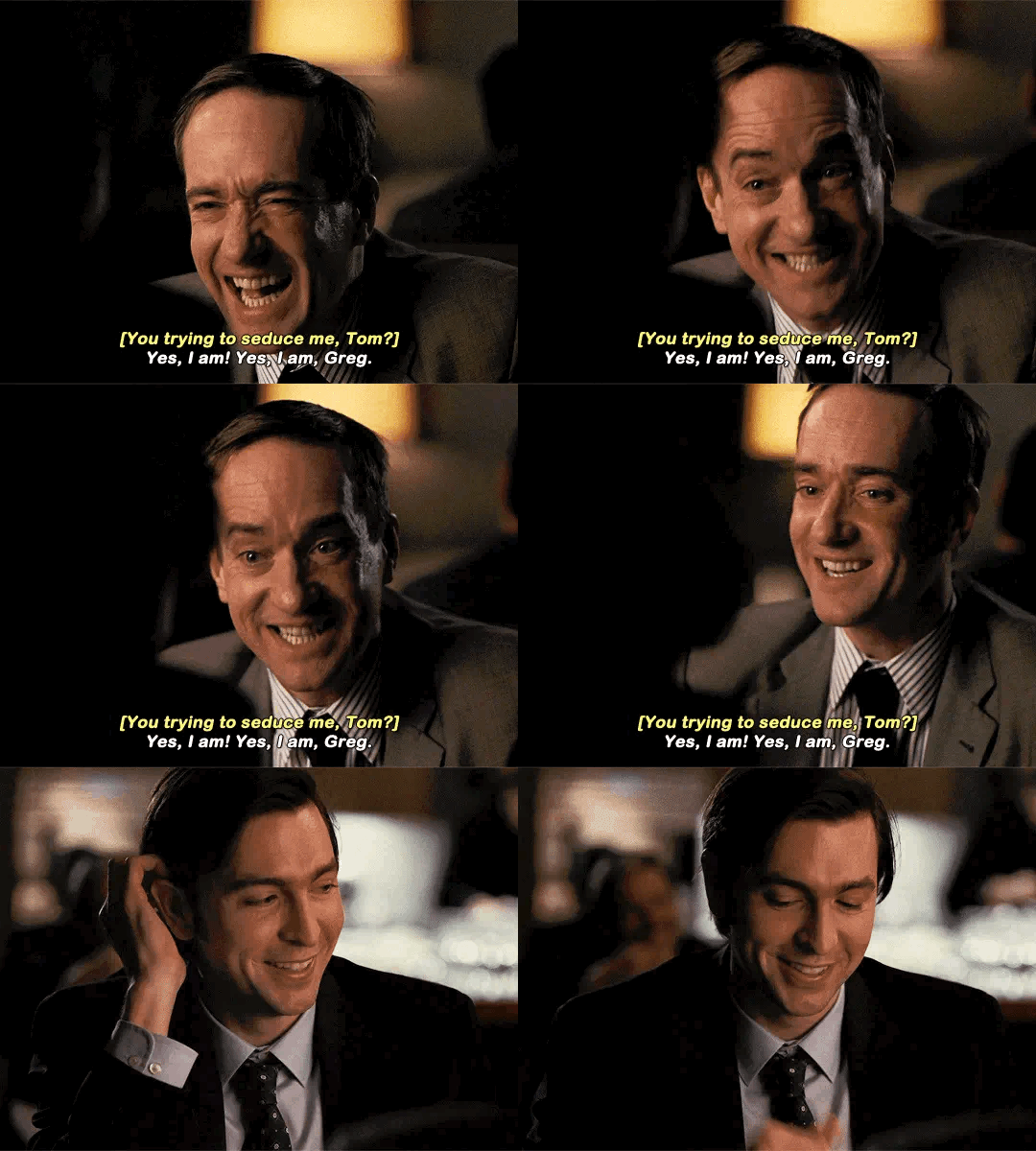
But what if they see through it? What if they, like Logan Roy, perceive relationships as tools—using us only when convenient? Would we care? Probably not. Because in exchange for our loyalty, we’d receive privileges we never imagined—an arrangement not unlike the inner workings of politics. As the saying goes, if we get a call telling us there’s a dead body, we’d better be ready with a place to bury it. It sounds ugly, but that’s the reality. We don’t like the idea of someone else directing our lives. Yet, if we’re honest, someone is already pulling the strings—so why not choose the one we know and reap the benefits that come with it?
In this section, just as before, I’ll examine the situation—but this time, from the perspective of someone within the inner circle: a trusted advisor, a close friend, or even a family member.
Observation of Hidden Costs: Up close, I’d see the cracks beneath the dazzling facade. Every seemingly inevitable success would come with a price—intense personal sacrifice and deep emotional isolation. From the outside, his decisions might look effortless, like the natural order of things. But standing beside him, I’d witness the struggles he endured—or chose to conceal. And even if those struggles remained unspoken, their weight would be undeniable.
Emotional Labor and High Stakes: As a relative or close confidant, I’d feel the constant pressure—not just to support his bold decisions, but to live up to his expectations. At the same time, I’d want to sip from the cup without getting drunk, if I can put it that way. Being close to a dominant personality means forever balancing admiration and the suffocating reality of living in his shadow. To him, the story of his success might feel like an obvious conclusion. But to me? It would be a stark reminder of the human cost behind constructing that reality—though, at the moment, I might not fully grasp it.
A Nuanced View of the Creation of Reality: My perspective would be less triumphant, and more complex. I’d see that shaping an inevitable path isn’t just about genius or strategic foresight—it’s also about personal charisma, manipulation, and an ability to control the narrative. But let’s be honest: instead of saying what I truly think, I’d more likely shape my words to reinforce his position—to make him believe I am loyal, protective, and irreplaceable. I’d witness the internal conflicts, the backroom manoeuvrings, the unspoken vulnerabilities—all the things that get rewritten in hindsight to make the final picture look like destiny.
THE “Reality”
Let’s return to the real world. While I cannot yet speak for myself—if I ever can—history has repeatedly shown that Succession isn’t just a well-written story designed to captivate audiences. The dynamics it portrays mirror the real-life struggles of individuals who have reshaped industries and challenged the status quo. Consider these examples:
#1 – Steve Jobs and Apple
What Happened: Steve Jobs refused to accept conventional limits in technology. He co-founded Apple, was ousted from his own company, and later returned to transform it into a global innovation powerhouse. His insistence on elegant design, intuitive interfaces, and revolutionary products like the iPhone redefined how we interact with technology.
What It Looks Like Today: Many now say Apple’s dominance was inevitable. But at the time, its revolutionary path was anything but clear—it was fraught with risks, setbacks, and bold defiance of industry norms.
#2 – J.K. Rowling and the Making of Harry Potter
What Happened: Before the Harry Potter phenomenon, J.K. Rowling faced immense personal and professional hardship. A struggling single mother, she wrote in coffee shops and faced repeated rejections before finally finding a publisher who saw potential in her work. Over time, her story reshaped an entire generation’s love for literature.
What It Looks Like Today: The Harry Potter universe now feels like a natural part of storytelling history, as if it was always meant to exist. Yet the perseverance and creative risks required to bring it to life illustrate how non-linear and uncertain success truly is.
#3 – Elon Musk and the Reinvention of Industries
What Happened: Through ventures like Tesla and SpaceX, Elon Musk has disrupted industries once thought too entrenched to change. His vision faced widespread scepticism, financial hurdles, and countless failures before transforming into what many now consider inevitable industry shifts.
What It Looks Like Today: Tesla and SpaceX are now seen as natural technological progressions. However, their success was not predetermined—it was the result of relentless risk-taking and iterative innovation.

?
The Hindsight Illusion
Once these breakthroughs occurred, many observers rewrote history in their minds, assuming that such changes were bound to happen. Yet the truth is far messier:
- The Non-Linear Nature of Success – What now seems inevitable was once riddled with uncertainty and difficult decisions.
- Personal Initiative – These figures made bold choices that redefined entire industries, rather than simply following a predetermined path.
- The Role of Hindsight – Our tendency to view outcomes as obvious after the fact overlooks the sheer courage and uncertainty involved in realizing them.
These real-world cases remind us that even the most apparent outcomes were once clouded by doubt, struggle, and raw creativity.
The Truth Lies in the Small Details + Philosophical Insights:
Today’s phrase carries profound meaning. It encapsulates the idea that we are not just passive observers of our lives—we are constantly shaping our own reality through our choices, struggles, and triumphs. Beneath this concept lies a fundamental duality:

Empowerment Through Selfhood – It suggests that each of us is the architect of our own destiny. We carve our paths, even when the journey is riddled with challenges. Much like an artist given a suitcase to paint on the street—I bet you’ve seen them—, our actions and decisions gradually form the bigger picture of who we become.
The Hindsight Bias – Once our reality is established, it often seems as though it was always meant to be. We, or those around us, may look back and say, “It was obvious all along.” This perspective not only highlights how hindsight distorts our understanding of events but also serves as a reminder to respect the unpredictability, effort, and struggle behind every personal triumph.
Here’s a simple ASCII diagram reflecting this thought process:
[Home: Blank Canvas]
|
[Decision-Making & Challenges]
|
[Creating Own Reality]
|
[Achievements & Realized Success]
|
[Hindsight: “It was obvious!”]
This visualization shows how what is later perceived as inevitable is actually the culmination of countless conscious, almost imperceptible steps. It critiques the way we often oversimplify complex, dynamic processes in retrospect.
For me, this phrase is both a call to action and a reflective mirror. It urges the celebration of the unique path walked while cautioning against cynicism and oversimplification. It’s a reminder to never underestimate the messy, intricate process behind any “obvious” success.
This theme resonates with multiple philosophical perspectives:
- Existentialism (Jean-Paul Sartre: “Existence precedes essence”) – Life begins as a blank slate, and we define ourselves through actions, decisions, and experiences. The illusion of inevitability arises only after we’ve constructed our own reality.
- Constructivism & Phenomenology (Husserl) – Reality isn’t fixed; it’s shaped through our perceptions. Our consciousness actively interprets raw data, forming personal narratives that later appear as objective truths.
- Pragmatism (William James) – Our beliefs function as tools to shape our experiences. Success and failure are reinterpreted through hindsight, which falsely simplifies a once-complex process.
Each of these philosophical viewpoints underscores the importance of personal agency. They remind us that behind every “obvious” success lies a history of struggle, creativity, and risk that is often overlooked once the dust has settled.

My Conclusion
Thanks to AI, I realized that this phrase was first mentioned—perhaps for the first time formally—by Amanda Palmer in her book The Art of Asking. Now, I don’t know if the creators of Succession used it as inspiration from her or not, but that’s not the important thing. I looked up some information about her, and at the heart of Palmer’s message is the concept that by being open, asking, and accepting help, you actively shape your own narrative. Like the phrase you mentioned—”You create your own reality”—her work suggests that our lives are not a series of predetermined events, but a tapestry woven by our actions, choices, and the communities we build. Anyone interested can look up more information about her and her work.
Eventually, in the series, we see how ferocious Logan himself is and how ignorant but arrogant his children are. Not that he isn’t, but he at least exudes what he represents—except at certain points, but we all know that as people get older, “the prostate alarms.” I personally haven’t created a reality of my own, but I live in it nonetheless. Maybe I’m actually in the infancy of it and what Logan meant to say—well, only time will tell. The truth is that no one believes in you and your ideas until one day you somehow become what you’ve been preaching for years, and suddenly everyone is clapping for you like they’ve been with you all the way. You smile and see the leeches you have plans for at the same time. All of them lackeys—in his case—because they can’t help but suck up and demand certain things. From another point of view—mine, for instance—if one day I turn out to be the winner of this whole story, every last one who didn’t believe in me will now shake my hand and expect something from me. And what I’ve gotten in return is discouragement and reproach, and now I have to be the good hero and help everyone who wants me. As cliché as it may sound, this is reality itself. There’s a reason HBO productions are so breathtaking. It’s impressive how well they bring all that life has to the screen. Of course, some things are not exactly like that, but it’s still art. It’s supposed to make you pay attention while telling you a story; it doesn’t have to be one hundred per cent real—it’s important to make you think.
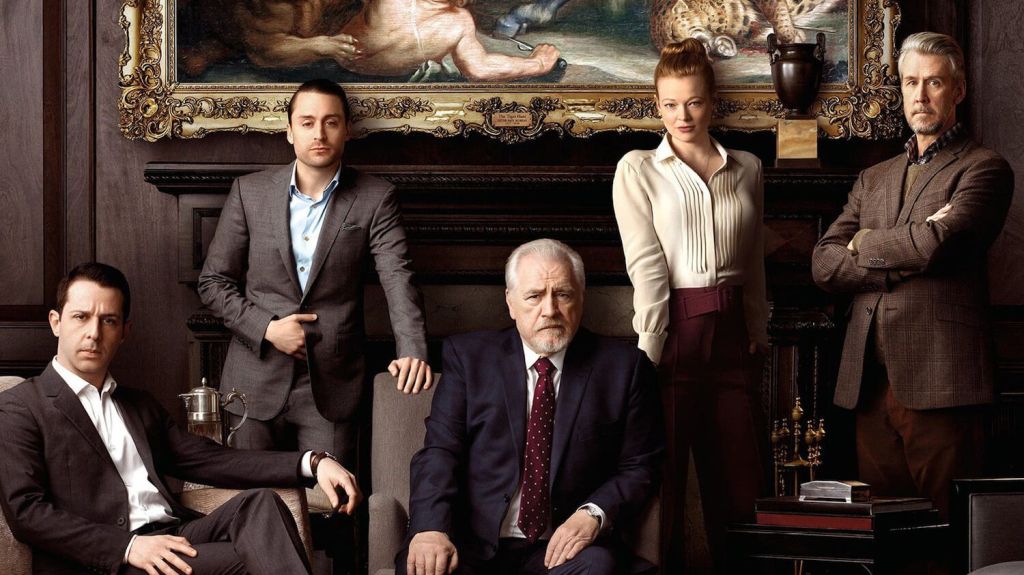
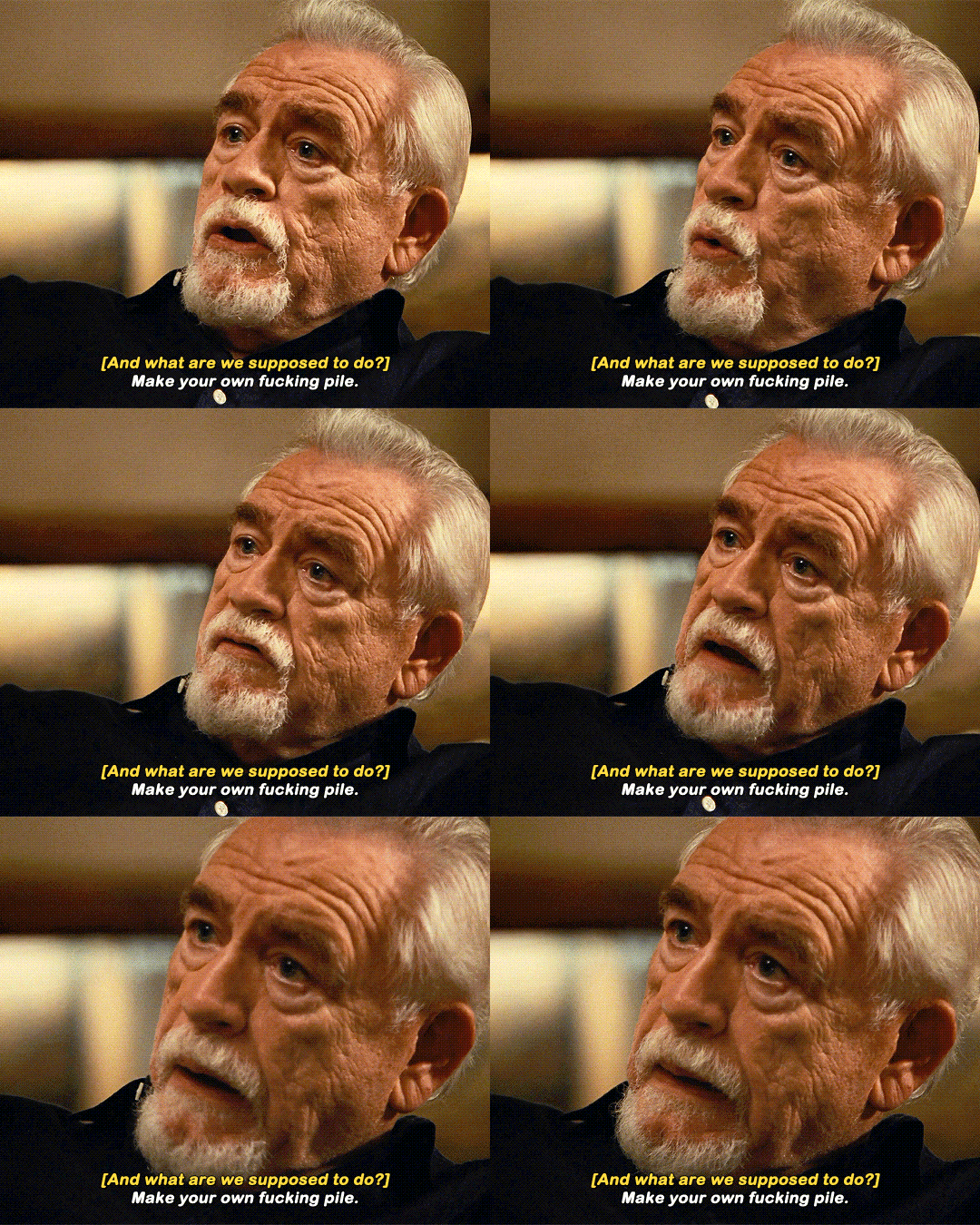
To wrap it up, this phrase invites us to confront the ambivalence in how we understand success and self-definition. By looking beyond the polished surface of “inevitable” outcomes, we are urged to embrace the complexity behind each breakthrough, valuing the uncertain, courageous steps that forge a reality truly worth inhabiting. It challenges the comforting narrative of inevitability—that once reality is constructed, its outcome seems preordained—while affirming our power to shape that reality through bold decisions and the messy process of creation. Yet, it also warns that pursuing success through shortcuts or superficial means can lead to unexpected consequences, ultimately undermining our growth and authenticity—nut we aren’t Logan Roy alikes… unless we are after all.
Perhaps you are in such a position right now or maybe you live in the shadow of someone like this, or you are on your way to experience either of the scenarios. In any case, what would you?
Thanks for reading!
Yours sincerely,
Ivaniel Georgiev


Leave a Reply