Hello, hello. It’s another Sunday—another week, another stab at something clawing my brain. Usually, I rip one phrase apart, chew it to bits, but this time, I’m going in a different direction. It’s a whole damn show: Adolescence.
A single-take, no-mercy throat-punch about modern youth—“yes, stopping” cults, social media’s choke chain, Andrew Tate’s poison whisper, families cracking like dry twigs, school’s festering swamp, and their warped “incel” angle—their word, not mine.
Watch it first if you can—my take’s a pale ghost next to the real thing. It’s not perfect, stumbles here and there, but it’s an untrue-but-so-true reality that digs into your guts and twists. Phenomenal’s too small a word—this thing’s the Beast from Beauty and the Beast on roids.
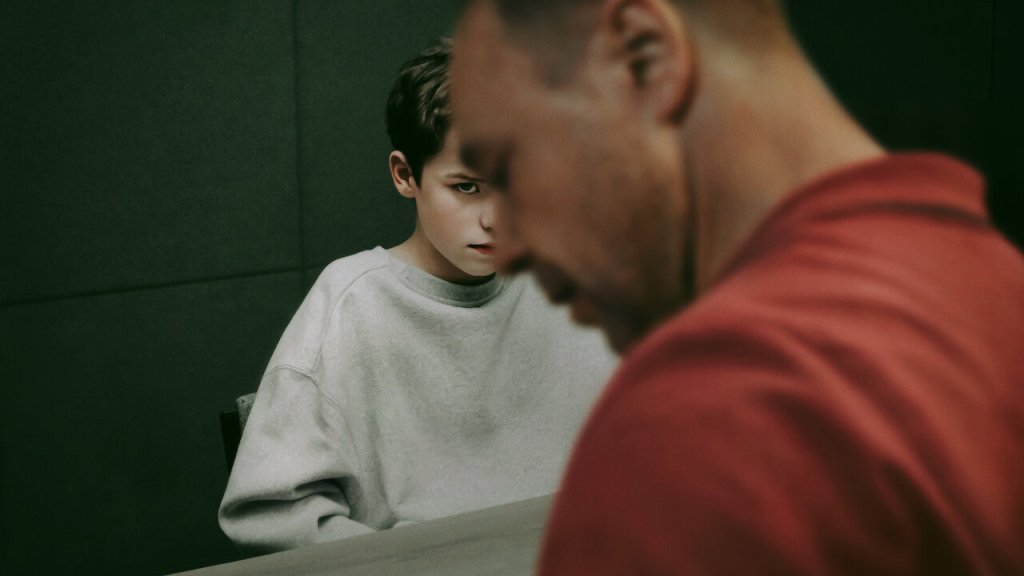
This could’ve been me. Not the murder part—I never carried a blade because I’m so sloppy I could’ve made a seppuku without realizing—but I’ve teetered on that edge. Crossed lines at work, in personal shit (same mess, different day), in ways that could’ve locked me in a concrete box.
Never happened. Still, I’ve got my own bars—the wrong kind, always have. I’ve glimpsed the abyss—cellblock, dead-end, worse—and swerve when I can. Swerve, not sprint—old habits die bloody. This show slapped a mirror in my face, reflecting every dumbass move I’ve dodged or drowned in, and I can’t look away.
Last week, my fingers danced furiously across the keyboard, fueled by raw intensity as I unpacked Chernobyl’s:
“Every lie we tell incurs a debt to the truth. Sooner or later, that debt is paid.”
Lies pile up, and the tab comes due—ugly and inevitable. If you missed it or you’re a new member of DA BOIS—play your best lo-fi jams and dig it up. Link to the article: https://daboisastrgledt.wordpress.com/2025/03/23/the-cost-of-lies/
But now, Adolescence. Full spoilers ahead—bail if you’re guarding the magic. Stick around if you’re skipping it or have already seen it; maybe my wreckage gives you something to grind on.
What and When Happened, That Which Happened
Episode one hits like a kick in the nutsack—or like losing your virginity in the backyard. Out of nowhere, it leaves a mark. A cop’s hunched over a recording—I thought it was his son’s voice. Murky. Unsettling. Back in the car, chatting with his colleague, then his phone buzzes—operation’s green-lit.
Minutes later, police swarm a house—doors splinter, neighbors gape, a family’s caught raw in their pajamas. Jamie—the antagonist—is the prize, yanked out on suspicion of murder. Rights half-spat through protocol, he’s hauled to the station, choosing his dad, Eddie, to stand in the fire with him.
The family’s left dangling—uncertainty’s a bitch (one of the worst ones). Stripped for a cold exam, Jamie’s trembling, skin goosebumped; Eddie’s gut churns, watching his kid humiliated under fluorescent glare.
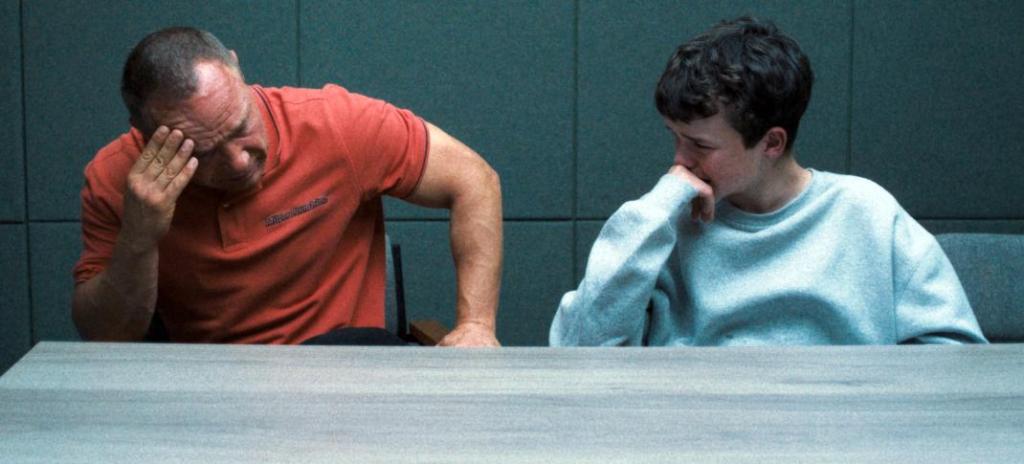
Interrogation slams in: Instagram messages flaunting half-naked models, comments between him and the victim, and the coffin itself—a security tape nailing him to the scene. Lawyer’s “no comment” drones on, a last resort. Eddie sees the footage, his face hardening, and asks the question choking the room. Jamie denies it—voice cracking.
They hug, tears spilling, father and son clutching each other in the debris of trust. It’s a savage opener. Single-take style doesn’t flinch—drags you into the family’s panic, their disbelief, their unraveling seams. (I love real-world cinema.)
Jamie’s sold as a victim of a system already sharpening its gavel—or has he earned the chains? Eddie grips his son’s innocence like a fraying rope. Denial? Or a dad’s primal howl against a truth too rancid to swallow? Every frame’s a jab to the ribs—the liver shot is yet to come.
My Take
I’ve waited for that knock many times—heart thudding, palms slick. Not a SWAT battering ram, but the dread camped out in my chest for years.
Later in life, I tampered with documents—ten times, fifteen, who’s counting? Real copies, faked details—IDs tweaked, forms forged, slipped to coworkers, bosses, even the law to dodge walls I couldn’t climb.
Ate without paying—not broke, just a greedy bastard. Two and a half years gaming the system: claiming food never arrived, snagging orders I didn’t cover, strolling out of supermarkets with “forgotten” scans bulging my pockets. Not because I was hungry—just a sneaky, weak prick chewing on a broken system’s scraps.
Then there were the people I played—the worst stain of all. Made them think I was their guy, when it was all about me. Verbal cons—slimy, unprovable, morally dead. Built trust just to gut it. If cash had changed hands, I’d be in cuffs—or worse, a ditch.
Summer 2016, it got damn close. Trespassed into the village pool with a loose crew—seven of us, drunk on boredom. Started with swimming, ended with stolen ice cream, drinks, and cash from the register.
Local cop sniffed us out. One of them tried calling my father like a debt collector. Funny thing? My dad never picks up unknown numbers. Has a rule about it. But after days of constant calls, he finally answered. My doomsday.
I manifested the wrong thing—again.
Dad drove me to the station. Silent as a grave. That look in his eyes—like he wished he’d used a condom that night. That’s why you always wear protection.
I tried to play the victim, throwing the oldest guy under the bus—lame dodge. Our confessions were all over the place. I cried, right in front of the precinct. Dad filmed me, promising I’d never do anything like this again. (Cheers to me and my promises, wink.)
In the end, I said just enough to lighten the hit. Three of us paid up for the whole damage of the seven involved. Not saints—just the ones who couldn’t duck. If I could’ve, I bet 100% I would’ve.
Learned my lesson? For a while, sure—to get everyone off my back. In reality? Not a chance. Kept dancing with fire so long I was about to mutate into Johnny Storm, aka Human Torch.
Mom looked at me like she didn’t know who I was. Blamed Dad for not chaining me down. Dad called me trouble from the cradle, too exhausted to keep chasing me.
His final stab? I’d always done whatever the hell I wanted, consequences be damned. Maybe he was right. He usually was. But no one grabbed the wheel—not them, not me. Blame ping-ponged until it dented the walls. Everybody and their ego.
No one wants to admit they play a part in everything that happens around them.
I did what I did. Lived it. Learned it—or at least I hope I did. Still drag it like a pirate’s leg.
How What Happened Affects the Environment You Live In
Next episode, D.I. Bascombe and D.S. Misha Frank storm the school—hallways buzzing like a kicked hive. Everybody knows why they’re there, what happened—before the cops even realize they’re being mocked. Jamie’s gang—Ryan and Tommy—whisper about knives and his arrest.
Teachers swat away pleas for tighter locks or real help, acting like they don’t get paid enough for this—such role models, wow. Jade, the victim’s friend, gets cornered—cops pry into her story, and she snaps, voice spiking into a furious “Leave me alone!”
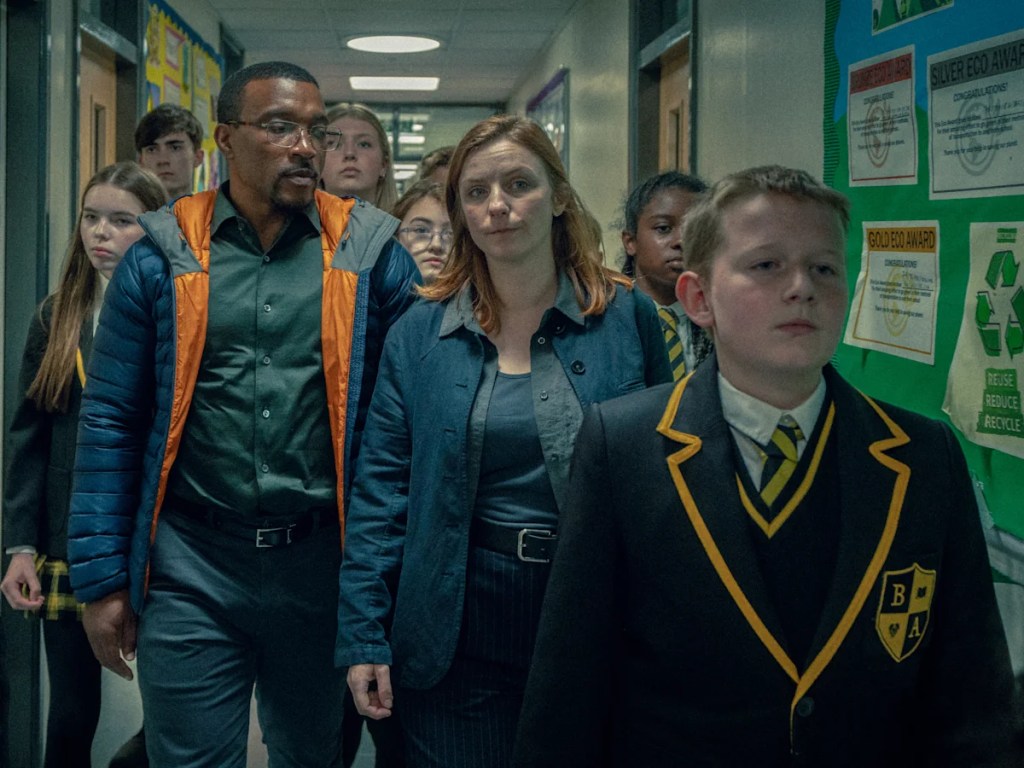
Then the fire alarm trips—pure chaos erupts. Students mock, faculty flounder, the whole place steeped in an open secret nobody wants to say out loud.
And then Adam, Bascombe’s own kid, drops a live wire: Katie cyberbullied Jamie. Coded “incel” emojis, taunts masked as jokes.
Case flips—the victim’s got blood on her hands, too. Andrew Tate’s name slinks in, a fight flares up, and Ryan’s vague, sweaty bullshit after Bascombe chases him down muddies it all further. Cold, clipped procedure smashes into the hot stew of teenage rot—nobody’s coming out clean.
My Take
High school was my chaos lite—no bodies dropped, but the same currents churned. Rumors, crushes, backstabbing—that ran the show, not textbooks or bells. Cops rolled in for “talks”—drugs, alcohol, the same pointless, boring crap teenagers always pretend to know more about than the cops do.
Bulgarian oinksters, UK quadrupeds—grunting more than thinking, in my experience. They’re always late to the party. Bascombe and Frank hunted the right guy, but something stank—like the show wanted you to squint at them too.
My teachers? Plastic dolls in a Barbie nightmare—hypocrites preaching rules they bent whenever it suited them. I pulled reckless stunts—lied over nothing, scammed for kicks—and no one stopped me. They’d turn a blind eye, then hit reset like a bad rerun.
Everyone’s hiding something, playing the game, praying the lies hold. Mine held—‘til they didn’t. Then I’d just weave new ones.
I’m trying to say they should have been role models, but they were paycheck drones—babysitters too overwhelmed or apathetic to care. Smoking cigarettes, drinking coffee, gossiping about their summer plans—that was their real subject. School’s supposed to be a second home, but it felt more like a brothel where the teachers were pimps, just liberal ones—they never took a cut, just shouted. Never hit anyone.
I got drunk and high on campus, stashed liquor in my backpack, and smoked weed right next to my classroom. Got caught sometimes, shrugged it off. (I’m telling you, teachers only cared about their image.) Lied my way through every rumor, every flirt, every petty stab.
“I lied nearly every time I opened my mouth.” That was my personal gospel.
That pool stunt? Thought the cops would march in, expose me in front of the whole school—let everyone know exactly who they were dealing with. Turns out, I worried for nothing. Just lazy cops who couldn’t be bothered.
Convinced half the school of bullshit—fake fights, made-up hookups—until the cracks bled through. Some believed it, some smelled the rot—didn’t matter. I kept spinning.
I was a fidget spinner before fidget spinners existed—the OG.
How did that affect the people around me? Not much. Not much, because they weren’t any different from me. All they cared about was who liked them, who didn’t, and how to snatch a little more attention for themselves.
Cops, students, teachers—everybody wants to be in the limelight.
What Do You Want to Prove, or Are You Trying to Deviate From
In the third act, clinical psychologist Briony Ariston steps into the secure center for her last shot at Jamie. Single-take tension—a chokehold. The camera doesn’t blink, and neither do I—for a full hour.
She’s calm, surgical—probes his fights, his dad’s simmering rage, his warped lens on women and intimacy. He dodges, smirks, then snaps—fists slamming the table, a raw howl of all that pent-up poison. No tidy confession—just a tangle of doubt.
Briony had one task, and she nailed it. Jamie likes older girls—I don’t blame the lad. We learn Katie wasn’t interested in Jamie, and he wasn’t into her either. But he tried to trick her into going to the fair with him because she was in a bad situation.
So they didn’t like each other but stayed in touch—how modern. In the end, it’s always better to have someone rather than be alone, even if they’re flat or a little ugly. Jamie saw her as the prodigal one—something to exploit.
Interestingly, he described the psychologist the same way—except she was older and showed him empathy, which put him in familiar territory. He said he didn’t like her. Yet, he did.
Briony was there to wring him dry—like a sponge. She didn’t like him, but he hoped otherwise. Then she crossed the line—fully conscious, not expecting his reaction.
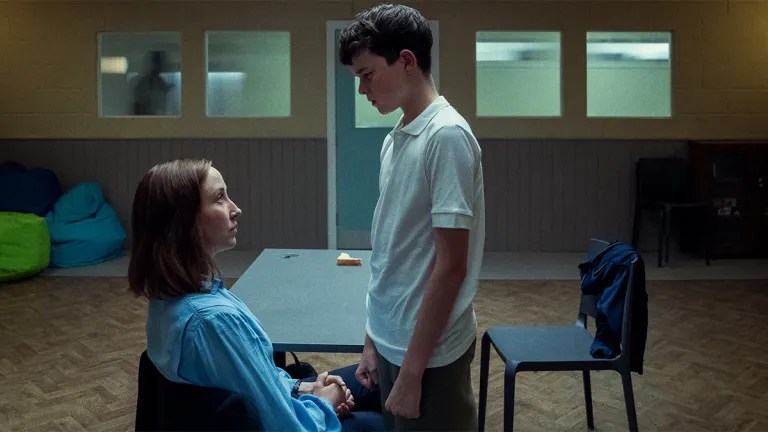
So is Jamie a puppet of a screwed-up world or a fuse already lit? Briony’s report dangles, unfinished—redemption’s a dice roll in the dark.
My Take
Interrogations gut you—strip you down to who you are or who you’re bullshitting yourself you’re not. Briony wrung Jamie dry—squeezed ‘til he broke. Me? Three tangles with cops, freedom swaying like a drunk.
Summer ’16 was one—the swimming pool mess. The others? Weed. Bulgaria’s felony fetish turns a joint into a rap sheet.
First time—nabbed outside my condo with a pizza box in one hand, 1/3 gram in my pocket. Tossed it mid-search—caught anyway, hand snagged like a kid in a cookie jar. Handcuffs bit, precinct reeked. They slung “dealer” at me for crumbs.
Slept under a buzzing bulb—cellmates snoring, drunks muttering—freed at 6 PM, eyes burning. Learned nothing. Bought more a week later, thumbing my nose at the lesson.
Second time—my last, to this day. Had 3.5 grams stashed under my ballsack—dumb spot, dumber vibe. Cops rolled up as me and an acquaintance stepped out—gut sank, tossed most into the grass. Shrek-the-cop sniffed it out with a flashlight.
My guy was on probation. They were gonna frame him, send him back—to a place where the food looks worse than puke. He screamed in my face to take the fall. And I did. Because I thought he was my friend. But really, because I was afraid of him.
At the station, they tried to flip me. They couldn’t. But before they released me, they put me in a dark room—alone. Cops coming in and out, asking questions for hours. Four, maybe more—I assume.
They didn’t beat me, but they laid out the consequences. No job. A fat fine. And since this was my second offense in a week, it showed a pattern.
No matter how much I knew about standing my ground, they got inside my head. I started picturing myself as a total failure—far worse than what I was. Still, I was more afraid of going against my “friend” than of them.
Some smart-ass cop unlocked my phone with face recognition—chats bared, dealers’ names glowing. They made me text them, script their trap. I warned one off anyway—spammed him to abort.
He got nabbed later. Didn’t dig for details. What was I supposed to do? Send flowers? Pocket money for jail ramen?
I held the match, torched others to save my skin.
“They reveal who you are—or who you aren’t.”
No dodging it. Forced or not—what does it matter? I did it. Jamie did it.
Consequences don’t blink. They don’t bargain.
What Happened Happened, and You Will Feel the Aftermath One Way or Another
The final—and my favorite—act was Eddie’s 50th, 13 months later. Breakfast and Jamie’s card tease a brittle hope, but the trial looms like a swelling storm cloud. Then the van’s tagged with “nonce”—neighbors gawk, shame bites deep. Eddie snaps at the punk culprits, scrubbing paint in a public meltdown—rage and desperation sizzling like hot oil.
A family outing—a last gasp. Store run, breakfast, movies. In the van, Eddie and Amanda recall great memories. For a moment, tension dissolves—a nostalgic tune from their adolescence amplifies the warmth. Then they arrive. Eddie is recognized. The mood shatters.
Clocked in the parking lot, he spots the vandals, grabs one by the collar, and threatens them not to come near his family. Paint is slapped over the slur—sloppy, frantic—a middle finger to the stares.
Then Jamie calls. He’s pleading guilty. Katie’s murder is real. The confession lands like a sledgehammer. Eddie is mute, jaw locked. Amanda and Lisa choke tears behind forced calm. Redemption is a ghost in a world too shredded to stitch back together.
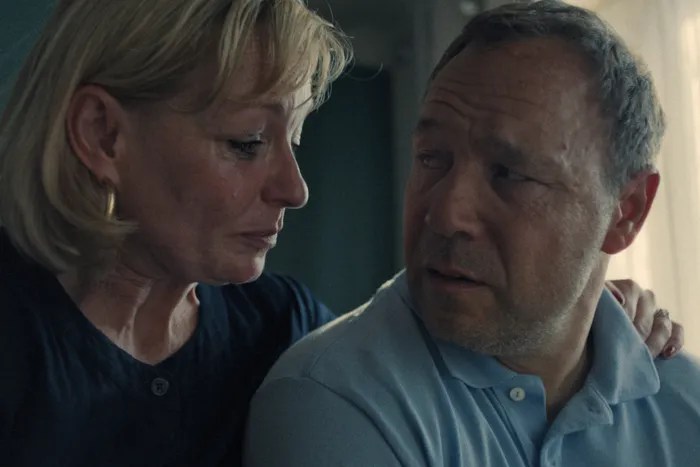
The finale deepens the series’ themes of public humiliation, personal failure, and the painful clash between familial loyalty and societal expectation. The contrast between a family’s fragile birthday hope and a brutal public breakdown leaves viewers questioning whether redemption is still possible in a world so irreparably scarred.
My Take
What should have been a great day for the family turns into their Armageddon. That graffiti gutted Eddie’s business—his lifeline, sprayed with hate. Jamie’s plea gutted them all—hope torched in one flat voice. He thinks only his dad is listening, but everyone hears his decision to plead guilty.
That’s the moment of truth for the family. Back home, they contemplate leaving. A fresh start. But their daughter shoots it down—“What happened will follow us. Maybe it’ll be worse elsewhere.”
Both parents pick apart their past, searching for the moment things went wrong. How did Jamie’s situation spiral? A tragedy rooted in their son’s choices, but also in their own doubts as parents.
Me? No murder, but I’ve got scars that itch. My family clung to hope I’d change. I didn’t give a damn. Failed hard—jobs lost, ties burned—stayed numb through the smoke.
“Deserving and ‘deserving’ are two very different things.”
Many saw potential in me. I didn’t. I saw what I’d scraped by with and shrugged. Change now? Trying. Maybe. Gritting my teeth through it. It’s slow as rust.
Those who love me—and those who will, whether through work, business, or circumstance—must accept who I am. If they see something I should change, they should point it out. If it makes sense, I’ll try. If not? I won’t fake it for their comfort.
I am flawed—not clinically diagnosed, but self-aware. I accept who I am, the emotions I feel, and the ones I can’t. The real question is: Am I willing to change for the better?
I don’t have a definitive answer. But I’d say I’m trying.
Do others see it? Maybe not. Change is more internal than external. You might notice shifts, but most of it happens in the dark. I carry my humor, my mistakes, my past, my present—all at once. I can’t give you what you want unless you know what you want. And unless it aligns with who I am and who I strive to be.
How does this affect those around me? I can’t say for sure. People rarely discuss their real emotions or the motivations behind their actions. My choices might hurt them in ways I never intended. But I hope I’m now emotionally intelligent enough to recognize what to do—and what not to do—to avoid seriously screwing up their lives.
Hardships taught me. But light hits dulled the sting—teen me didn’t care, adult me’s clawing at something less shitty.
Life isn’t easy, even when it’s easy. Every choice—good or bad—has consequences. You will feel them, no matter what—and you will always doubt yourself.
Suffering is natural. But you should at least try to dodge the self-inflicted kind. Then again, even that won’t guarantee a worry-free life—life’s unpredictable and bad things happen (even to good people).
That’s Life, and You Gotta Live It No Matter What Side You’re On
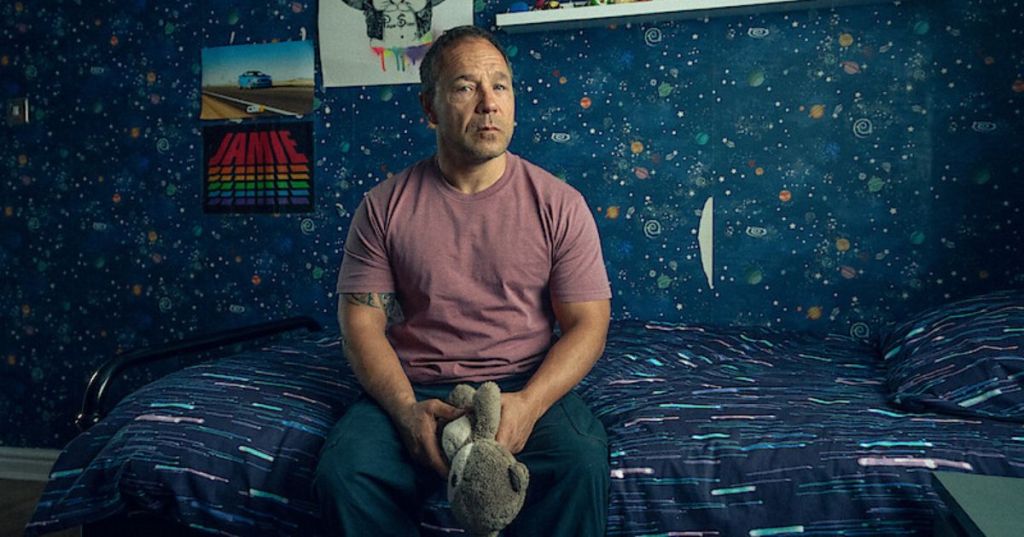
Adolescence doesn’t tie bows—it leaves you bleeding. Single takes, messy souls, no cheap exits. It’s youth, identity, society’s boot on your throat.
We’ve all strayed, buried shit, watched it claw back. Blame Tate, blame culture—it’s us too. No “proper ending”? That’s life. You live it, whatever side you’re on.
Maybe you see yourself in Jamie. Maybe you see yourself in Eddie. Maybe you think you’re better than both. But give it time—life has a way of dragging you into your own mess.
And when it does, who will you blame?
I hope you understand.
But what do I really know?
P.S. This is out of context, but for the past couple of days, I’ve been looping Chamber of Reflection by Mac DeMarco—there’s a 1-hour edition. Something about it just clicks with the vibe of Adolescence. Check it out—tell me I’m wrong.
Thanks for sticking it out,
Ivaniel Georgiev


Leave a Reply