Shout-out to everyone tuning in for another round of breaking down the most meaningful phrases I’ve come across lately. This week’s pick is both serious and funny—funny because everyone thinks they know… but they really don’t.
Sundays have become special for me. Not just because I stumble upon powerful lines—whether from books, films, or random digital rabbit holes—but because I get to sit down and really think about what was said, and why it was said (or at least how I see it through my lens).
That said, today’s phrase comes from another HBO gem: House of the Dragon. I forgot to note the season, episode, or timestamp—you’ll have to forgive me—but the moment stuck with me.
There’s this conversation between a married couple—servants, to be exact—wrestling with their reality and the hand they’ve been dealt. And then the wife drops this line, while her husband disapproves:
“I cannot blame anyone for doing what I myself would do if I could. Lucky we don’t have enough coin to find out.”
Now that’s deep.
Everybody thinks they’d do better if they were in someone else’s shoes—until it’s game time. It’s like those sports fans who say Messi is great but not that great, or the ones calling LeBron LeFlop. Come on. Try actually living someone else’s life before you open your mouth—but that’s the thing: you can’t. It’s damn near impossible to find yourself in the exact same position as someone else.
What is much more possible, though, is gaining more power or money than you used to have—however that happens. Maybe you inherit wealth, build a business, get into politics, or strike gold in some other way. The point is: once you level up, your choices change. And you change.
To make it, you’ve gotta be smart—whether that’s academically smart, cocky-smart, street-smart, manipulative-smart, or some mix of all that. Different games require different players. You get the idea.
This week, I’ll try to steer away from the jokes—as much as I can (honestly)—and focus on this topic, because a lot of us experience this. Or I’m a weirdo who sees ghosts (that’s not a joke).
Before we continue, feel free to check out last week’s edition. That one wasn’t centered on a single phrase, but on a whole mini-series that completely blew my mind. It’s called Adolescence, and it’s an absolute home run—but fair warning: the blog is packed with spoilers. If you haven’t watched it yet, maybe skip that one and come back later. But if you have seen it and want a more personal, thought-provoking take, check it out here: Adolescence: or How to Live in a World Where You Are Not Wanted Because of Who You Are…
Why Do You Think You Know
Chances are, you’ve found yourself in conversations where someone’s actions became the topic—and you had opinions. What they did, why they did it, and of course, what you would’ve done differently—probably better.
But let’s be honest: at the end of the day, those statements are just that—statements.
Because the truth is, you were never in that person’s exact position. And even if you were—if you’re honest with yourself—you’ll probably recall how many times you messed things up, doing worse instead of better.
And yet, you still think you know better.
Why is that?

Somewhere along the way, growing up, you believed you could be someone—and surely, you can. But being someone means owning your decisions and your actions. And before you can even own anything, you have to reach the place where that ownership becomes possible—and that part? That’s hard as hell. I imagine it like being sent to hell, only to find out there’s another hell… what the hell?
What I’m challenging here is the idea that our opinions about how someone should or could act are somehow more valid than the lived reality of their experience. When we say, “I’d have done it differently,” we’re often clinging to a neat little story—one where logic and foresight magically solve everything. But the real world is messier than that. Everyone’s dealing with unseen baggage, fears, and pressures we know nothing about—mostly because they don’t feel like sharing, and even more so because they know they’ll be judged (even if you claim otherwise).
It doesn’t matter if we once believed we could’ve handled a similar situation better—the memory of our own mistakes exposes how shaky that belief actually is. We end up in this weird paradox: the more we critique, the more we expose the limits of our own understanding.
Dig deeper, and this whole “I know better” attitude is wired into us. Hindsight bias, overconfidence bias—our brains trick us. We look back and think we knew what was coming, even though we didn’t. We downplay our own mess-ups and pump up our wins, building this narrative that we’ve navigated life smarter than we really did.
Our ego plays a major role here. It wants proof that we’ve figured things out—that we’ve made it through storms others are still stuck in. So we start believing we’ve got a formula others should follow. But that “formula” is usually just a messy mix of luck, pain, second chances, and wild guesses that somehow worked out.
In one word: life. And life is strictly yours (or theirs).
Real ownership means accepting the whole journey—every dumb choice, every regret, every moment that made us stop and grow. It means recognizing that true wisdom isn’t loud. It doesn’t shout directions. It whispers: I’ve been there too (exactly like a ghost).
And that’s humbling.
It teaches us that while we can reflect on our past with clarity, we’ll never fully grasp someone else’s path. That’s what makes advice tricky. It’s not about telling people what to do. It’s about offering a story, a shared experience, and saying: Here’s what helped me. Maybe it’ll help you too.
Never force your opinion—just offer it as guidance. It may be totally wrong or profoundly helpful—but that’s for the other person to decide.
We all want to be the version of ourselves that never messes up—but that version doesn’t exist. What’s real is the version that keeps learning—and shares from that place, not preaches from it.
So maybe the real question is: How do we move from assuming we know better to simply understanding better?
It probably starts with a reckoning—with realizing that every “I would’ve done better” is also a reminder of how imperfect we are. And once you can really own your imperfections, you stop talking down to people and start speaking with them. Just then, you can really understand. Before that? It’s just a bunch of dumb nods and empty yeses.
That’s when advice becomes something beautiful. Not a lesson. A connection.
Imagine a world where people chose that kind of sharing over judgment. A world where we embraced the uncertainty in ourselves—and in others—as something that builds us up, not tears us down.
That’s the dream, right?
I’m delusional, I know—but better that than fake and chewing on my bitter soul every time I’m by myself.
So let me leave you with this:
In what ways might embracing your uncertainty make you stronger—not just for yourself, but for the people around you?
Have you ever noticed that when you own your flaws, you suddenly become a better listener? A better friend? A better significant other?
Most likely, you have—even if only on rare occasions—but you still did. And you haven’t acknowledged it.
Then there are a hundred times more when you didn’t. And perhaps that was easier—easier until that moment when you look in the mirror while brushing your teeth (I told you so).
Let’s keep talking. Let’s keep growing. Together—as cheesy as that may sound.
Why You Can’t Be Sure
In the last section, I explored why we think we’d do better in someone else’s shoes. Why we say, “I’d have done it differently,” like it’s gospel—though none of us are preachers.
And here’s the thing: you can’t be sure.
I know people who say, “I’m 100% sure I’d do better.” That’s adorable—like a toddler’s slap (still very painful experience).
Let’s call it what it is: ego, laced with a hint of delusion. Most people—inner circle or not—live off that cocktail. But hey, the lie tastes good, so they keep slurping it.
Even those who rule the world don’t truly rule—we all know that. You don’t need a sixth sense—or even a sensitive gut—to see it. Empires rise and fall. So do the people in charge—and yet, they still ended up in those seats. That alone doesn’t mean we get to dissect their every move like we’d be flawless in their place.
Sure, you can judge. But take a step back.
We often assume people act out of power, greed, or self-interest. And yeah—many do. But the real drivers? They’re often quieter. Subtle. Messy. Hidden beneath layers of fear, timing, and trauma.
Still tied to power and money—but harder to spot.
To truly understand someone’s choices, you’d have to consider everything: The necessary and the unnecessary—the seen and the unseen. Most of us don’t even scratch the surface before passing judgment.
One of the most overplayed lines I hear is: “If I had the money, [insert your example here], I’d do things differently.” Or worse: “I’d never take the money. I have morals.”
Come on. Most of us lie every day—it’s as routine as eating. You’re telling me that without ever tasting power, comfort, or wealth—without even stepping into that Garden of Eden—you’d walk away from the fruit?
No chance—let’s not pretend we’re immune to seduction.
That “book” about negotiation, manipulation, blackmail? It’s not fiction. It’s a playbook—written over millennia, refined and weaponized with each generation. And the more access we have, the more exposed we become to its tricks.
You think you’re too noble to fall? That’s exactly how the book wins.
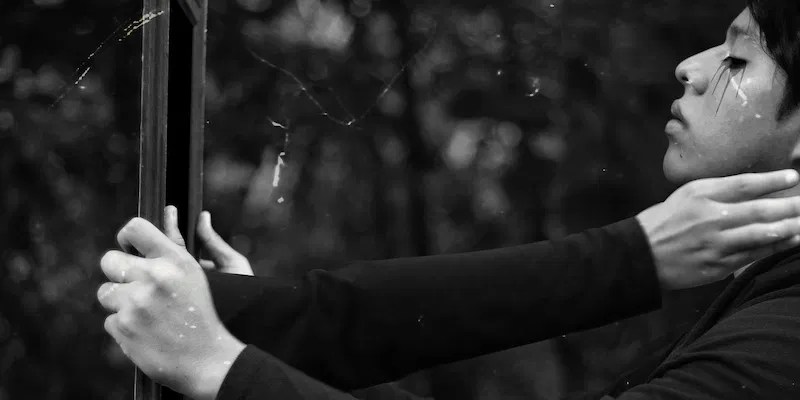
Because certainty is an illusion. It’s not wisdom—it’s ego as the villain in a James Bond movie. It wears a suit, speaks eloquently, and is represented as the hero.
In daily life, certainty can feel powerful. But here? It’s a mask. A comforting lie we tell ourselves to avoid admitting how unpredictable life really is.
To believe you can fully predict—or improve upon—someone else’s choices is to ignore how tangled real life actually is. Even the most powerful aren’t in control of their fate. If anything, their lives are more fragile than we like to admit.
It’s also about the arrogance of morality.
When people say they’d never sell out—that they’re better than that—it usually reeks of naiveté. They’re clinging to an idealized version of themselves—one that’s never been tested.
But life tests us. And under pressure, even the strongest convictions can bend. That’s not weakness—that’s reality.
Think outside the box, yes. But remember: the box is made of layers.
Decisions aren’t clean. They’re rarely powered by just one thing—money, power, status. They’re shaped by a swirl of memory, fear, necessity, timing, desperation. Trying to reduce all that into a tidy story? That’s where our judgments go blind.
And about that “book”? It’s cultural, not literal. We live in a world that documents every technique to bend someone’s will. And instead of growing more immune, we’ve grown more vulnerable to it.
Even our virtues? They can be twisted. Temptation knows how to dress up as love. As an opportunity. As whatever you crave most.
That’s the irony: The louder someone claims they’re above influence, the more likely they are to fall. Not because they’re weak—but because they never learned to question their own certainty.
So what’s the takeaway?
Not cynicism. Not distrust. Just a reminder: you’re human.
And being human means being vulnerable—to change, to influence, to failure.
The confident claims we make are just snapshots of who we are in a moment.
And those snapshots? They age fast.
If we stop trying to win over each other, and start approaching each other with curiosity instead of critique—maybe, just maybe—we start beating the book.
Not by being stronger—but by being wiser.
Recognizing your vulnerability isn’t weakness. It’s step one.
Because only when you admit you don’t know everything, then can you start to understand anything.
And in that understanding, empathy grows. Judgment softens.
And suddenly, your words don’t come from a pedestal—but from the trenches, where people are actually trying.
So let me ask:
Have you ever made bold claims about what you’d never do—only to later realize how naïve you were?
Have you felt the pull of temptation—the kind you once thought you were immune to?
What helped you through it?
And how can we all learn to speak from that place of humility—not perfection?
Live Your Life, Not Someone Else’s
I did. Many times. Over and over again.
To prove people wrong—and if I’m honest? I usually just ended up proving them right.
I can’t even count how many times I said one thing, only to do the exact opposite when I had the chance. I don’t remember if I ever went around preaching how noble I’d be in someone else’s shoes—but I definitely wore the shoes, and tripped over my own hypocrisy.
Here’s one example before we wrap this up:
Back in the day, in my hometown and village, Yu-Gi-Oh! was the thing.
Every kid played it. Every kid wanted the best deck. So did I.
Yugi was my favorite—he was the good guy. Helped his friends. Took the weak one’s side. Fought evil. In my head, I was Yugi.
But in reality? I was more like Pegasus—the villain.
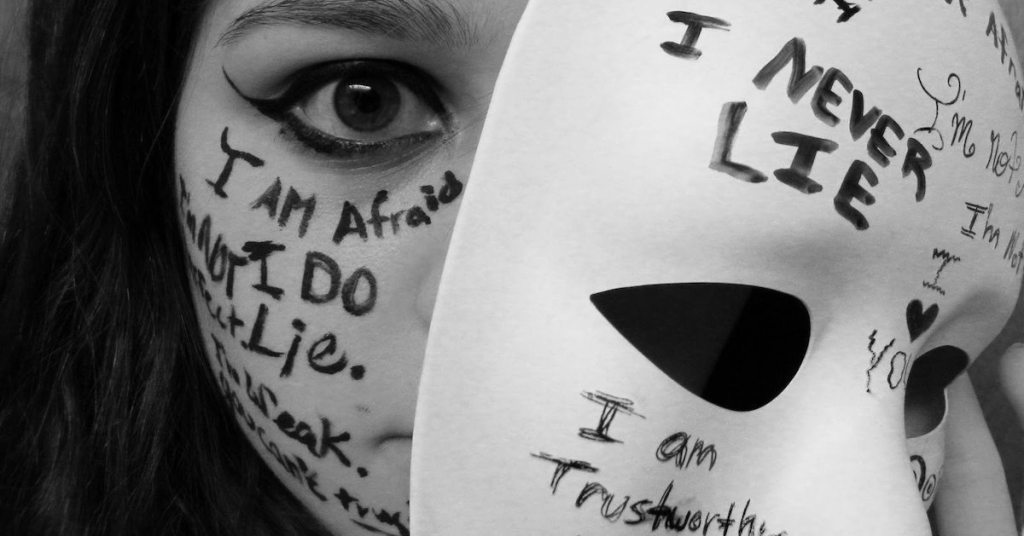
Not because I embraced being evil—like he did—but because I cheated and lied while still pretending to be the good guy.
He owned his role. I played the victim.
I stole. I scammed. And when caught? I acted like the innocent one. That’s not hero behavior—that’s delusion. And it’s not just a childhood thing—most of us carry that mindset well into adulthood. Telling ourselves stories about who we are, instead of facing who we’ve been.
So here we are—the final stretch.
Your Life
That’s what you’ve got.
What can you become? That’s mostly in your hands… and maybe your masters’ (just kidding …or am I?).
Try to hurt as few people as possible.
Because even with the purest of intentions, someone, somewhere, will still get hurt.
That’s life. But minimizing that damage? That’s character.
Own your decisions.
When they go right—great.
When they go wrong—and they will—don’t run.
Face them. Ask why.
What went wrong?
What does it say about you?
Learn. Grow. Then try again.
And don’t go chasing max power or money without first understanding what even a little of it feels like—because there are levels.
You can’t jump into calculus if you don’t know basic math—same goes for life.
You want the top role at work?
A partner who completes you?
A purpose that actually lights you up?
You don’t just get those.
Unless you’re corrupt, inherited a fortune, or playing a rigged game…you earn them.
Let’s say you’re working for a company and dream of becoming its CEO.
Cool. But you don’t leap to the top—you learn.
You understand every department. Every weak spot. Every small win and major failure.
That’s how you lead—not just sit in the chair.
Sure, you can fake it.
We’ve all seen CEOs with zero competence.
But those aren’t leaders—they’re con artists.
Pyramid scheme mascots.
Money-making machines built on other people’s backs—contributing nothing real to the world.
Is that the life you want?
Live your life.
Let others live theirs.
Do what you can.
Do what you want.
But don’t expect from others what you’re not willing—or able—to give yourself.
Or do.
And get what you deserve.
Maybe money and power are everything in the end.
Maybe I’m wrong—like I’ve been many times before.
But thanks for the attention span.
Really!
—Ivaniel Georgiev


3 responses to “Why You Can’t Be Sure Until You Live It…”
Wonderful ♥️
LikeLike
I’m glad you like it Caleb. Welcome to DA BOIS!
LikeLike
[…] If this one hit close to home—or you’re just joining DA BOIS—check out last week’s dose: Why You Can’t Be Sure Until You Live It… […]
LikeLike