
D-A-B-O-I-S are struggling for another week—Wu-Tang Clan’s Method Man hums in my head these days. New blood, old blood—welcome back. Sharpen your soul, draw your blade, suuuuu—let the truth slice through everything.
Today, freedom is on the agenda. What is freedom? Sure, it’s different for everyone, but what is it really? Can we give it a single definition? I don’t think so. It’s no word; it’s a wound.
No one’s truth fits mine—not friends, not strangers; only cool philosophers, some podcasters, and a few very well-written HBO characters. That’s my Ivanielverse—don’t pity me (I’m doing just fine).
Last week, I swore: Past souls lived freer, not freed; raw, not richer; experiencing life, not others’ lives. No freedom quotes, no pics or videos of the so special and precious life. Live it like no one’s watching—even if they are (for real).
Life’s a wonder. It can be full of twists—like suddenly realising you need a prosthetic. But hey, at least you’ll never stub your toe again. Stay sharp, champ! Ask those who have less than you—they’d gladly trade their cage for yours. Many, I bet, have found freedom in unimaginable places, carving it even in shadows we fail to notice—of course, I hope we don’t learn that the bloody way.
Freedom ain’t a flight to Bali; it’s something deeper. It’s you being able to act how you want—even when you’re told not to. It’s learning how to live with the chaos you’ve created and still having the strength to fix what you broke—or broke you. At its best, freedom is doing what you want without being afraid to let others do the same.
It’s a messy concept, no doubt. On one hand, it’s the ability to follow your will without outside interference; on the other, it’s the power to govern yourself from within. Philosophers call that the split between negative and positive freedom—or at least, that’s how I interpret it. Whether it’s Socrates, Aristotle, Voltaire, or me (yeah, I know I don’t belong here), the point remains:
Freedom is an inner state—a road paved with fear and failure. It’s the will to overcome what holds you back—and to resist what doesn’t sit right with you.
Before I move on, a quick note: If you missed last week’s post and find my writing interesting, feel free to check out Once Upon a Time in America… Pt. 2—the adventure-packed 21-day chaos trip (warning: it’s a long one—about an hour read). And if you want the backstory, Pt. 1 dives into how the idea was born in the first place—much shorter (but still full of adventures and dangers).
Freedom As LIBERTY
Freedom is not a virtue, nor a goal, nor an end—it is a condition. A person fully free does not automatically become good, moral, or even happy. Freedom is dangerous if one has not earned it, understood it, or built the inner discipline to wield it.
It’s no crown, just air; a free soul isn’t inherently wise or whole—it may even be wrecked, but it’s raw.
Freedom, by nature, exists concerning others. One person’s—or nation’s—freedom inevitably clashes with another’s, whether by accident or design—and always at the expense of the weaker. To navigate this space responsibly, one must first know oneself. For true freedom is shaped by the guarantees of liberty, and liberty becomes the pathway—a structure within which freedom thrives.
Think geopolitically. This relational nature of freedom isn’t just personal—it shapes the dynamics of nations, too. Some radiate their ideals, preaching, exporting, and marketing freedom across the world. Yet outside their borders, that exported freedom often fractures, exposing cracks in its polished facade—but truly, the problem starts within.
Look no further than Lady Liberty—250 years on, her torch burns steadily but wearily, a reflection of the weight of promises unmet. Yet, she still stands mighty—but tired; her hand stretched high, trembling in her declining years.
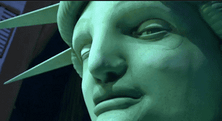
Know your pulse, or liberty’s a lie.
Freedom Through the Eyes of Slavery
Every nation has, at some point, been subject to another. Some people were affected more recently; others are still caught in the shadows of their former subordinates. But does this past give one the right to claim moral superiority today?
Those who essentially argue that their ancestors lived in slavery and therefore deserve special attention—be it in film, sports, or nonprofit activism. But today, we live better lives than our ancestors. This isn’t to say their suffering should be ignored. Nor should we blame anyone today for the crimes of their ancestors. Remnants of those mindsets may persist—but they should be handled by established law, not public vengeance.
Take Bulgaria, my homeland: nearly half a millennium under Ottoman rule—five centuries, people. And yet, the people persisted. It wasn’t the worst kind of slavery—if such a phrase can even be uttered—but there were countless abuses: children taken, entire villages slaughtered. Despite this, Bulgarians could own land, property—even build schools. But in some ways, we never truly fought to free ourselves; we waited for external salvation. Even today, many Bulgarians view liberty as something granted from the outside, not something earned or defended. This legacy fosters a mindset of passive dependence.
Contrast this with the American South before 1865—unthinkable. Americans have their Thirteenth Amendment, which brought new possibilities for freed African Americans, yet problems persisted for generations—in a way they still do. At least they ensured the next generations would remember what it means not to be free—Bulgarians never fully understood.
While slavery existed in both Bulgaria and the United States, the nature of that experience was fundamentally different—even if the oppression bore the same name. Despite the horrors of slavery in the U.S., the modern African-American experience includes an active pursuit of self-definition and cultural power. In Bulgaria, we often remain trapped in a passive, inherited nationalism—clinging to victimhood without the resilience to transform pain into purpose.
The term “slavery” often took a literary tone in Bulgaria—it meant a life without free will. To say our ancestors were “not really slaves” offends older generations taught to despise that period. And yet, to insist on victimhood today becomes a national complex—a problem I see here and, more vividly, in the United States.
Passivity scars—liberty’s a gift we didn’t earn.
I’m not saying anyone is wrong—they simply need to stop seeing everything as black and white and repeating stories solely from the victim’s perspective. People are genuinely bad—period.
Slavery is slavery, whether historical or metaphorical. Today, we are slaves to systems. Is that better? In some ways, yes. In others, not really. We have plenty of tools to fight the system—but the system has even more ways to use and corrupt us. The question is: will we fight? And will it even matter?
Every bomb has a timer, and it feels like ours is ticking. Perhaps AI could save us from ourselves—or make everything worse. I’m optimistic because history shows that in the long term, humanity improves. But tough periods are inevitable—history bends kind, but grinds hard.
Freedom Versus Age and Self-Discipline
If slavery limits freedom, then what follows emancipation? Boundaries of a different kind—those born of age and the capacity to self-regulate.
No slavery, no problem; new binds—age, will, grit.
Freedom isn’t inherent—it’s learned. Consider the contrast between a first grader and a newly-minted adult. Today’s liberal ideals push us to vault away from religion, tradition, gender norms, and parents—all in the name of liberty. Freedom, like the Second Amendment in the United States, is a gift inherited from ancestors who believed it necessary. Yet newer generations, who never asked for this gift, often use it without understanding its purpose.
Dangerous in the wrong hands, freedom is something we carry everywhere, yet rarely pause to contemplate. It’s indeed a gift, but it’s useless without guidance and the will to use it wisely.
Imagine a child. As much as the child wants freedom, their survival depends on parental care. An adolescent, while free in form, often lacks the substance of freedom: discipline and purpose. Without these, freedom is easily mistaken for indulgence—a mistake that comes with a price. Through trial and error, one either matures or sinks.
Our culture often fails to teach young people how to navigate freedom. They are told they can do anything—but rarely taught how to choose wisely. Many drift through this contradiction, unsure of their next step. Adults, meanwhile, frequently retreat into rules, jobs, or systems, evading the full responsibility of living freely.

True freedom is not about doing whatever one wants. It’s about choosing freedom. And what is true freedom? Pick good—for yourself, then others. Such choices require inner strength and an understanding of life’s mechanisms.
Children don’t naturally know what’s good for them—hence the need for limits. These limits, ideally, are not about domination but protection. If a child matures properly, they will one day choose wisely on their own. But when young people are raised in authoritarian environments, with rules imposed without reason, they may become adults who don’t know how to handle freedom. This gap in understanding is a danger—not only to themselves but to society as a whole.
Bad environments breed drones; good ones birth choosers.
In adulthood, there are two paths: building upon a strong foundation or crumbling under the weight of a false sense of liberty. Self-discipline becomes the cornerstone of true freedom. It manifests in small, everyday actions: resisting impulses, thinking critically, and finding purpose—this is democracy at its peak.
Life, given time, teaches us—if we are willing to listen.
Freedom in the Media and Public Space
Once a nation escapes slavery and learns self-regulation, it faces a third challenge: freedom in the public sphere. Here, media, money, and influence shape the narrative—and often distort it.
In Bulgaria, freedom of speech arrived in 1989. In America, 1791. In France, 1789. The French Revolution didn’t just topple monarchies—it ignited nationalism, civil rights, and mass movements. In those early days, free speech was raw and authentic—people had something real to say. But as societies evolved, the rise of mass media—and now social media—has complicated this freedom.
Once blood-true, revolutions sang of change.
Today, freedom of expression is commodified. In Bulgaria, this phenomenon could be called “the drunkenness of a nation.” It begins with underground media, student journalism, and passionate op-eds—then succumbs to oligarchs, ads, and self-censorship. If your speech aligns with those in power, you’re celebrated. If not, you’re vilified. Criticizing Ukraine in recent years is a case in point: dissent is swiftly labeled—Russian agent, conspiracy theorist, radical.
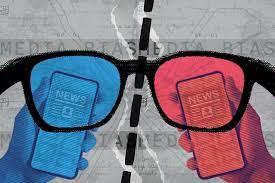
Freedom weaves peace but sparks wars, once a unifying force, now used to divide. The public sphere no longer reflects the people. It mirrors algorithms, corporate interests, and attention-seeking extremes. In this environment, freedom of speech becomes distorted. Meaningless noise is amplified, while truth is buried. Performers and provocateurs become the new authorities, drowning out thoughtful voices.
Truth sinks; clowns soar—scrollers, suits, stars.
Speak freely, and you risk replacement. Play the fool convincingly enough, and you might rise to the top. So, who can we trust? That answer is elusive. Perhaps the key lies in scepticism: avoid those who repeat themselves without reason. That’s where truth dies.
A friend recently recommended Louise Hay’s You Can Heal Your Life. I’ll spare you the trouble—it’s nonsense. But never trust anyone’s opinion without verifying it yourself. For me, therein lies the horror of free speech: 50 million copies sold to wandering souls searching for salvation. While experts struggle to be heard, magical thinking thrives.
So we must ask: What kind of freedom is this? A freedom to mislead and distract? Or is it simply the absence of filters, standards, and shared values? If this is liberty’s greatness—perhaps silence is golden.
Freedom to lie? Or no leash?
The Clash of Freedom(s)
Having explored how freedom functions, we now arrive at the inevitable clash: liberal versus conservative freedom.
In Western cultures, liberty is often framed as freedom from—freedom from tradition, religion, the state, or societal norms. In contrast, in Eastern cultures and many developing nations, liberty is seen as freedom to—to belong to a family, a faith, or a heritage.
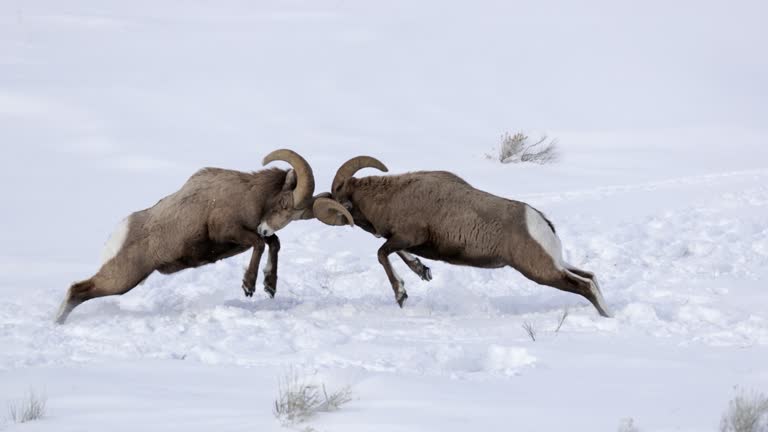
Liberal freedom is about options. You choose your values, your religion, your identity. You say, I choose me. It’s freedom from—freedom from constraints, history, and responsibility. It promises more: more goods, more choices, more beginnings, more endings—even eternity, if you wish.
But liberalism carries fatigue. Its endless choices overwhelm and isolate. Many flee the liberal world, turning eastward to seek solace in Eastern spirituality. Why? To escape their own freedom.
Conservative freedom, on the other hand, is rooted in meaning. It is freedom to—to fulfil a mission, honour tradition, and uphold responsibilities. It acknowledges that you are not just you—you are part of something older, something deeper.
This type of freedom isn’t always democratic. At times, it’s painful. Yet it offers dignity. You are free when your life aligns with your core values—even if that means saying “no” to the infinite choices of the liberal world. Conservative freedom rarely sells millions of books or dominates social media like Bonnie Blue alikes—but it often endures longer.
Not loose, but firm—dignity over noise.
Young Westerners, having achieved total individual freedom, now grapple with isolation and confusion. On the other hand, many Easterners live within systems that limit self-expression but offer identity and meaning. Though Western culture has given us much, it feels as though we’re drowning in excess and distraction today. Eastern culture, meanwhile, offers stability—but it doesn’t represent the kind of freedom most seek, at least for the larger part.
West’s youth—free, adrift. East’s hearts—bound, found.
Thus, neither approach achieves complete freedom. True liberty must balance both: the right to choose and the ability to belong.
No victor—freedom’s both: pick, belong.
Liberty and Death
A truly free person does not fear death. This doesn’t mean they seek it, but they accept it as the price of sovereignty.
Free souls nod at death—not chasing, knowing.
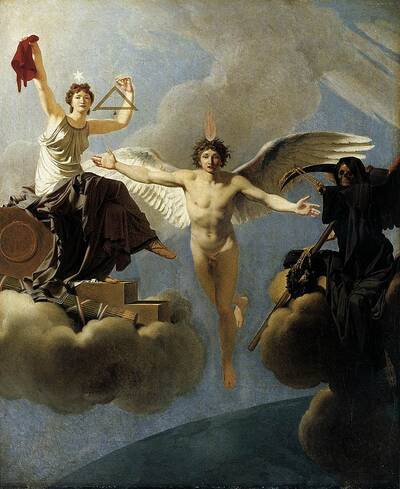
To choose life over liberty is, in essence, to choose slavery. To choose liberty over life is to be truly alive. Hegel wrote that history progresses through the consciousness of death—the slave becomes free the moment they decide they’d rather die than live without dignity.
In his words: “Choosing life over liberty is suicide. Choosing liberty over life is to truly live.”
Two hundred years ago, people bled for freedom—daily. Once, liberty demanded blood and bravery; now, it fades into the background, mistaken for mere comfort. We scroll past—or we post how much we pity (whoever that may be). Freedom once meant dying for a cause; now, it’s a convenience, as ordinary as running water or the toilet in your home. When was the last time you thought about that?
Old wars bled freedom—now? Wi-Fi and a waste of tears over nothing.
The hard truth is this: we’re not willing to die for liberty anymore—because we think we already have it. We cling to safety above all else. We confuse comfort with freedom. We avoid risk, pain, and even truth. In doing so, we lose our grip on what it means to be free.
But freedom isn’t comfort. It isn’t convenience. It’s a violent internal state—a constant battle with the self. Freedom requires sacrifice. It isn’t license. It isn’t ease. Freedom is a construct of the soul, forged in the struggle between who we are and who we aim to be. Few are willing to pay its price.
Freedom’s a brawl—soul vs. self, dawn to dusk; without it, though, life becomes… less alive.
So ask yourself: if you’re not willing to risk everything for your freedom, are you truly living?
Freedom Through My Eyes
Freedom transcends explanation—it is first felt, then realized. To possess it is to be willing to lose much in its name. It demands courage and sacrifice, and though it doesn’t always cost your life, there’s no guarantee it won’t.
What’s certain is that the path to freedom is far from pleasant. If you manage to survive it, there will be moments—perhaps many—when you’ll wish you hadn’t begun. Even if you reach the other side, you may still wonder if it was worth the cost. Freedom asks much, often more than you’re prepared to give.
To hold it? You must lose all.
History offers no shortage of examples:
- Socrates, sentenced to death in ancient Athens for “corrupting the youth” and challenging the status quo.
- Jean-Paul Marat, a radical journalist of the French Revolution, assassinated for his uncompromising views.
- Martin Luther King Jr., whose unwavering fight for justice and equality cost him his life.
Even today, people die in the name of freedom—yet their stories are often drowned out by the noise of modern life. Consider these three women:
- Anna Politkovskaya, a Russian investigative journalist who exposed human rights abuses, ultimately assassinated in 2006.
- Neda Agha-Soltan, a philosophy student in Iran whose death during the 2009 protests became a symbol of resistance.
- J.K. Rowling, not killed, but redefined—her views on gender identity reshaped her legacy, proving that even speech exacts a price.
Speech costs—always.
Debate was once the cornerstone of democracy. It still ends wars, resolves disputes, and signs treaties. But it also starts wars, spreads hatred, and challenges power. Speaking freely should be normal, yet history shows us it’s often an act of bravery.
In our time, free speech is being replaced by a subtler, more insidious form of control—corporate and state-aligned censorship. Alarmingly, it’s happening voluntarily. People fear losing the comforts they’ve worked for, and so they conform. It’s easier to stay silent than to risk everything.
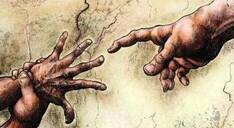
So, is freedom normal today? If freedom means the absence of tyranny, then yes—most people are freer than their ancestors. But here’s the paradox: many who claim to value freedom have never known its absence, and those who invoke the past often unintentionally keep its chains alive.
Freedom matters because it shapes identity—personal and national. Yet not everyone participates equally. Some are constrained by governments; others by global powers. And so many of us, myself included, are left wondering: What do we do with our freedom?
Should we celebrate it? Should we fear it? Do we even understand it?
Freedom is not the absence of rules—it’s the power to build your own. It is relative, shaped by where you’re born, how you’re raised, and the information you consume. For some, freedom means resisting oppression; for others, it means making peace with their limitations.
Yet whether you fight for freedom or accept its boundaries, one truth connects us all:
Freedom is not “I can do.” It’s “I can’t do without.”
Some can’t live without independence. Others can’t live without the system that keeps them safe. But freedom, in both cases, isn’t just the ability to choose—it’s the inability to live without what defines you.
The Crisis of Freedom in the 21st Century
I’ve touched on many of these ideas before—but now it’s time to confront the crisis of freedom in the 21st century head-on.
At the heart of this crisis lies the subjugation of modern man to Euro-Atlantic values. While it begins in the West, its influence has spread far beyond its borders. Thanks to the internet, the same ideas, aesthetics, and ideologies flood the entire world. Yet those closest to the center—the so-called “Western Man”—feel its effects most profoundly.
What’s happening is this: modern man has unshackled himself—literally and figuratively. From fashion to business, from identity to ideology, everything has been stripped of its old context. Clothes are worn less and less—and ironically, man arrived on this earth without clothes in the first place. So, in some sense, we’ve come full circle.
But this goes much deeper. We are witnessing the dismantling of identity—a denial of country, heritage, gender, class, appearance, and ability. Every traditional point of orientation is being erased in favor of so-called “trans-border ideologies.” These ideas float across cultures and claim to be universal, but often erode what makes each person and place unique. In some cases, history is even erased simply because it offends a particular group. But this erasure does more harm than good—it’s a dangerous precedent, echoing dark chapters of the past.
Some argue that “man is energy” and that everything physical is a social construct. There is truth in this—but it’s taken to an extreme, where human biology, scientific discoveries, and even observable reality are denied. We forget that while the world may hold divine mysteries and spirituality is a part of us, we are still physical beings living in a physical world.
When people believe they are beyond nature, science, and consequence, they lose their connection to what it means to be human. They begin to see themselves as gods—answerable to no one. At first, this might seem liberating. But look closer, and you’ll see a society teetering on the brink of collapse.
It’s happened before. Look at the fall of the Roman Empire. It wasn’t just foreign invasions that brought it down—it was moral decay, hedonism, the collapse of traditional family structures, political corruption, and economic disorder. Institutions rotted from within, and Rome fell—not because someone toppled it, but because it toppled itself.
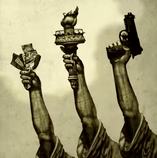
Sound familiar?
The modern West isn’t struggling because it lacks freedom. It struggles because it has too much—and no idea what to do with it.
We are disoriented. And when people are disoriented, they look for a new compass. That’s when a “strict leader” appears—not to grant freedom, but to take it away. To reorganise society under new laws, new myths, and new control.
The truth is, many people don’t know what to do with the freedom they’ve been given. And when that freedom becomes unbearable, they subconsciously invite someone else to manage it for them.
Today’s freedom has evolved into something strange:
A world where everyone must be heard, every opinion accepted, and no one held accountable for what they say or do.
But in Rome, such “freedom” could get you publicly executed—a final warning for others. Today? You get cancelled. Or sent on “vacation” with a one-way ticket to a distant island 💀. And people mock you—perhaps they did the same in the past (so we aren’t so different after all, hm?).
It’s a paradox: Freedom, taken too far, leads to fatigue. And that fatigue creates a hunger for new restrictions—even if we don’t want them.
Choosing To Be or Not To Be
The question “To be or not to be”—Shakespeare’s eternal dilemma in Hamlet—is, at its core, a question about freedom. Here, I reframe it not as a philosophical abstraction, but as a deeply personal confrontation with the desires and sacrifices that come with choosing to live freely.
It’s a choice. About life. About being. About freedom.
Some ask me, “How are you so free?” The answer is simple: “Well, how can’t I be?”
I’m free to write. Free to breathe. Free to think. As we Bulgarians say, free not to be a horse with blinders—and truly, don’t be.
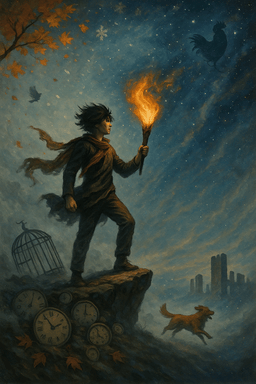
This journey of freedom is not just a concept—it’s deeply personal. Perhaps a poem can capture its essence better than prose ever could. I typically don’t include poetry in my blogs, but this time, inspiration struck:
I am free to choose, free to curse and despise,
no cages, no borders where my spirit flies.
I am bold, not right, I hunt the flame,
I see beyond grey, carving my name.
I am free as a fall, as a season’s change,
I am the spark of a fire, like wine, I age.
I am free to wake late, I own my day,
to hold a sweet memory, to drift away.
I am a dog most free—no stray, no leash,
no map, no nothing—beast but no beast.
In a noisy world, I claim the quiet, raw kiss
— I am the silence, child of the endless abyss.
Born unchained, yet tangled in modern days,
free slave of a system—half tender, half brave.
Like a rooster’s crow, I split dawn before sun’s rays,
I am free to do as I wish, free to live—free to the end.
The truth in my voice, I am unafraid to blame,
I am free to think—to accept, and to walk away.
But then come the questions:
- What do you want?
- What do you love?
- What do you hate?
- What are you willing to sacrifice?
- Are you willing to die for freedom?
- Are you willing to leave behind all the comforts, all the goods, all the people who love you?
- Are you ready to say “I love you” one last time? To see one final sunrise, one last night sky?
How would that happen? I don’t know. I’m not ready to lose my life—not yet. But sometimes… I wish I were. I don’t know how or if I’ll reach that phase, but I’ve started to notice something:
Freedom is replacing my desire to live; freedom is the essence of my living.
And somehow, that makes me feel more alive than I ever have.
How far will I go? How far will we go? Well, time will tell.
The idea that freedom can become more important than life itself is both liberating and terrifying. It demands a level of clarity and passion that transcends mere survival. It means living with purpose—where freedom is life.
But let’s not romanticise it too much. The sacrifices are real: the goods, the relationships, the simple joys of existence. They remind us that freedom is not a luxury—it’s a supreme act of self-determination. And it requires unwavering courage.
There is a strange kind of invulnerability in admitting these truths. Because the pursuit of freedom is not just about systems or states—it’s an internal journey. A negotiation with fear. With values. With the ephemeral beauty of life itself.
Time will reveal much, but for now, this awareness—this honesty—is the essence of freedom:
The courage to face the truth, even when it’s inconvenient.
Even today, people continue to die for freedom. But many of them go unnoticed. Their voices don’t echo across democratic halls. Or if they do, attention quickly shifts elsewhere—distracted, diluted, disappeared by design.
And so the question remains: To be or not to be?
Thank you for being part of DABOIS!
Sincerely yours,
Ivaniel “The Free” Georgiev


Leave a Reply