DABOISASTRGLEDT (phrases) – by Ivaniel “Ivo” Georgiev
DABOIS are back with more of the same—struggling, struggling, and (you guessed it) more struggling. I’m honestly considering starting a school at this point.
The School of Struggling—or Struggle. Doesn’t sound too bad, does it?
Anyway, it’s that time again—wading through the world of phrases. This week’s one comes from (surprise, surprise) another HBO production. By now, I assume you know I’ve got a soft spot for their shows. They’ve got a knack for weaving gut-punching truths into casual dialogue—and this one hit me square in the chest (figuratively, I mean).
The scene? A conversation between father and son. But let’s not limit it to relatives. These kinds of confrontations aren’t confined to bloodlines—they happen between friends, partners, colleagues, strangers… and yes, very often, between you and yourself.
How do I know? Well, I know.
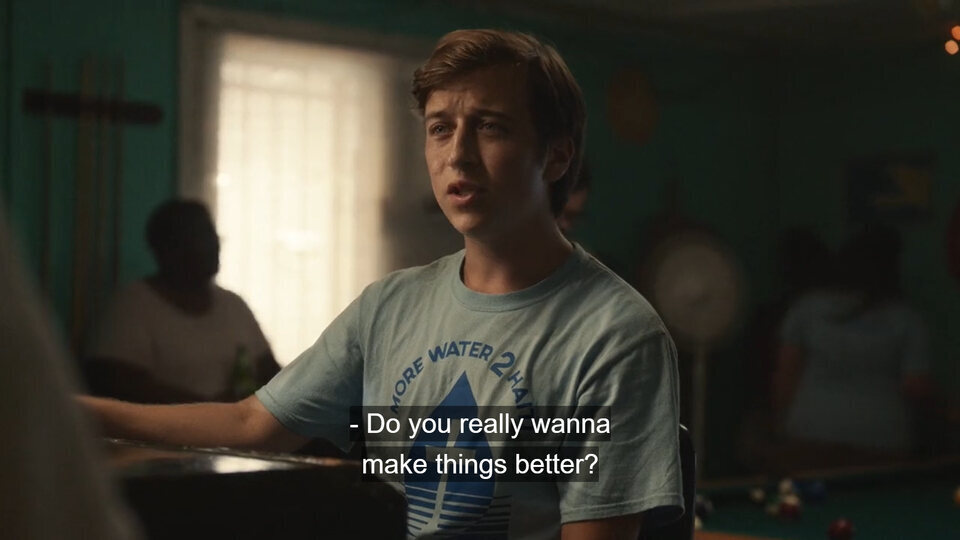
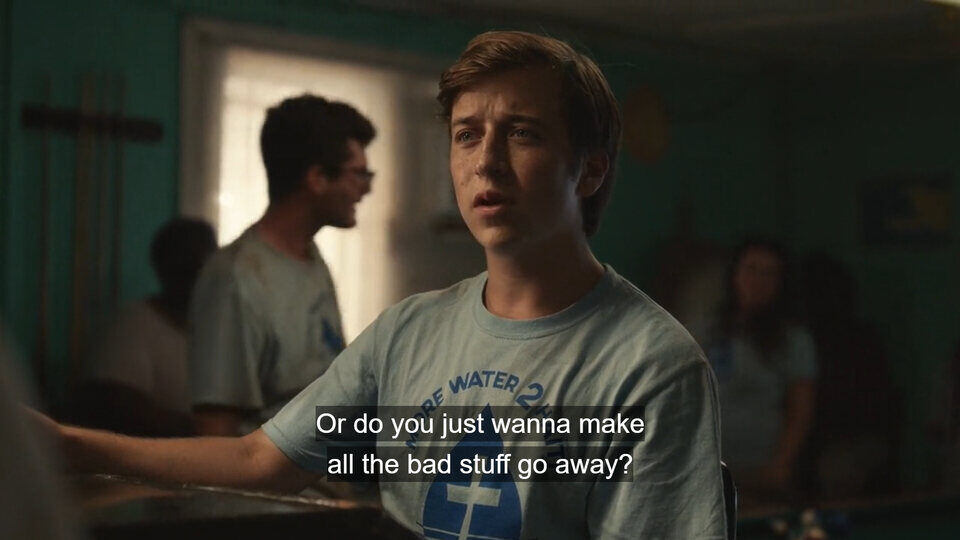
I didn’t write down the exact timestamp this time, but I remember the moment clearly. It takes place in the final episode of Season 1 of The Righteous Gemstones, where Gideon, the son, torches his dad, Jesse, with:
“Do you really wanna make things better? Or do you just wanna make all the bad stuff go away?”
Man, shit. That’s a knife to the chest—and that’s a good thing (sometimes, all you need is a knife… not in the back though).
The hard truth? Most people just want to sweep things under the rug—and the often do. They want everything to look like before—same habits, same dynamics—just without the mess (like that’s possible). But here’s the thing: one person deciding they can’t continue as things were changes everything. You can’t just keep walking the same path once one of you has stepped off it.
And no, you can’t forget something that already happened. First of all, the mind doesn’t work like that. And second—if you do somehow forget… is that really kindness? Or just plain naivety?
For God’s sake, how many times have I had that same conversation myself? Except most of the time, it wasn’t with anyone else—it was all me vs. me.
Gideon’s line isn’t just a jab; it’s a replicating one—as if from another dimension—that hits you exactly where you expected. You may ask about those me-vs-me brawls; I staring down my lies—stole cash from a friend, swore it wasn’t me (not even begged fir forgiveness)… and did it many times again. Why? ‘Cause wanting’s not enough; you gotta gut your habits.
And let me tell you, those self-interrogations rarely led to anything productive back then—because I was pitying myself and accepting what’s happening as normal. I know how dumb the following sounds, but after years of wrongdoings, it all led me here—to this moment, this reflection, this community. So, it’s gotta mean something, right—or am I going absolutely nuts?
That said, I still don’t know what’s more disturbing: That someone can hurt you over and over, ask for forgiveness every time and expect it like clockwork…or that someone can do harm knowingly, and still act like it’s no big deal.
Wanting’s easy; doing’s a war.
What do you BOIS and GALS think? Have you had similar conversations—with friends, family, strangers, or maybe (like me) just within the walls of your own mind?
I don’t know, but I can’t shake the feeling you’ve been there too—promising change, dodging the work. So, let’s rip off everything that deserves to get ripped and see what’s hiding beneath it.
Before I go any deeper into today’s topic, I want to welcome all of you reading—newcomers, regulars, fellow strugglers. Thank you for giving your time, your attention, and your energy. I genuinely hope DABOISASTRGLEDT continues to grow into something meaningful—a space for understanding, forgiveness, real talk, and above all, effort.
So don’t worry, BOIS and GALS—you’re not alone. We’re all in the huddle together.
If you missed last week’s edition, or you’re just getting into this wild ride of thought and feeling, feel free to dig through the archives. Otherwise, check out the latest one here: I’m Not a Cynic, Yet I Am One…
If you like the type of content I’m sharing here, you can definitely check out my daily newsletter for some more interesting twists about different aspects of life (and some free goodies) – Subscribe to My Newsletter.
Europe tour checkpoint: We’ve seen most of the extraordinarily beautiful Portugal, and we are back in Spain. Just finished a couple of days of walking around the capital—Madrid—and we are on the way to Bilbao. Very soon, we will be back in France, eating some camembert with grapes and crackers under the Eiffel Tower. Will be in touch.
Now, back to the want, not want… game.
To Really Want
Let’s start with the essentials.
- What does it mean to really want something?
- Does it mean you wouldn’t do something you’d later seek forgiveness for?
- Does it mean you’re a bad person, unaware of your true self?
- Does it mean you ask for things, make promises, but aren’t willing to sacrifice for them?
- Or does it just mean you’re human—flawed, hopeful, and desperate for another chance even if you’re not ready to earn it?
- Is this all a matter of self-awareness, or just the unwritten rhythm of life among the tribe you’ve chosen—and who, in turn, have chosen you?
If you’ve been here before, you know I shy away from absolute answers. If you’re new, let me say it plain—there is no one truth. The truth has many faces and the following has been proven in the history of times.
However, I know plenty of people who believe in the “one absolute truth”, but even that feels like a hypothetical; an imagined “right” and “wrong” that rarely survives scrutiny. Those people are the worst, am I right? (No offence fellas, just sharing how I feel.)
As for me, I live in the lines between the questions—and everything that’s been said in general. That’s my whole brand.
And maybe, just maybe, I haven’t asked the right questions either. That’s why I’m inviting you into this—comment below, get in the mix. Let’s not pretend any of us have it figured out.
I remember my mother asking me—over and over again, after I’d messed up for the X time:
- “Why did you do that?”
- “Do you plan on driving me insane?”
- “What will you do differently next time?”
And I’d look up with those wide, sheepish eyes, muttering: “Well… I don’t know, I just… maybe… I guess…”
Until eventually, she’d get sick of my nonsense—but choose to believe me anyway.
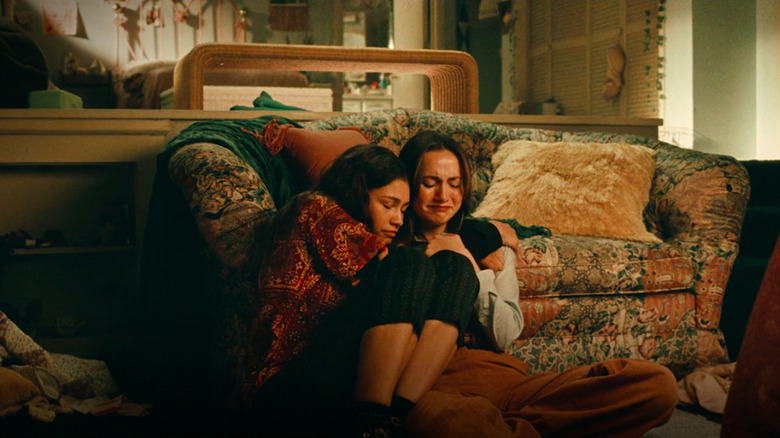
Not because she trusted me, but because love sometimes overrides logic—read that again.
She’s the kind of person who would love you even if you did the unthinkable. She’d probably still do even if I kill someone. (Not that I’ve tested that theory… yet. But I’ll keep you posted.)
Gemstones’ Gideon calls it: most folks just want the mess gone, not the work done.
So the same thing is happened in friendships too, but less often—because truth like that doesn’t live long in those circle. (In real and long-lasting friendships, yes, but I mean more about the casual ones.)
People don’t ask, “Why did you do that?” They just leave—because it’s easier and very often the better option.
Unless it’s one of those rare, two-person soul bonds where even the ugliest betrayals are forgiven because… if one of you walks away, the silence that follows would be worse than the pain, worse than betrayal. Especially when you’re young. Especially when you’re still figuring out who you are and who you aren’t.
The truth hurts. So we hide it.
And then we do something reckless. And then we wonder how to justify it, how to spin it, how to call it “the right thing.”
Eventually, lying starts to feel easier than honesty. That’s not a confession—it’s a pattern.
Now, without spoiling too much from The Righteous Gemstones, let me touch on how Gideon’s words came to be. See, when one person makes a move that affects another’s life, that’s a rebellion. Not always loud. Not always obvious—by the way, in case that seems interesting, I discussed very much of that in: I Was A F*cking Kid—But Was I… (And I’m diving even deeper in my upcoming book.)
So what I’m trying to say it’s that the whole thing is a refusal—some internal scream if you wish—that says, “I can’t keep doing this.”
But honesty? Too complicated.
So we act out instead. Sometimes with guilt. Sometimes with full-blown manipulation. Sometimes, without even knowing what we’re doing until it’s already too late.
Gideon isn’t a bad kid—no more than I am (not that this is a defence).
He just reached his breaking point. And like many of us, once he’d already stepped into the mess, he didn’t know how to walk it back.
So he kept going. Until the damage was done. (I did the same. Many… many times.)
I won’t spoil the rest—you can watch it yourself if you want. But the point is: There’s a massive canyon between wanting something and getting or giving it.
I’ve said this before:I think humans are inherently flawed. Not evil—but really evil. A faulty design, if I may—and some try very hard to prove me wrong, but the mass… well, they just show how right I am.
So getting mad at someone for doing what humans do? It almost requires you to forget they’re human in the first place.
Yesterday, I had this little moment—thinking about what it means to be a parent. I’m nowhere near becoming one, but I was the child. And no, I wasn’t a perfect kid. Not even close—nope. But a lot of what I am today is because of what was drilled into me early—some lessons I needed, and some I still resist.
My parents, bless them, had their own dreams for me. Things they wanted—things they still want.
But they might never get them—probably they won’t.
Not because I’m defiant. But because what they imagine and what I live through… aren’t always aligned.
They’ve asked things of me that they never did.
It’s easy to expect someone else to chase the ideal version of your life. Harder when you have to do it.
And me? I’ve said the right things.
But I haven’t always acted on them. I’ve wanted their love and approval—sure.
But I’ve also taken paths they’d never understand. Still, I ask you: Who decides what’s normal?
We’re not saints. We sin. Sometimes multiple times a day. And then, it depends, I guess, on what you call a sin—one’s sins, may be another’s blessing (and the opposite).
- How do you not do something you know you shouldn’t?
- How do you stop yourself from doing something you know you shouldn’t—but still do?
It takes time. And values. And discipline that doesn’t come cheap. Simply, it takes a lot, and the reward is not as fulfilling as people imagine it to be—but it doesn’t mean it’s not worth it.
Because to grow—to really grow (of course, if there’s such a thing)—you often have to isolate yourself. And there’s peace in that loneliness, sure.
But for most people, peace isn’t enough. It feels less like a reward, more like a punishment.
So yeah—whatever you do, someone out there will always hold you accountable.
Complete happiness? Might never last—it won’t. But maybe that’s okay—it all comes to what you perceive and how you perceive it.
Do what brings you peace. And when the price comes due, face it head-on—with your head held high.
- What do you think, DABOIS community?
- Do you find meaning in my words?
- If yes, why? If not, also why?
Don’t keep it to yourself—we’re not here to lie.
Just To Want
Now let’s flip the script.
This is the other side of the same coin—where the person wants to do the right thing… but that desire never really leaves the realm of wanting. That hope never grows legs.
So here’s a set of questions I’ve asked myself (and maybe you’ve asked too):
- How many people do you know who say they’ll change, but don’t?
- Do you fall into that group yourself?
- Why is it so damn easy to want—and so much harder to do or get?
- Is it worse to ask for something you can’t deliver, or to give something you regret?
Let’s dig a little deeper into some everyday examples. Think of these not as judgments, but mirrors you can choose to look into… or not—you’re the captain of the ship (I’m trying to be a lighthouse).
Example 1: My Own Life
I remember promising my parents I’ll stop hogging the bathroom—next day, I’m soaking for an hour… until there’s no more hot water. Thus, wanting’s a cheap trick—sounds good, feels hollow.
I still remember all the vibes that were gone in a heartbeat—“new year, new me” posts, “I’ll change” reels—they sell the same lie: skip the grind, keep the glow.
And last but not least: doing something for the greater good. I was thinking of planting some trees and helping with the afforestation—nada (I planted exactly zero trees since then… and that is proof of what kind of hypocrite I am).
Example 2: Romantic Relationships
We’ve all seen this: someone gets dumped, gets heartbroken, gets hurt—and suddenly they want to be the better version of themselves.
So, they dress sharply. They read more. They text less (but not really). They promise to become more open, more emotionally intelligent, more whatever—yes, whatever.
But when it comes time to take real responsibility, to sit with their own shame, to actually do the internal rewiring—that’s where it stops. It’s easier to pretend the past didn’t happen than to ask why it did…To want the change without making it.
Example 3: Professional Relationships
Same story, different setting. Someone’s coworker screws up a project. They say, “I’ll improve. I’ll take the lead next time. I’ll listen better.”
But when feedback comes in? They get defensive. They blame the process. They pretend the criticism is personal, not constructive.
Suddenly, the new methods they promised to try are “too unrealistic” or “not how this team works.” And so, again: the desire was there—but the follow-through? Ghosted.
Example 4: Social Relationships
We all want a better world. More justice. A cleaner planet. Kinder people.
But when the petition goes around or the vote comes up or the uncomfortable conversation knocks at the door… We stay seated.
Because liking an idea is not the same as lifting it. And the want to “erase what’s wrong” rarely translates into building what’s right.
And this… this is where the real division happens. The gap between real change and the naive desire to pretend change has already happened is massive.
Too often, people want to restart without reworking anything. They want to skip the grind and jump to the glow-up. But that’s not how growth works.
Change isn’t a surface-level repaint. It’s not about making the right sounds. It’s about reconstructing the self—and not everyone’s up for that. It takes time. It takes pain. And worst of all, it often takes solitude—and it does take balls… I mean, the huge ones in particular.
Change is not a good or a bad thing—it’s a natural process. The thing is, you get no applause. No acknowledgement. Just the long echo of your own honesty.
So yeah—most people don’t do it. Not because they’re lazy. But because it’s terrifying.
Now, throw in psychological defence mechanisms—and it gets messier.
Often, the loud declarations of “I’ve changed” are just attempts to shove the guilt away.
To forget. To bypass pain, not confront it.
It’s less about doing the right thing and more about numbing what felt wrong.
So again, I ask: When you say you “want” something, is it desire—or denial?
Heavy thoughts, I know. But if you’ve been reading DABOISASTRGLEDT, you’re not here for light fluff anyway.
We’ve always been the ones wrestling with the uncomfortable.
So BOIS and GALS—Where are we landing with this one? And are we aligned—or have I taken a detour you’re not riding with? What’s the change you’ve promised but ghosted?
Drop your thoughts. Let’s talk—for real.
Want or Not Want; Life Doesn’t Care
Today, I’ll try something different. No comparisons to any philosopher, no borrowed wisdom—only what I understand through my own life.
Because, as helpful as philosophy may be—as much as countless thinkers have uncovered over the centuries—there’s something far more valuable: discovering your own philosophy through what you endure and survive.
That, I believe, is the only real way to understand what you think, feel, and believe. Not through quotes, but through scars.
Real change is a street fight—bloody, lonely, no applause (kinda like Fight Club).
It seems—again—that everything circles back to freedom. The blog began with the weight of hardship, thus struggle—but hardship, I’ve realised, is the unavoidable shadow that follows freedom wherever it goes.
Gideon’s words weren’t just words. They were a form of liberation.
For him. For his father… and for us—if we let them be.

But this freedom doesn’t come wrapped in comfort. It brings with it a mixture of struggle, reflection, and a kind of friction that either shapes you or breaks you.
It’s a steep price—but the only one that leads to a truer life.
Easy choices often seem heavy at the moment, but they cost less in the long run. It’s the easy way out that demands everything from us—our dignity, our clarity, our soul.
And most of the time, we only realise it when it’s too late—this is my father’s favourite quote.
Freedom isn’t chaos. It’s not doing what you want whenever you want. That kind of “freedom” is a trick—something that feels like power but leaves you powerless in the end.
The real kind? It lives within boundaries we choose ourselves. The paradox is that self-imposed limits are what actually set us free.
Because this whole thing—life—is just a one-man game of chase. You me your shadow. You run. It follows. You sprint. It sprints too. But shadows don’t get caught, and too many people run themselves into ruin trying—don’t be that kind of person… please!
We carry more power than we know. Some of us crack beneath it. Some abuse it. Some deny it. But it’s always there—waiting to be used wisely.
The problem is, most of us never get taught how—or some have been… but they still prefer the
“comfort” of the inevitable
And when you’re in a position where someone else’s life depends on how you wield your power, things can get real dark, real fast—like 720° spin (yes, not 180°, but four times that).
A truly free person is not the one who screams loudest or moves most recklessly—those are the fake freedom bragging fellas.
It’s the one who understands the cost of every decision, and still dares to choose what’s really constructive—for them, and for others.
That’s strength. That’s clarity. That’s freedom.
Give Me What I Took Away from Myself (poem)
There are sins I must atone,
for forgiveness I must claim—
I myself, to forgive, I swore,
oblivion—a lesson carved in pain.
I ask not with shallow pleading words,
no wasting time, but a demand outright—
shame is a spreading disease, it lurks,
so is foolishness, just another lethal blight.
But you cannot pin blame on me;
you have never truly known my core.
I have harmed no one… nobody!
I point, I only try to show there’s more.
They claim I make mistakes,
yet they never pause to truly listen.
I am not wrong—they are deaf;
I speak, repeat—what is the lesson?
The old-timers down the trench,
who once fought for our freedom—
I want what others often pledge:
I am free, but never been a freeman.
But as time marches on, I feel a void—
dark and heavy, sapping my life away.
Now I long for things I once held dear:
the banner—of strength, of truth, of faith.
I want, but I cannot (haiku)
I want… and I take,
I wound—still, I want again;
How much more can I?
The poem may stretch beyond the blog’s core theme, but to me, it captures the entire feel of today’s thought: that wanting is easy, but becoming is not—and that not everything you do is right, no matter how you believe it is.
My mom’s love—forgiving me when I didn’t deserve it—showed me: real change starts with truth, not excuses. Whatever the noise is—if you’re dodging it, it means you’re missing the hard part, thus not facing your shit = repeating it all over again.
Don’t take my words as commands—that’s not the point. As always, my only hope is that you ask yourself as many questions as possible—and have the courage to answer honestly.
Because asking for forgiveness and giving it are important.
But what comes after them? That’s what really matters.
I’ve talked enough—though part of me always believes there’s more to say. Still, I’ll end with this: Gemstones’ Jesse wanted easy fixes; I did, too. Every “I’ll change” was a bandage, not the much-needed surgery.
Thank you for the attention spam.
Yours,
Ivaniel “The Often Confused and Slowly Aware” Georgiev
P.S. Truth’s a blade, so be careful how you’re using it.
I’m human: flawed and evil—trying not to be (to the best of my ability).


Leave a Reply