DABOISASTRGLEDT (phrases) – by Ivaniel “Ivo” Georgiev
DABOIS, your Mr Struggling is here again – with another phrase to dissect. Today, I prepared a topic I’m not “qualified” for… and yet, I know everything about its consequences – or at least that’s what I’d like to believe. The truth is, this topic operates on a level far beyond my current position.
Still, that shouldn’t stop me from philosophising a little, right?
The phrase I came across today is one you’ve probably heard dozens, if not hundreds, of times. It found me while I was watching another episode of Apple’s Silo.
If you’ve been following the blog, you might remember a previous edition where I broke down another dialogue from the same show. It was about how certain traits in others trigger our dissatisfaction – how a single habit or tone of voice can slowly erode the foundation of a relationship. We withdraw, treat people differently, and before we realise it… the connection ends. (As always, you can revisit that piece in the Archives.)
In this particular episode, the scene that caught my attention was between Chief Commissioner Billings and his wife. Her words hit hard:
“So when you think of your secrets and your pride about what you’re qualified to do, picture your daughter growing up without you. Think about that.”
To which he replied, “Kat, that’s not fair.”
Oof. Pride’s a bitch, isn’t it?
How many times have you found yourself in a moment like that, honestly? And if not this exact one – since it concerns parenthood… and you may not be one (yet) – how often have you heard of something similar, or wondered what you’d do if it were you one day?
So what does it really mean to do the things you don’t want to do – or, more precisely, the things you had no problem doing at the time? Because sooner or later, everything we do comes back around.

What comes around goes around, goes around, goes around… comes all the way back around
Our choices create ripples – sometimes tiny, sometimes tsunamial – and the trust we’ve built with others can collapse just like this.
Why, then, does everyone think they’re right, even when they’re clearly not?
Why do some people keep defending their stance even after the disaster has already happened?
More specifically:
• Are such actions wrong?
• Is time wasted?
• Can there be positives in doing what feels wrong?
• Who helps – or harms – whom in the process?
• And what comes next?
Before digging into the characters’ words, let me take you into my own story – right after my 25th birthday.
It’s October ’25, I’m 25, fresh off a Europe trip that was half adventure, half Dad yelling “grow up!” and so much in between.
Honestly, it was wild: so many embarrassing moments, tight situations, and non-stop laughter – yes, even while sleeping… which might be some kind of disorder. Well, it was a real kind of trip for my dad and me. I’d be lying if I said I expected it to go differently, but also lying if I said I expected so much unnecessary tension. My father insisted that I “grow up once and for all” before turning 25. When September began, he told me my nonsense had to stop.
I had no idea what that meant. I looked at this man, who is on the verge of becoming 50, still fooling around in his own way, and thought: if he hasn’t stopped, why should I? (Okay, that wasn’t the exact conversation in my head, but I assume you get the point)
I understood him, of course, but I couldn’t sacrifice who I was just because he wanted me to. Many of his comments were valid, sure, but the way he said them made me shut down.
Sometimes, it’s not what you say, but how you say it.
It’s all about how you talk to different people if you want to find common ground – and ours is already common, so why not make the extra effort?
I’m not exactly a flower everyone wants to smell – imagine if I were – but if I end up like my father when I’m his age… oh boy.
Anyway, I love the guy. But he’s a pain in the ass – a hornet that won’t stop stinging. I don’t know if I’ve learned my lessons. I don’t know if his advice was as “valid” as I said a moment ago. What I do know is I have to change. But change is a rather constant thing, and it happens every day – mostly in the unseen. And then there are other questions. Change into what? And for whom? And most importantly, why do you think I haven’t?
Yeah, we’ll talk about that in the future.
Now, as tradition demands, I want to thank all of you who return again and again – and those who randomly stumble upon one of my stories and decide to give me carte blanche with their time. Everyone’s time is valuable, of course, but let’s be real: what’s valuable to some means nothing to others. From cleaning toilets to making millions through investments, the difference is night and day – and yet, somehow, still shit to other shit. Which is more valuable? Which is more important? I’ll leave that to you – because, as we know, some toilets are worth millions (ifykyk).
I hope this blog keeps growing into a space for reflection and raw truth – not just for me, but for anyone who finds themselves somewhere in here.
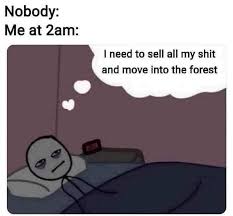
Sure, it’d be nice to make a living out of this one day – to write, to discuss, to think aloud – but more than that, I want to connect, to help people, and to learn from each other. I’m not trying to sound philosophical, arrogant, or intellectual. I just try – through a mix of honesty and self-irony – to reach those who, similarly to me, hid themselves in the quiet dark corner that life threw them at.
I hope I haven’t confused you more than usual. I won’t waste your time any longer.
If you missed the last edition, check out My Family – Who Am I? How Do I See Myself In Them? A Saga Like No Other… (This one in particular is a rather special blog where I talked about my 25th birthday, my roots, and the strange, beautiful mess that made me who I am.)
And if you like what I share, Subscribe to My Newsletter – the daily, shorter, sharper, filled with my interpretations, texts that might just make you pause and rethink (hopefully they do). I’ve prepared a quick guide that I personally use and still find valuable. Stay tuned for more reflections, ideas, and perspectives that’ll help you see life from a different angle.
Now, let’s not waste more time. Let’s dive right into the heart of today’s topic.
Why do we defend our fuck-ups? Why do I? Let’s talk it out, no bullshit, just me, you, and this barstool – or whatever you are sitting on.
Pride
I’m not one of those people who like to publish material just for it to be consumed – whether it’s text, audio, or digital content. I’d rather explain how and why I felt something, and let you experience it for yourself – if you choose to – in a way only you can.
So, instead of going into specific details, I’ll focus on the context of what was said and use a few examples that fit within the frame.
The commissioner’s wife’s words hit me like a spear. I’m a living witness – and, more precisely, a victim – of what they discussed. Now, I won’t throw the hot potato into anyone’s hands, because outcomes are never one-sided. But I will emphasise pride – one of humanity’s greatest plagues, though not the only one – and the parental responsibility so many people take on without ever truly wanting to.
(And we all know how well we do a task we agreed to only out of obligation, with zero desire behind it.)
Still, it doesn’t matter whether we want to, don’t want to, can, or can’t – especially when it comes to raising another human being. We all claim we’re giving our best, that no one could’ve done better under the same circumstances.
But pride – yeah, pride – Is one of the deadly sins for a reason.
If you’ve seen SE7EN, you probably remember the scene where John Doe brutally mutilates a young model’s face and gives her a choice: live disfigured or die by taking the pills. If you guessed she chose to live, you’re wrong. She chose death, showing how pride can consume us so deeply that we’d rather die than face ourselves in a mirror.
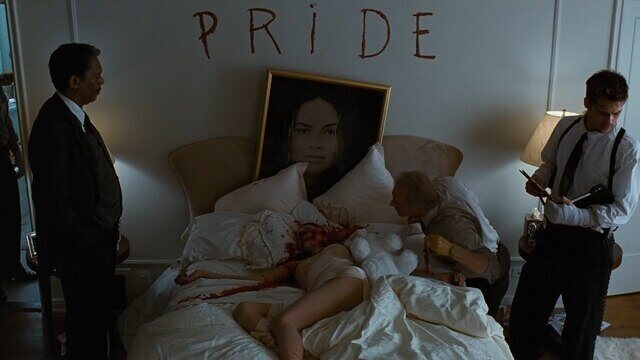
In today’s context, pride has a different face. It’s not about appearances; it’s about how you feel when you’re alone with yourself – or with someone who won’t stop coming at you.
Now, I have no idea what it’s like to be a parent. But I am highly critical of this group – because too many exaggerate what they’ve done, what they’ve given, and what they’ve produced. They are those who chose this path, yet they are unsatisfied with the outcome, which is dumb and stupid… and a little funny.
No one’s ever ready for what’s to come, no matter how much they try – or in my case, postpone it until it arrives. But that day always comes, and with it, every ideal you’ve built collapses. Again, I’m only guessing here – but still, criticism is necessary.
Without it, people rarely realise what they’ve done.
Pride is frightening – especially to those around us – because a proud person doesn’t hear words. Or maybe they do, but only their own. They’re always right, always ready to debate, always sure they see what others can’t.
They want a normal life – naturally, better than normal – but they don’t realise that everything they do keeps them further away from it.
Then comes the second problem: society.
We’re all part of one living organism, whether we like it or not, and that organism evolves in cycles. Our cycle, like many before, runs on hierarchy. We live in an age that pretends to care about everyone but acts quite the opposite when it matters.
We strive for ideals, demand that others behave a certain way, but only a few truly live up to their own standards. The rest feed off the efforts of others, doing the opposite of what they preach.
So here’s where it gets messy. These people, who were once children, are now supposed to raise children of their own:
• But what exactly are they teaching them?
• What kind of morals are they passing down?
• What can you really learn from someone barely affected by anything beyond their own life?
Even when they do care, it’s usually because something directly affects them.
And the most tragicomic part? Despite everything, it’s precisely these types of people who talk the most and do the least.
In my opinion, pride shuts us down – my dad, me, Billings in Silo. Kat’s right: pride makes you blind to what matters – family, truth, your kid’s future. I love my Dad, but his pride’s a wall. In fact, mine too. I’ve defended dumb choices—lied, dodged, thought I was right. Whatever was supposed to hit, hit anyway.
What do you think, BOIS and GALS?
• Is my point of view valid?
• Do you see the same behaviour – the same hollow mechanisms?
• What pride blinded you or someone dear to you?
• Or maybe you see things differently?
Qualification
The end of the previous point left us exactly where this one begins. Qualifications’s another beast. Everyone’s acting like they’ve got a PhD in life, but who’s really ready? Nobody. And when I say nobody, I mean NOBODY. If someone preaches the opposite… stay put.
I know this may sound silly – since I define myself as some sort of writer (even if only self-proclaimed) – and my thoughts should, theoretically, flow smoothly and consistently. But the truth is, I try to run this blog like a conversation between two or more people. And if you’ve ever participated in a real discussion – and I assume you have – you’ve surely noticed how easily we stray from the topic, despite our best efforts.
That, in itself, says something important. It happens most when conversations are on a higher level – when both sides actually listen and respond. But in most of our lives, that’s not the case. And that’s the point I’m trying to make here. No one is really taught what to do or how to act. Still, everyone has a head on their shoulders and must learn through their own experience. By “them,” of course, I mean us.
That’s what qualification is about.
You don’t have to be perfectly qualified, but if you’re going to do something specific, it’s good to have a basic sense of what, when, and how. And if you don’t know – then know who to ask.
It’s easy to say, harder to do. One thing to talk, another to act.
Here comes the interesting part:
Even the most unqualified people can sometimes do the same job as those who are qualified. History has proven this countless times, and people rarely change their patterns. In the end, results don’t always depend on skill. Yes, the qualified tend to lead the rest of us forward, but some of the greatest names in history are descendants of the unqualified. The important thing is to work relentlessly. Those who never stop moving survive.
Often, it’s the less qualified who work harder. The highly qualified, on the other hand, tend to grow restless, to seek fulfilment elsewhere, to chase new challenges. So, whether qualified or not, we’re all part of the same story – each contributing in our own way.
Not everyone can be a “unqualified” legend such as Steve Jobs, Michelangelo, or Malcolm X (and honestly, I can’t think of an Asian of that same calibre… maybe Jackie Chan?). Still, everyone contributes and destroys – some more, some less – but all together. (With each other or against each other)
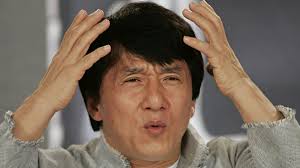
The truth is, if you want something, you don’t wait for a diploma; you work your ass off – whatever the case is. Dad wants me to be “qualified,” stable, but his advice feels like a cage. Silo’s Billings, proud of his Chief Commissioner badge, thinks he’s got it all figured out. Kat’s words slap: “Think about your daughter.” Qualifications don’t mean shit if you’re not there.
A coin has two sides, and both aren’t always visible – depending on its position, or yours. Yet no matter which side you hand over, it still represents the same value. (Unless your coin’s a lev, which will soon disappear anyway – but that’s a stupid example… and we’re not talking about coins, are we?)
So the real question becomes:
• Should you be qualified?
• Should you want to be?
• Or is it enough to simply define yourself as such?
Which one matters more? Which is most accurate, or easiest, or hardest, or truest? (I hope I’m not confusing you as much as I’m confusing myself.)
Even the qualified wouldn’t give you a clear answer. Sure, they’d try to find the right words, and the best of them might even get to your perspective with carefully chosen ones. But what’s the point of not being open with someone and still expecting trust? And if you do gain it, what comes next? Do you make up for your mistakes? Through action, through words? Maybe both. Or maybe not at all.
Now that I think about it, unqualified people are often the easiest to forgive, and they tend to do more than they’re expected to. They rarely get praised, and when they do, it’s rare enough to mean something. I’m not saying that qualified people don’t work hard or can’t apologise. It’s just harder for them because they’re used to praise – often flattery. And when you’re constantly told you’re great, why bother apologising?
Still, I’ll end with this thought: a person can be their own best critic – If they’re honest enough. But we’re not built to survive constant self-criticism. That’s why we’ve endured as a species – we’ve learned from the mistakes of others, those who walked similar, though not identical, paths.
I know I said I’d stop there, but really, this section on “qualification” can’t end without mentioning parents.
To me, the parental “profession” isn’t about whether they did a good or bad job, or how qualified they were for it. What matters is that they did it anyway. They showed up – sometimes more, sometimes less – and thanks to them, there’s what we call “new life.” Some say that life should be perfectly organised, that every child should have everything they need. But I’d argue otherwise. No matter how structured someone’s upbringing is, real life will always bring its own chaos.
Sooner or later, in one way or another, everyone meets the raw and harsh reality of the world outside that protective ring. Whether it matters when or how – that’s up to you to decide as always. Draw your own conclusions.
So, what would you say, BOIS and GALS? Does it really matter how qualified a person is to live the life they want? And what does “qualification” mean to you?
Fun fact: history shows that those who became the elite were the ones who understood change faster and handled novelty better. But does that mean everyone else lived worse?
So what truly determines the quality of life?
What the elite defines and enforces – or what the individual builds through struggle, self-doubt, and defiance?
Let me phrase it differently:
Who determines the quality of life – the ones dictating from above, or the one wrestling with himself and the world that doesn’t understand him, creating his own standard from the ruins?
Consequences
Consequences aren’t fair, but they sure as hell are real.
I think the first two points have explained my views well enough so far, but now it’s time to reach the climax of today’s blog. And climaxes are always good… so good… finger-licking good. (Too much?)
I know the topic has drifted far from the original idea of parenthood and into something broader, but I don’t think that matters. What matters is the information itself – what’s available, what’s being shared – and today’s topic is no less serious than any other. Whether it hits harder or not depends on you, the reader, and on anyone who’s lived through something similar.
It doesn’t really matter to me. I’m speaking mostly from my own experience. I consider myself a realist; I know how much impact my actions – and the actions of those around me – have had. People don’t like to admit that. I know because I am a person, and for a long time, I didn’t either. But eventually, something shook me hard – like a ripple that turned tsunaminal – and things suddenly shifted.
So let’s talk about consequences more seriously.
In my opinion, parental consequences are among the most significant in any person’s life. After that come the intimate ones – and even those often trace back to the family. It’s exactly what we see between Commissioner Billings and his wife. She believes he should take greater responsibility for himself because what he does reflects directly on their child.
I won’t talk again about how my parents influenced my life. Instead, I’ll borrow examples from elsewhere. In this particular case, let’s rewind to the 1960s.

Everyone’s heard of the hippies – or more precisely, the hippie movement. Like every movement that sparks change, it gave birth to something bigger than itself. But the people behind it rarely understood what they were creating. Nor did they want to – until it was too late. And when that moment came, it was too late. So they just went with the flow. Some walked away with scraps, others fully satisfied – depending on which side of the revolution they landed on.
I mention the hippie movement because it’s what indirectly gave birth to the proletariat.
The hippies were, for the most part, children of the rich rebelling against their parents, declaring that they wouldn’t live like them. Ironically, decades later, many of those same people – or their children – became the ones holding the real capital which they initially fought against. Their offspring rule us now. Children who were never abused, never truly disciplined, and while I’m not saying they should have been, it does complete the picture, doesn’t it?
And whether we like it or not, that’s a fact.
Some parental mistakes lead to others, and the cycle continues. No one’s exactly to blame – everyone rebels against someone, somehow – but rebellion itself always survives, whether useful or not.
I see the same thing here, in my country, and across the Western world.
That same proletariat are the children of left-leaning people – descendants of those same hippies who once shouted against capital. But they’re not truly anti-capitalists; they simply play the role that suits them at the moment. They rebrand old power as new, just to seize it and enjoy the same, even, and even greater, privileges than their predecessors. They’ll forget the songs they once sang, but never the taste of freedom – at least their type of freedom. That one’s too addictive to let go.
And so it is today. You can clearly see the world we live in – and why we suffer. Yes, suffering might be a personal choice, but it’s also an inheritance; a burden of others’ mistakes that someone eventually has to carry. My generation – and several before and those after – have to live in this mess now, and on top of that… to fix it.
It seems the world these “parents” created is still comfortable enough, since no one’s really complaining. Right? Or maybe those who complain will eventually find their match – one way or another.
Anyway, I might have strayed again (surprise, surprise), but now you see how important it is to understand the consequences – or, if you can’t fully know them, at least imagine them. Visualise what your actions might lead to before you take them. (That last one is important)
So, BOIS and GALS, what do you think? Anything to add? Anything to challenge? What are some consequences that shook you awake? I’m right here, waiting for you.
The Aftermath of Doing and Not
Doing or not doing – it’s all a gamble. Parents, hippies, me, you – we all screw up. It’s the same old cycle re-painted and re-polished.
Everyone who takes on responsibility makes mistakes – whether it’s parental or something else entirely.
But even those who avoid responsibility make mistakes. So, should we blame the ones who at least tried?
What if they’d passed that weight to us instead?
We can’t really condemn the “culprit” who dared to shoulder the burden. If we had that same courage, perhaps we’d be first in line for power ourselves, don’t you think?

Some might mention honour, morality, or virtue, but the truth is, those tend to vanish when there’s something strong enough to silence the noise they make. Yes, the children of those children may now rule us and seem clueless, but can we really blame them? (Well… not entirely.) They carry what they’ve inherited – often reshaping it into a model that suits them, fighting what they hate only to become it.
They may claim to care about us while sipping their coffee and scrolling their phones, but does that make it true? We vote, too, claiming to care about our future… and then promptly forget everything once the ballot’s cast.
Whatever we do, we’ll keep making mistakes.
That’s the interesting part: making mistakes doesn’t mean we’ll always make them. And even when we do, someone eventually drags us out of the mess so we can live peacefully for a while. Not that life isn’t already peaceful enough – if you ask me, it’s too peaceful. But that rhythm of rise and fall, calm and chaos – that’s how it’s always been, and likely how it will stay.
(Unless, of course, artificial intelligence takes over and changes the game – much like Homo sapiens did 50,000 years ago.)
I know I’ve spoken broadly today, and wandered off-topic more than once (sorry about that). Still, I think the final product isn’t half bad. It’s given me a lot to chew on, and I sincerely hope it’s done the same for you.
Silo’s Billings might lose his kid to pride; I don’t wanna lose myself.
Like always, I’m including a poem to accompany the blog. This one came super easily, and I think that happened because I thought about the topic of this blog, which gave me enough time to paint certain images. The goal was to include parents, poetically not aiming specifically at them and simultaneously show the bigger picture. As a future philosopher – fingers crossed – it’s debatable to say if I achieved it, so please be my guests.
Pride and Prejudice
Pride is a burden, so is qualification —
Two are too few, and three too many.
A gift, a love — all false creation;
I suffer, I suffer; battles are plenty.
No single answer feels quite right,
nor any path I’d call straight.
I’ve heard of guilt, I’ve seen a light —
The coin has worth, yet carries no weight.
What was meant, and what was done —
Who, in truth, has ever prevailed?
Is there none left to cut out their tongues?
They left me here — in pieces, derailed.
Therefore, I ask: what fate will I earn?
I do not know; may God only say.
Am I ready to suffer before I learn?
I smell coffee, but tea soothes my pain.
Why must I always find someone to blame?
Why can’t I stop chasing guilt within them?
I’m but a rat, crawling out of my shame —
hoping my path leads elsewhere than hell.
Well, that’s it, my dear fellow sufferers.
I’m glad I once again had the chance to print – well, perhaps that’s not the right word unless digital ink counts – my thoughts and send them out to you.
As always, I’ll leave you to draw your own conclusions. I may be completely wrong (likely am), and I’ll certainly make my own by rereading this piece a few times – mostly being dissatisfied with the nonsense I’ll discover I’ve written.
P.S. My academic year has officially begun, so I’ve decided to limit the blog to two posts per month (for which I apologise), but priorities are priorities. You’ll find new posts on the 7th and 23rd of each month. (The 7th will feature shorter “phrases,” while the 23rd will be reserved for the usual long-form reflections.)
Consequences burn, but I’ll still fight. BOIS and GALS, pride’s a blindfold, qualification’s a trap, consequences don’t care. I’m 25, still learning, still swinging. Look at your ripples -what’re they hitting? I’m a mess, but I’m here. I hope you are as well.

May the force be with you.
May reason be with you when you say “yes.”
May truth guide you when you choose your path.
Thank you for your time. See you soon!
Sincerely yours,
Ivaniel “the unqualified, unpretentious, and awaiting the consequences” Georgiev


Leave a Reply