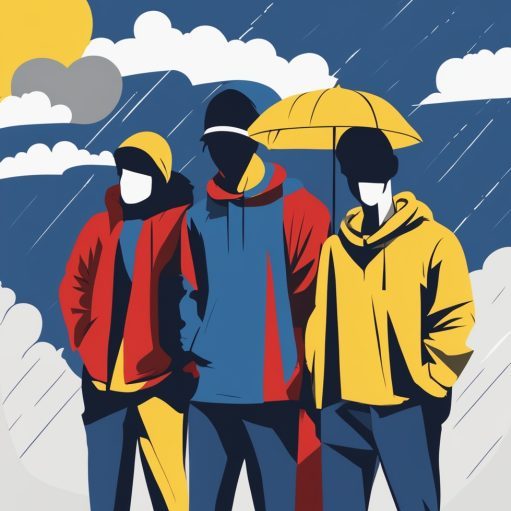
DABOISASTRGLEDT (phrases) – by Ivaniel “Ivo” Georgiev
DABOIS, it’s good to be here again.
Sofia, October ’25. Imagined corkboard: Prince pages, Gen Z slang, scraps, and a lightbulb doodle here and there.
Bht pins are scattered. Red string arrows: REALIST ←→ DREAMER. Centre pull-quote: “He suffers…with their joys.”
A lot to start with, right?
Yup, it’s yet another blog, another phrase, another round of questions – and maybe, just maybe, a few answers hiding in between.
Today’s piece is a bit different. Fewer jokes this time (I said fewer, not none).
Why? Because this one’s been sitting heavy on my mind.
Over the past two weeks, I’ve been reading The Prince by the notorious Niccolò Machiavelli, and somewhere in the middle of the book, a line from a biographer describing the Florentine caught with the uppercut (big time):
“He suffers with the sufferings of his people and rejoices with their joys.”
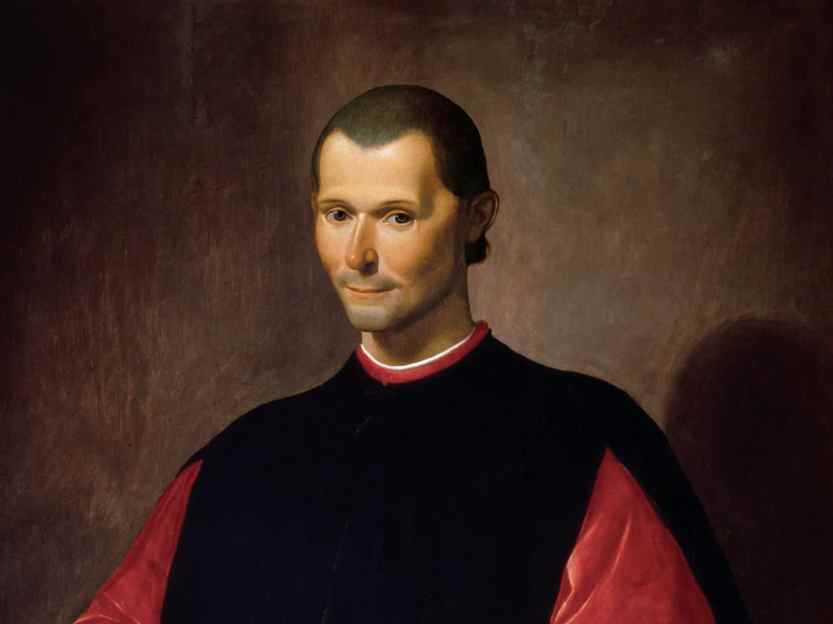
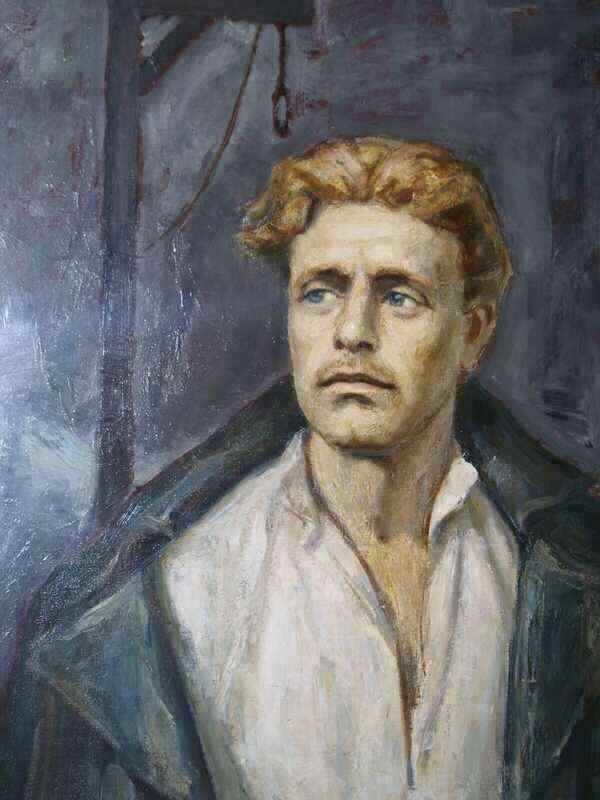
Somehow, this felt deeply familiar. It reminded me of our own greatest patriot and freedom fighter, Vasil Levski.
And that, in turn, made me wonder: where do I – where do we – fit into this picture?
I’m not a fierce freedom fighter (God forbid, if I am one at all), but I do share something of that same belief.
To me, it’s important that both suffering and joy are shared in public life. Therefore, if you manage to climb out of the swamp, you shouldn’t forget those still sinking – especially the ones who might never get out.
Anyway, Machiavelli is often seen as a realist, even a political scientist, but I don’t think that’s quite true.
A scientist is someone works with evidence – they study cause and effect, test, and observe.
A realist, on the other hand, judges truth by its practical limits; he doesn’t experiment, but he still looks from both sides.
So, who was Machiavelli, really?
Historians and theorists call him the founder of political realism because he separated politics from traditional morality. He wrote of power, necessity, and prudence – of politics as its own separate field with its own rules.
And so The Prince is often read as a manual for tyrannical governance, or, in other words, a cold instruction book for rulers and power.
But to me, Machiavelli wasn’t a scientist or even a realist. He was, first and foremost, a dreamer – an a priori dreamer, as philosophers might say.
Someone who imagined truths before testing them. He built his theories from experience – his own and others’ – yet forgot that no two lives unfold under the same stars. That’s what makes him fascinating: his conclusions are brilliant, but his foundation is almost always personal.
The truth is, I see myself in that profile – truly, I think that’s a goos quality… but I have to remember that it shall not be the only one
I hope these words make you ask questions that matter to you, and maybe even push you toward something real. I have my hopes, as you may know, and one of them is that this blog becomes a space for reflection and, above all, for accepting truth. Most importantly, not just for me, but for anyone who finds a piece of themselves here.
Anyway, Machiavelli lived in the late 15th and early 16th centuries – a Renaissance man who could have chosen any path, yet died in poverty, leaving all his children in hardship. He’s remembered as a writer of harsh, controversial words, the subject of centuries of debate. Critics have always outnumbered admirers. And still, those who knew him described a cheerful, kind man who never wished anyone harm.
Still, no matter how much we talk about him, it’s hard to truly know “the man” behind the man – that is an evelast sotuation with people.
And if I know people, even a little, I know that there are far more Machiavellians in the world than we realise – not in what he preached for, but who he was.
Quick aside: if Machiavelli were Bulgarian today, maybe he’d be like Kiro Breika; a Bulgarian YouTube sensation: loud, harsh takes, perhaps a kind heart underneath. (This joke is very demographical, so don’t mind it really.)
Before I continue, I have to say – thank you. (YES, I’m never gonna stop!) To everyone new, returning, and devoting their time.

As Gary Vee once said, “There isn’t anything better than helping people.”
And the best way to do that is to learn from each other. What that means exactly, time will tell, but for now, I’m sure this doesn’t feel like the wrong path. I must say that when I say “help,” I don’t mean some academic or artificial sort of help – not the kind that happens in lectures like the one I’m currently ignoring.
I always thought of the idea as life being school or “the school of life” – those daily lessons that shape us, especially the ones we can’t name until much later.
And I may philosophise a lot, but I’m far away from being a philosopher, at least in the academic sense – I know, I know… always that academic comparison I love to tangle with. But yes, I consider myself a philosopher, at least in its true sense – a lover of wisdom.
How wise I actually am is debatable; some will think I’m arrogant, others naïve.
But through self-irony, I try to uncover the small truths that my experiences reveal.
For now, that blend of honesty and humour helps me speak most freely – if you know any tips and tricks, please share.
If you missed the last edition, check it out @ Running Away as Fast as You Can: Until… When…
And if you enjoy what I share, subscribe to my newsletter – you’ll get a free guide as a small thank-you, plus short reflections and tools that might help you see life from another angle.
Alright, enough delay. Let’s get to the heart of today’s topic.
The Dilemma
The dilemma of all dillemas: a phenomenon as old as thought itself.
Some people live in a constant state of chaos, unable to take a certain direction, and so the dilemma follows them from the beginning of their adult life to its very end – some of it was even builr within ourselves without us realising while growing up and maybe even before we formed as a being in the womb. (And I’m no exception.)
Therefore, a person must be able to define what they think and do – qt leadt if they want to suceed in their self-development.
I play with words very often and what I know precisely about them is that they were invented by someone, but once born, they follow their own law and order. And the issue with that is, we’ve started using them however we please, so the question that accordingly follows is: how far will that go?
The answer isn’t far off. In fact, it’s quite obvious, especially when you look at modern slang – you know, Gen Z style.
Why am I bringing this up? Because it’s all part of the same dilemma — this is just a point along that cast line. We’ve begun to reinvent meanings for things that have already been named, discovered, and used for generations.
Think of it this way: Tesla → direct current. Edison → mass scale. Lightbulb works. Boom. All said and done.
Now, does someone need to come up with something entirely new when everything seems already invented? Absolutely – that’s how progress works. But should they use it in a way that’s, let’s say, unnecessary? Unnecessary because it already serves its basic function.
Upgrading and repurposing are slightly different; I don’t want to give the wrong example here. Imagine someone trying to find “a new purpose” for the light bulb. It will still shine – just now with a “more modern” glow. And this isn’t about innovation; it’s about confusion. Of course, there might be something useful in between, but at the end of the day, it’s all for the money. (I hope this example brings to mind a familiar situation you’ve seen play out – maybe more than once.)
What I’m trying to say is, this is what we’re doing with language and ideas.
The words our ancestors used to build the world we live in now seem outdated. We’re ready to turn our backs on everything familiar, to invent something new – in the name of what, exactly… a revolution?
Because if revolution is a continuous process, we can’t deny that some revolutions lose their way. They gain popularity among the “new citizens” precisely because they inherit an easy life from those before them.
And if we strip away all the words like “skibidi,” “rizz,” and “slay,” what remains are the words ordinary people still use every day. And by spinning those words in circles, redefining them endlessly, we trap ourselves in a loop – no exit, no real direction.
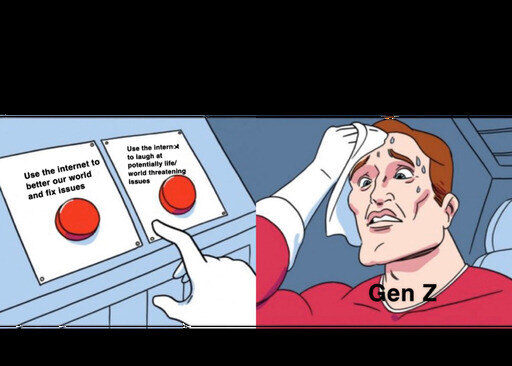
Don’t get me wrong. You can use whatever you want, however you want – freedom of speech isn’t the issue – but some things have a time and place.
After thinking long and hard about this, I came to a simple truth: It’s not what you say that matters most, but how you say it – and then of course, what you do.
Because whatever you say, it all comes down to what you’ve accomplished at the end of the day – and I know a lot of people play with “accomplishing” these days, but an accomplishment may be something insignificant in lots of cases.
Freedom of speech isn’t the problem as I said. Words and thoughts come first. But if you don’t understand what you’re saying, how can you be sure what you’re doing?
History offers plenty of examples.
I think of the craftsmen back in the day – those who developed their skills to perfection within their craft, but often neglected to think beyond it, or to communicate clearly. Over time, that problem faded, but new ones appeared – ones we can explain, but not always comprehend.
And that brings me back to Machiavelli. The man who found a formula for surviving the virus that eventually consumes every living thing – power.
But when we say formula, we shouldn’t assume it’s the best or the only one. He himself faced a dilemma he didn’t fully understand. He professed principles that seemed right in theory, but in practice? Not so much. So, e’ll never truly know how he saw himself; his writings only reveal part of the picture.
And therefire, when we talk about him, he shouldn’t be assigned a fixed label.
He wasn’t realist or dreamer; he was both, and neither.
A methodological realist when it came to politics: rejecting utopian morality and insisting that rulers must ensure power and order by any means that produce real results. And yet, a dreamer – perhaps even an overly ambitious technician – when it came to execution. He overestimated rulers’ power to change society and underestimated the inertia of human nature.
This tension explains why some see him as a cold-blooded scholar of power, while others see an impatient visionary who dreamed of a reborn, united Italy through decisive – both violent and infused with struggle – reform.
And here comes the big question: Where do we stand on that spectrum?
I can’t speak for everyone, but what I see isn’t promising. Most of us say one thing, do another, and when asked what we meant, our explanations are long, foggy, and full of detours – I say us because its true.
As you know, I’m not one to attack others for no reason. My arguments come from years of observation – like Machiavelli, I’m an a priori type of person.
I explain life or at least my understanding of it, based on experience, mine and others’.
The dilemma didn’t appear today – only its answer did.
This is a side note, but when I took a creative writing course with Ivo Siromahov, he told me something I’ll never forget: “It’s extremely important – especially for a writer – to know how and when to use the words you use.”
That lesson left a mark on me, and even though I tend to believe it didn’t change how or when I use words it actually did.
But as they say, “Everything in its own time.” That’s why we keep learning as we go.
So, BOIS and GALS, one thing I’m certain of: something is coming. What it is – good or bad – depends entirely on how well we understand the dilemmas we’re in.
The Realist
He’s a common type of person, or at least, that’s how it seems at first glance.
Everyone claims realism. “I know what needs doing.” “Here’s the formula.” But most? They’re not realists; they’re simple pattern collectors.
However, this is a generalisation because the truth about people is quite different. That’s why is it so valuable to recognise who someone truly is, what they say, and what they do?
Well, this too depends on the life you lead – you may not need to account for that at all… if that’s what you believe in. But for me, it’s crucial to understand why people behave the way they do. That awareness helps you avoid awkward situations — the ones you could’ve avoided if you’d noticed the mechanisms at play.
Now, I’m not saying that these people are the realists; they just represent something else entirely.
And now is the time to ask: What exactly makes a realist a realist?
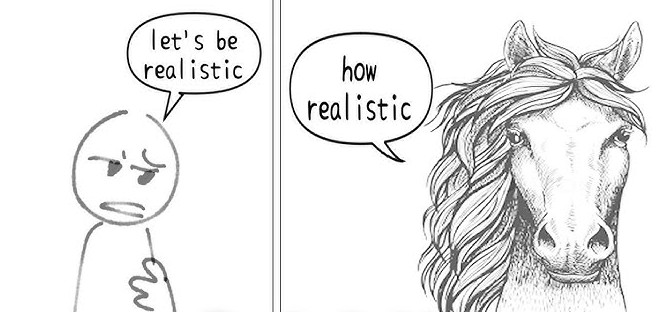
A realist bases their decisions on limitations, probabilities, and cause-and-effect mechanisms. They prioritise evidence, counterfactual thinking, and choices that remain stable even under uncertainty. They see ideals not as destinations, but as tools – to be reconciled with what’s actually possible.
Or, to put it more simply – as I mentioned in the introduction – a realist is someone who draws not only from personal experience, but from the experiences of others whose paths they believe to be well-trodden; they gather facts from several different sources and only then decide how to act in a given situation.
1. The Realist’s Methodology
- Gathering diverse evidence and testing hypotheses against alternative scenarios.
- Making clear assumptions and then looking for ways in which those assumptions might fail.
- Valuing incremental experiments, pilot policies, and mechanisms that produce reproducible results.
2. Characteristics of the Realist
- Analytical curiosity.
- Tolerance for ambiguity.
- Aversion to surprises.
- Credibility with stakeholders who value predictability.
3. Weaknesses of the Realist
- Over-reliance on past data.
- Conservatism that blocks unknown possibilities.
- Paralysis by analysis.
- Moral poverty occurs when pragmatism becomes an excuse for gaining momentum.
And that’s why the realist is more a posteriori than a priori.
I used to consider myself a posterior person back in the day. But no. I just don’t fit the frames of one. I’m more like Machiavelli – the man, not the myth.
Experience first, then story.
As always, I might be wrong, but you, BOIS and GALS, have the right to express yourselves freely. So, I await your thoughts, criticisms, and additions on the subject.
The Dreamer
This is the so-called idealist – maybe a little different than it, but indeed “a kind of.” That’s why I prefer to stick with “the dreamer.” He is often called a fool – a person who imagines things because their world is crooked.
But we have to agree that’s not entirely fair. Everyone lives in their own little utopia – some gather enough followers to make a shared one, and for a while, that shared utopia fills the hollow places inside them.
How long does it last? That’s another question.
If I’m honest, I can call myself a dreamer. I’ve spent my life wanting things that looked impossible (like a 25-sm/10-inch love pen). Joke aside, this is not an easy path. It’s very hard to turn dreams into reality – especially when the dream has to 20sm difference.
But no, dreams crash. Often. Very often. Not like that Air India Flight 171, earlier this year, but pretty close (yeah, enough jokes.)
Still, a person can’t be only a dreamer. I’ve seen realities that snap fantasies unless there’s a loophole to exploit. Dreams matter, but dreaming without a map is like putting a blind man in unknown terrain and handing him a compass with no legend.
I have hope, I just don’t live on expectation alone.
That’s why I argue that most people aren’t so different from me. We may vary in degree, but not kind.
Think of it like astrology: sun, moon. rising, whatever helps you map the differences (ask a lady friend, she will explain better because I think I messed uo here).
The point is: I’m a dreamer and a pragmatist simultaneously; I chase certain goals, but I accept compromises to get there.
So, what drives the dreamer? Dreamers focus on opportunities, values, and change. They value vision and meaning. They see limits as puzzles to be rethought. They love big, unique solutions.
1. The Dreamer’s Methodology
- Synthesise stories and examples into a unifying thesis.
- Use moral plausibility and imagination to create action that resonates.
- Favour decisive, transformative steps that connect social meaning with practical goals.
2. Characteristics of the Dreamer
- Big imagination.
- Comfort with normative discomfort.
- The knack for attracting commitment through purpose.
3. Weaknesses of the Dreamer
- Underestimates systemic inertia and coordination problems.
- Persuades through charisma and anecdotes more than data.
- Struggles to turn vision into lasting institutions.
So, extremes are dangerous. Too much realist kills possibility; too much dreamer misses the system. I call myself a dreamer, but not the kind who ignores friction.
Small Bulgarian detour: historically, we’ve never been extremely “big” in one mode or another. That middle temper matters. It shapes how we dream and how we act – and that’s why we are stuck as a nation in the middle (the problem is that “the middle” has top and bottom parts too).
BOIS and GALS, how do you read people and what you do with the gathered information?
I’m may like some psychics, but I’m not one. What am I is, being decent at spotting the pattern: What people say vs what they do.
Watch them in family, at work, among strangers. Form several hypotheses and pick the most likely one. That’s the short version of practical dreaming.
The Ever-Lasting Dilemma
And yes, if you thought dilemmas like this had a final solution, you were mistaken.
Maybe, just maybe, I’ve drifted at times, splitting off like a river through its many channels, but the current still leads back to the same sea – or ocean.
Since I’m writing this text under the shadow of The Prince, I must note:
Machiavelli rarely argues through abstractions. He grounds his points in vivid cases, anecdotes, and the deeds of rulers. He trusts experience and the study of history as the true source of political knowledge, focusing on human motives and recurring behavioural patterns. He pays close attention to character, incentives, fear, love, reputation, and habit – psychological forces that drive social systems as much as laws do.
But even Machiavelli makes two familiar mistakes.
First, as mentioner shortly earlier, he overestimates the disciplining power of elites and states, assuming that bold reforms or controlled violence could reshape societies despite deep-rooted class interests and social inertia.
Second, he generalises too easily from exceptional cases – the Romans, Cesare Borgia, city-states – and treats local victories as universal truths. In doing so, he leaves his “sovereign combination” of power and consent vaguely defined.
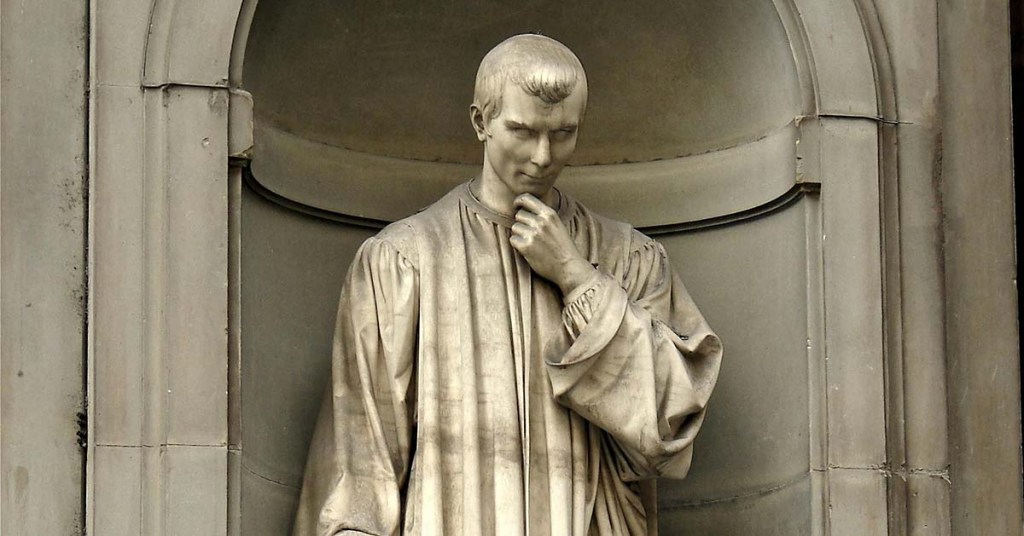
Still, his goal wasn’t tyranny – it was greatness and security. He was often deliberately provocative, using bold rhetoric to jolt complacent rulers into reflection. His virtue was civic and psychological: he believed institutions could cultivate habits that align personal ambition with collective stability. In that sense, Machiavelli’s work was not anti-human – it was hyper-human.
When you apply this to his life, you see that he blended realism’s micro-foundations with the dreamer’s grand prescriptions. That hybrid explains the eternal ambiguity around his name.
Try the exercise yourself and maybe put on the Florentine’s shoes.
- Was his optimism about transforming elites just a rhetorical push to awaken them from comfort?
- Or was his real wisdom a kind of epistemic humility – designing institutions that make the fewest assumptions about human virtue?
I followed this trail not for Machiavelli’s sake, but for ours – the realists versus the dreamers and whatever else there is.
Because, as I said in the beginning, everyone claims realism today. Yet realists don’t back down – they test, measure, iterate, verify. Dreamers, meanwhile, dominate by sheer volume; they fill the air with conviction and feeling. I used to think I was a realist because I saw things as they were – a little did I know.
That’s why seeing or feeling is not understanding. My “realism” was built on experience – mine and others’ – filtered through my own narrative. I forgot to account for society’s inertia, the collective organism we move within.
So maybe I am not a realist at all, but a pragmatic dreamer. And if I know people, most of are as well. We each believe we know better. We have plans, intuition, our own tiny worldviews. But that’s precisely the eternal dilemma: we can’t escape ourselves.
Important to remember:
- Realism without imagination breeds stability, but also sterility and injustice.
- Dreaming without realism breeds inspiration, but collapses under unworkable constraints.
Therefore, to build something lasting, we must blend the two: a vision worth following anchored in systems that respect human limits.
As always, I end with a poem with the addition of a haiku – both confessions and a mirror.
Why Am I
I’ll follow my dream until the end –
prepared to pay its dearest cost.
Headstrong, honest – making amends;
to help, though help… itself may throb.
And so I wander, deep in thought,
through the dominos of past mistakes.
I walk, I watch, yet still get caught;
I tried, but the abyss… is my escapy place.
For I have walked this path alone,
through thick and thin – the twilight’s hush.
I know – but do I… truly know;
I’ve chosen wrong, yet still I rush.
Now drowned within the deepest streams,
I drift by choice, yet torn apart.
O sleepless nights, o restless dreams –
I fight the plague inside my mind.
The current drags – it pulls, then breaks;
from shore to shore, I’m cast again.
No strength remains, no will awakes –
And if I die, I’ll die a black swan then.
So I must rise, and shake off the dust,
step through the thresholds, learn anew.
Though silence reigns, I know I must
seek the unheard sound – for all… of us.
Like that notorious, awakened Florentine,
reviled for truths his tongue has spun,
a man of thought, yet trapped between
he who justice sought, but left undone.
And just like him, I write my prayers;
The words are mirrors – reflecting my pain.
Flawed may be my method, still I care –
the quality to compromise, is most humane.
For life itself was oddly made
by someone perfect, cruel and kind.
Like rivers flow, then gently fade –
where one life ends, another’s lined.
Only a few are those who truly live,
a humble handful – vanishing, but pure.
The rest, proud sinners – doomed to drift;
still searching for that nameless cure.
So dreamers seek, and dreamers fall,
in fields of colours only one has seen.
Why am I? Why do I care, why… at all?
I won’t stop – my heart can’t kneel.
Hard
The door stands there.
Two worlds – bitter, tearful.
Measure… then cut.
That’s all for today, DABOIS. There’s more to clarify, surely, but I’ll let the flow of this monologue do its work.
The chaos is here, yes, but it’s real – as real as it gets.
We shift: realist in love, dreamer in work, pragmatist in politics, fool in art.
The key isn’t picking a side. It’s knowing what each costs.
Not every story contains wisdom – until you find it within. Not every experience is the truth – unless you can grasp the truthful part.
Search for patterns my friends; cause and effect; why comfort wins over sacrifice; why systems rot or endure.
And be careful with labels – especially the ones you give yourself because you will mirror them in others too.
Speak. Think. Act. Evaluate. Always.
Thank you for being part of the gang. Until next time!
With respect,
Ivaniel “the dreamer-pragmatist faced with the eternal dilemma” Georgiev


One response to “The Dilemma of Being: Realist vs Dreamer…”
[…] If you missed the previous post, check it @ The Dilemma of Being: Realist vs Dreamer… […]
LikeLike