
DABOISASTRGLEDT – by Ivaniel “Ivo” Georgiev
DABOIS, we’ve got another topic that needs some disclosure, and this time it’s not the usual cup of tea. I’ve touched on politics before through the lens of freedom, but today I’m tackling something simpler, yet far more misunderstood: the “Left/Right” dichotomy.
Most people treat it like football jerseys: pick a colour, hate the other team, and suddenly you are a moral diagnostician – it takes one to know one. And currently, I’m a couch-potato veteran who’s trying to understand why we’re exactly where we were thousands of years ago.
So, what exactly is “Left/Right”? Why do we use the dichotomy without dissecting it? How did we get trapped dividing ourselves? And why does the meaning shift every time the weather changes?
Here’s what I’ve noticed: People misuse it because they don’t look at the philosophical orientations. Each side revealed differences and shared beliefs about human nature that were supposed to unite us, but somehow it turned into a political fiasco.
At their core:
- The Left asks: “How can we make people more equal?”
- The Right asks: “How can we make people more responsible?”
Strip it away, and both collapse into propaganda. The debate becomes shallow, emotional, and pointless, which explains about two-thirds of modern (of all) politics.
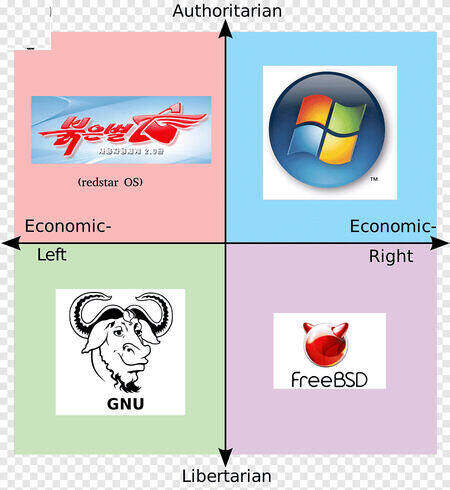
The formal terms appeared during the French Revolution (anti-monarchy vs pro-monarchy), but the tension (equality vs freedom) is ancient.
One accepts the world; the other wants to redesign it (fact vs desire, pragmatism vs aspiration); the Right accepts the world as unequal and understands that power clusters; the Left protests this reality and dreams of eliminating injustice.
Go back even further, and you see the same battle dressed in different clothes:
- Plato vs the Sophists: absolute moral hierarchy vs relativism and democratic persuasion.
- Sparta vs Athens: tradition and order vs intellectual freedom and democracy.
- Optimates vs Populists in Rome: elite stability vs reforms for the lower classes.
Different eras, same logic: reform vs tradition, equality vs hierarchy, the world as it is vs the world as it could be; both sides are half-right and half-blind; both turn monstrous when they forget the other half exists; both are required because without tension, society either freezes or shatters.
That’s the nature of life. That’s why you must verify what you defend and what you attack – never outsource your thinking.
And before I move on, let me say thank you – YES, I’LL NEVER SHUT UP ABOUT IT! I appreciate all of you giving me a slice of your time. My intention is to hand you questions sharp enough to cut through the bullshit – mine, yours, all of it. If something here makes you uncomfortable, good; comfort kills clarity. Still, questioning alone isn’t enough, and action must follow. However, without curiosity, no action ever sparks – that’s the never-ending paradox.
I hope this place becomes something bigger: a space for reflection and an honest confrontation with reality; a place where you learn not just from what I write, but simultaneously from what you discover in yourself. My goal is to help those who are trying to understand themselves and everyone they collide with. And by “help,” I don’t mean academic theory. I mean the lessons you learn when you observe an experience – I call it “The school of life”; Those moments we rarely speak about and the thoughts we hide because they get stuck at the throat – this is your reminder to let some of them out.

I’m not here to preach, but to clarify: by asking sharper questions; by pointing at the places that matter; by forcing you to decide whether what follows is true, false, or somewhere in the swamp between the two. I just love wisdom. Do I have any? Depends on the day. My only promise is to share whatever I find, with a dose of self-irony and absolutely no filters. I claim no expertise – I may be right on some points and completely off on others. Feel free to disagree; that’s simply how we learn.
If you missed the previous post, check it @ The Dilemma of Being: Realist vs Dreamer…
And if you enjoy these topics, consider subscribing to my weekly newsletter – short, digestible, and as useful. Subscribers get access to a small guide I created for myself – one I still use. Expect more tools and stories that will show life from a different angle.
Now let’s gut this beast.
Right
The right-wing world is huge. It stretches across cultures, centuries and shifting forms, but keeping one foundation: it takes human nature seriously. It doesn’t fantasise about what people could be; it works with what they are.
Its pillars (tradition, family, religion, institutions) may look outdated and boring, but they carry accumulated wisdom. These structures survived history’s stress tests. Break them too fast, and you break more than you intended.
The Right assumes people are flawed: selfish, limited, emotional.
If that’s true, then grand utopian engineering becomes dangerous; thus, you can’t build paradise with imperfect tools, and every such attempt to do so has come with a price. Maybe that’s why someone like Trump is possible, because he is a skilful actor ready to eat a bullet for the Oscar (the Nobel Prize in his case) literally – and indeed, people are mesmerised by such “mass appeal”.
Economically, the Right sees free markets and private property as engines of prosperity and freedom: less state, more responsibility; not greed, but incentive. Wealth grows when effort is rewarded and competition stays open.
Why the intense defensiveness? Three reasons:
- Identity: To them, defending the mentioned above isn’t xenophobia; it’s protecting “home” from dilution.
- Success and Freedom: High performers defend the free market because it protects their efforts – and no one likes to pay taxes, especially those who pay the most.
- Emotional Security: In chaos (look around), tradition and hierarchy offer stability. They’re psychological anchors in a world that feels increasingly ungrounded.
Here’s the part people overlook: the world can’t function without a functioning Right. Change without stability = collapse. The Right is the sceptical voice asking uncomfortable questions – or at least it used to (#MemoryMatters).
What makes the Right unique is its acceptance of reality: The world is unequal, and strength dominates. Humans can’t be reprogrammed like software – actually, TBC. Most attempts to “fix” the world are improving it, but in a specific time gap, it seems like breaking it. Either way, the Right defends what worked before because the past is proven, not perfect.
It’s the instinct to preserve meaning and order. The belief that institutions shouldn’t re-educate human nature, but restrain its worst impulses.
Historically, the Right wasn’t one block. Before the mid-20th century, it had two major roots:
- Traditional Conservatism: Hierarchy, monarchy, church, scepticism of mass democracy; loyalty to institutions, resistance to rapid change.
- Classical Liberalism: pretty much what it is today, but ironically, it turned way more “progressive” than expected.
Today, the Right splits into many branches. I’m not going to name them because they are very tangled, and I see no interest in doing so.
Correct me if I’m wrong, but the traditional Right’s foundational belief – to put it poetically – was that society should grow like a tree, not be engineered like a machine. But does the current iteration of the Right still follow this original principle? I argue that the original cause has been superseded, and it is now primarily defined by populism, intense cultural conflicts, and a reflexive backlash against globalisation.
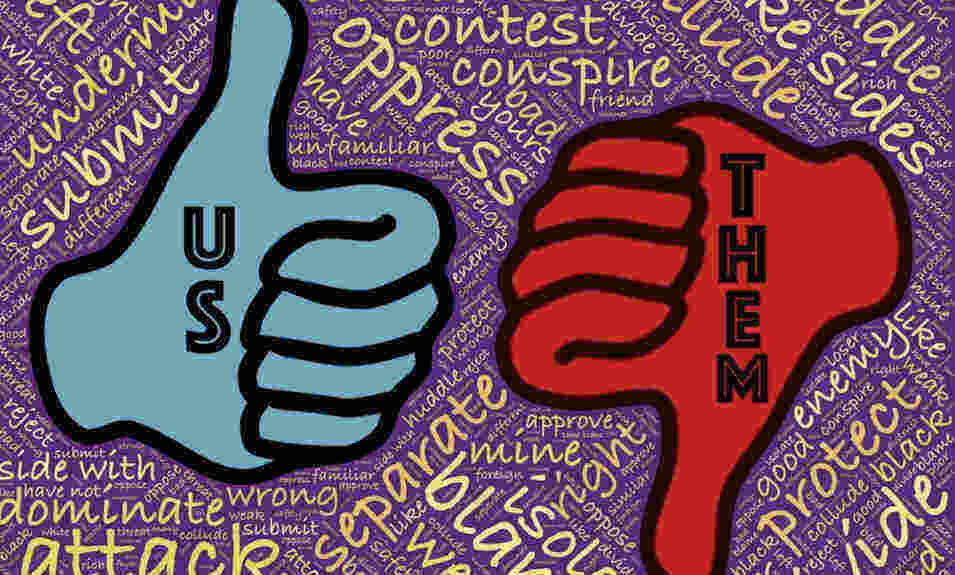
So, BOIS and GALS: Where do you lean? Personally, the Right gets plenty right, and plenty not right… depending on context.
Let’s move on and see what the opposition brings to the table.
Left
The Left are not foolish by default; they simply refuse to accept the world as it is. Their worldview starts with discontent: society is unjust, people must be changed, therefore, the world must be reshaped. That instinct explains why left-oriented movements so often try to redesign human nature itself – and why they usually get stopped halfway.
Lenin is a good example. With fewer than forty thousand supporters, he overthrew an empire. But once in power, he nationalised the entire state, abolished private property, trivialised marriage, and tried to engineer a new society by force. Food was seized, trade was banned, factories militarised, transport collapsed, and reality didn’t wait much to respond.
The irony is brutal: by trying to annihilate right-wing ideology, Lenin accidentally paved the way for Stalin, who fused far-left economics with far-right authoritarian structure into one of history’s most extreme models. Complete state ownership on one side; intense patriotism, hierarchy, and expansionism on the other (the worst of both worlds).
Why revisit this? Because the Left’s core instinct hasn’t changed. It begins with the impulse to “fix” the world, which easily turns to fixing people. And today, that instinct appears again, dressed in the language of modern liberalism – the freest of all free worlds… or at least that’s the sales pitch.
The mechanism is unchanged: equality through prohibition, control, and moral pressure. The Left rejects inheritance because it sees unfairness, but in the process, it often erases continuity, identity, and the psychological scaffolding that keeps a society sane.
Socialism, at its core, idealises the “new man”: someone very enthusiastic and optimistic, yet fundamentally unfree. This idealised citizen must live within a culture of constant moral theatre, because the leftist energy does not sustain itself naturally. Instead, it requires perpetual performance, dependent on slogans, parades, and ritualised public affirmation. Imagine Rockefeller having to beg for public cheers – absurd, right?
And here is the uncomfortable truth: refusing to accept the world as it is is the first step toward dictatorship. When the commitment starts to correct every injustice, the resulting drive becomes unstoppable. The revolution turns permanent, all opposition is recast as wickedness, and the cost of the transformation no longer matters.
Yes, the Left undeniably gave the world weekends, women’s suffrage, and worker protections; yet, they also ushered in the Gulag, the Killing Fields, and the famous “cancel culture movement” that destroys lives before God even has time to take notice (and this ↓).
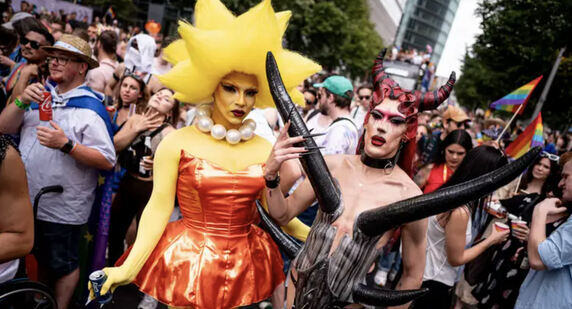
So, BOIS and GALS, which of these patterns do you recognise in your own worldview? What feels accurate, exaggerated, or missing? Bonus question: Is long-term acceptance of a flawed reality moral cowardice or moral wisdom, and why?
Reality and Misconceptions
Politics is often sold as a duel between heroes and villains. In reality, it’s a clash between instincts. And this tension isn’t new. As mentioned earlier, the argument has been replayed across numerous fields since the days of the French Convention. Push equality far enough, and you inevitably restrict freedom. Push freedom far enough, and you allow inequality to harden. The paradox is permanent: the more of one you enforce, the less of the other you can tolerate.
We have to understand that there are no enemies; a society without change collapses into stagnation; a society without preservation burns through its foundations; stability needs movement; movement needs memory. Remove either, and the entire organism destabilises – just like removing half of your personality would make you unrecognisable.
Reality
- One Defines the Other: They exist in a dialectical loop – neither has meaning without the other.
- Both Worship the Same Idol: Their conflict isn’t about whether the state should exist, but what it should do.
- Both Use Populism When Convenient: It’s “the 99% vs the 1%” and “the people vs the establishment” – or as they say, “tomayto, tomahto.”
It’s clear what’s what, right? Well, it’s not as simple as that. We may know what is real and what isn’t, but the truth is that what we think is real doesn’t mean it’s the only real thing. I’m one of those people who vouch for mutual understanding and agreeing on what reality is, but once you are in a group – and especially when this group becomes larger – just then you see that reality is a double-edged sword kind of a word. Still, some things are unavoidable, but (the butt smells).
Four Lies People Repeat Without Thinking
- “Left = poor, Right = rich.” (A broke man can be right-wing; a billionaire can be deeply left-wing.)
- “One side is good, the other evil.” (The Left can be utopian and authoritarian; the Right can be arrogant and indifferent.)
- “Left is young, Right is old.” (Both sides can be revolutionary or conservative, but the real driver is how you interpret human nature, not age.)
- “I’m neither.” (Yes, you can mix positions, but you should dig deeper into your worldview roots.)
These are just a few examples. The point is, our words often clash with reality, or worse, with our actions. So, if these political divisions are such simplistic lies, why the continuous need for propaganda? This is a zero-sum game: someone wants the upper hand against someone else. Thus, everyone watching may believe they have a voice in this fight, but they are merely providing the funds and the audience for the fiasco.
Modern Distortions
- Culture: The political name-calling is reductive: calling “the Right fascists” is as ludicrous as calling “the Left Bolsheviks.”
- Ideas: Since 1968, Leftist ideas have often been treated as the default position, while Right-leaning ideas are framed as dangerous.
What accounts for this flood of nonsensical opinions, often backed by ridiculous hashtags? Indeed, modernity has fundamentally changed the game. However, the core problem is that modernity constantly distorts the boundaries once set, introducing new elements to the already painted picture. While these new realities may be interesting, we are not obligated to accept them as the sole source of truth, values, or meaning, are we?
Horseshoe Theory
Push equality to its limit and you get a commissar. Push order to its limit, and you get a fascist. The difference is merely another Halloween, just a different costume:
- Pluralism disappears.
- Violence becomes purifying.
- Dogma replaces thought.
- Obedience replaces dialogue.
That’s why the far ends resemble each other more than their moderates. Extremism isn’t political; it’s ideological. Understanding one side requires understanding its counterpart – something I grasped in Professor Keith Kiely’s class.
Something Else
Nothing in this entire debate is truly essential, yet it seems our very identity depends on choosing the “right camp.” The truth is, we won’t get anywhere without solidarity. We all insist we want unity, yet we’re terrible at building it – let alone retaining a real one.
Honestly, why do we even bother explaining ourselves when AI can out-argue most people in seconds? Most of us don’t know why they believe what they believe. Independent thought is rare; honest self-reflection may as well be extinct (I hope not).

So, what is the reward for defending a side? Anger? Resentment? Some kind of a badge? If we want a society capable of functioning through contradiction, tolerance isn’t optional; it is the minimum requirement.
Anyway, as usual, I’ll end with a poem – actually, this time two. To capture the tension, one reflecting the public circus of “Left/Right”, the other is my personal manifesto. (And if there’s a haiku, thank your opponents – if not, thank them regardless.)
Left-Right, Left-Right…
God said, “Let there be light,”
and voilà – the world split in two.
A rigged-up match indeed,
where darkness wins just “fair”.
The chameleon has learned
to shift his voice like others do;
but past the dying edge,
his inky comrade waits to snare.
Here, others’ thoughts
weigh less than handful dust;
and “mine” becomes a plea
that no one cares to hear.
Two sides keep marching blind,
convinced their push is “just”;
they stomp, they shout, they trip –
acting like some noble pioneers.
That’s them, no shame at all –
the preachers of “depth and truth”;
they know – they know nothing…
yet they slice with surgeon’s pride.
Today’s fine diagnosticians –
diagnosing by colour, by two;
one shade off their palette,
and you’re labelled the “wrong side.”
As if a soul were paint,
not something breathing, whole;
and if you don’t comply,
then the wrong becomes impure.
This circus of dichotomy
hands the loudest fool control;
the clueless lead the lost –
certain their wisdom’s sure.
So tell me – how escape a fate
that splits you from the start?
How to live inside a world
obsessed with picking teams?
How does a wanderer know
he’s lost within his heart,
when darkness sells oasis –
vouching it’s the truth he dreams?
My Manifesto
Like the never-ending –
the tango’s pace,
like a river bursting
out past control;
like the lousy cango
crushing tiles’ place,
like a creeping fog
that swallows whole.
My mind is the only
tyrant in this play;
it flees, and it wanders…
then storms right back.
I pause, then I speak,
call it the inner flame –
but behind me,
often a shadow with an axe.
Wherever I look,
I see a different swan;
now white, now black –
on the stream of fate.
I passed out verdicts
based on scars alone.
Tell me: is the colour
legacy, or is it innate?
Life never bothers
to ask us what we think.
It comes, it gives, it takes…
always leaves a mark.
Inside an hourglass,
I stir myself and sink –
no more lying to myself,
no more need for masks.
Some eventually fall,
others rise to take their place;
exchange and succession –
balance holds its ground.
I’m a station where
no train, yet found its space;
my life – a seashell:
distant, hollow, vivid sound.
If the choice is mine,
then let the pain remain –
not being born of error,
but of the meaning lost.
And maybe one day,
a revolt will spark the change.
I’ll choose a steady path
and pay its dear cost.
My aim with these verses is to show that the dichotomy isn’t just political – it’s personal, and it shapes how we live.
So, no more mobs, no more parrots, no more empty open minds. The world needs all its voices ready to get shut down for good, yet still speaking regardless of the outcome – because that is the last defence of anything real.
And does your “side” matter? Sometimes. Most times, not really. Maybe that’s the joke: everyone claims they fight for the “greater good,” yet the greater good doesn’t need publicity. Both sides swear they’re protecting their people, and maybe they do – with the caveat that they have no hidden agenda… until they do. (IYKYK)
Real help won’t come easy, and we’d better learn (ASAP). It requires building something neither camp will applaud, but maybe something future scarred swans might appreciate – that’s the game we should focus on.
And yet, most people swear their loyalty because belonging feels good. The mature move – in my eyes, the only move that actually helps – is to steal the best tools from both workbenches. I hope we become the people who can face themselves in the mirror: not with a smug reflection, but with the human one that admits the wrongdoing, rejects situation-suited lies, and simply focuses on doing what’s best for each other.
It doesn’t matter which side of the fence you choose, as long as you don’t pretend it’s the only one that exists. The more certain you are that your idea is perfect, the more likely you’re blind to where you’re wrong. The winner is never on one side; the winner is the tension itself.
BOIS and GALS, that’s all for today. No haiku, but two poems – distorting time and beliefs. As always, I wrote more than planned and probably got tangled between the lines, but that’s nothing new. (Drop your thoughts below.)
Don’t be Left. Don’t be Right. Find who you are!
Thanks for reading. Until next time.
Sincerely,
Ivaniel “The Dichotomy Cowboy” Georgiev


Leave a Reply