DABOISASTRGLEDT (phrases) – by Ivaniel “Ivo” Georgiev
DABOIS, history doesn’t end; if anything, it mutates.
And the force driving every mutation isn’t a foreign invasion or a competing ideology – it’s the figure every stable system produces from within: the Stranger (I mentioned who he is, what he represents, and what types of “strangers” I’m aware of in my previous article).
Today, I’m looking at Francis Fukuyama’s *The End of History and the Last Man* and, moreover, a very interesting thought of his that I decided to focus on.
“The nation will continue to be a central pole of identification, even if more and more nations come to share common economic and political forms of organisation.“
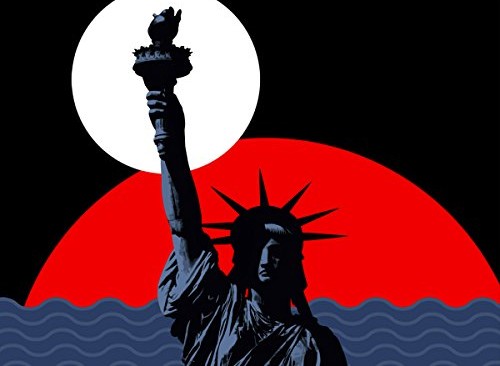
Although his book has great insights, I surely believe he missed the effect of the “stranger” – combined with the romantic spirit of those who are willing to sacrifice their life to change the course of what they believe in.
He wasn’t wrong about liberal democracy’s dominance; what he underestimated was what dominance and that quasi-freedom do to the people living inside it.
As much as the comfort culture tries to, it can’t produce gratitude. All this time spent doing the right things and what’s necessary just leads to producing the conditions for the next disruption.
What follows isn’t a correction of his argument, but in my opinion, the extension he missed.
Before we continue, thank you. (YES, I WILL NOT STOP REPEATING IT!)

I know time can’t be returned – NEVER – and I’m genuinely glad you’re spending part of it here.
If you’re new: this isn’t a place for preaching or selling. It’s a courtroom with no verdicts – only questions that open into more questions. My goal is to reveal what has not been revealed – or if it has been, to at least give a different point of view on it.
I point out the things that we accept, swallow or hide, and pretend daily that they don’t shape us – even though we’re under their control. If something here makes you feel uncomfortable, then you’re on the right path – discomfort is perhaps the best sign that we haven’t yet learned how to anesthetise it.
- Curiosity lights the match.
- Action keeps the fire alive.
- Effort is what everyone talks about until it becomes necessary.
I hope you stay until the end… but that’s up to you.
By the way, today’s loop on the DABOIS’ radio is: “American Daydream” by Electric Guest. It has exactly the end-of-one-story, beginning-of-another energy this piece needs.
What Fukuyama Actually Said
In 1992, Fukuyama declared that the great ideological battles were over. Monarchy had failed. Fascism had failed. Communism had collapsed publicly enough for everyone to witness. What remained – liberal democracy combined with market capitalism – was the only system capable of satisfying both material needs and the deeper human hunger for recognition.
He called this hunger thymos, a perspective articulated by Hegel, with similarities traceable to Plato.
I’m talking about the innate need to be seen, counted, and respected as a full person with dignity.
His argument was that every failed system had failed precisely here. Dictatorships recognised only the leader’s dignity. Theocracies subordinated it to doctrine. Communist experiments subordinated it to the collective. Liberal democracy, for all its imperfections, was the first system to offer universal recognition through rights, through the vote, through the principle that every citizen counts equally.
Fukuyama wasn’t predicting paradise, nor was he truly talking about the “end”.
He was predicting something more unsettling: a world without grand struggle. The Cold War had structured everything – identity, politics, meaning, sacrifice, etc.
Once it ended, what replaced it wasn’t triumph; it was an empty space nobody wanted to name – or couldn’t at that time.
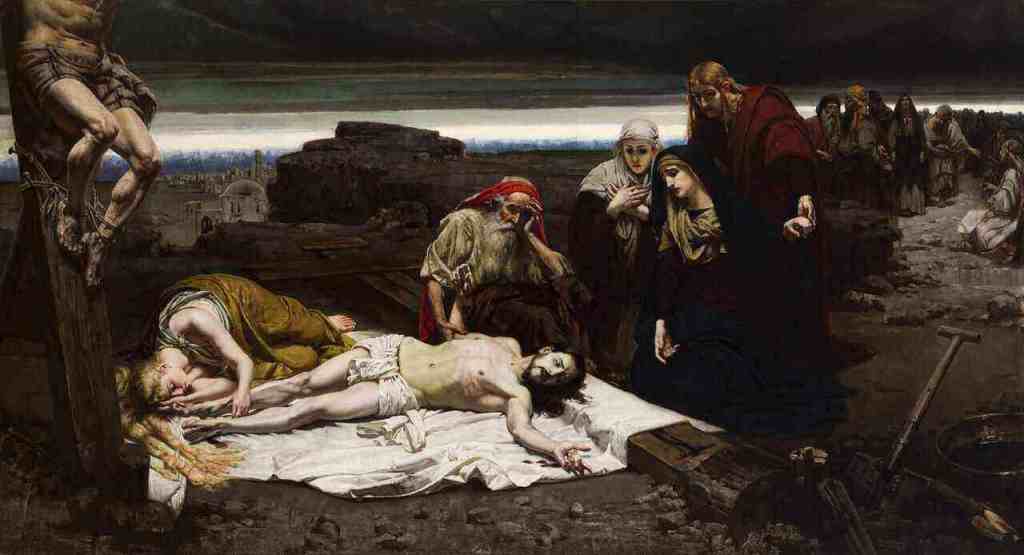
His deepest fear – borrowed from Nietzsche’s “death of God” – was the “last man”: the comfortable, purposeless citizen who has everything the system promised and fights for nothing. Not oppressed, not hungry, not angry. Satisfied enough to be inert. A person so absorbed by the system’s comforts that he becomes its slow internal poison – undermining democracy not through revolution but through indifference.
He was right about the destination. He was wrong about what happens when you arrive – and wrong about who gets left behind on the way there.
To his credit, Fukuyama has revised his position. He now acknowledges that identity politics and institutional decline are threats he hadn’t fully weighed in 1992. What he called “the end of history” was the end of a particular debate – which system works best – not the end of the forces that make systems fail.
The Stranger as History’s Engine
Every stable system tends to produce the conditions that can destabilise it.
The figure Fukuyama missed is the Stranger – the person the system cannot fully absorb, who sees the machinery clearly precisely because he was never invited inside it. Alfred Schutz identified him in 1944 as the immigrant decoding what locals take for granted.
But the Stranger was never only a migrant. He is anyone the system fails to recognise while promising recognition to everyone. And the more universal the promise, the more visible the gap between the promise and its delivery.
The dynamic works like this: some people watch how systems operate – who map the gap between what the system claims and what it delivers. And then there is everyone else, moving on autopilot, trusting the recipe because it has always been good enough. These two groups are largely invisible to each other. The watchers think they understand the sleepers. The sleepers don’t know the watchers exist.
But the important thing isn’t the watching; it’s what accumulates because of it.
Every system that optimises for stability accumulates its own contradictions – the unrecognised, the displaced, the ones for whom the universal promise didn’t arrive. At some point, that accumulation reaches critical mass. Not because of an external threat. Because the system generated a force it refused to acknowledge, and that force eventually found a name for itself from within.
The “end of history” is the calm before boredom turns into violence. The Stranger is not outside the system – he is its byproduct. (The inevitable product of a promise that couldn’t keep itself for everyone simultaneously.)
Batman’s Rise as Proof
Christopher Nolan’s Dark Knight trilogy demonstrates this more cleanly than most political theory.
At the opening of The Dark Knight Rises, Gotham is at peace. Crime is down. Dent’s Law works. Bruce Wayne is retired, physically declining, living as a recluse in a mansion that functions more as a tomb. By every visible metric, the system succeeded. Gotham reached its end of history – stable, ordered, prosperous on the surface.
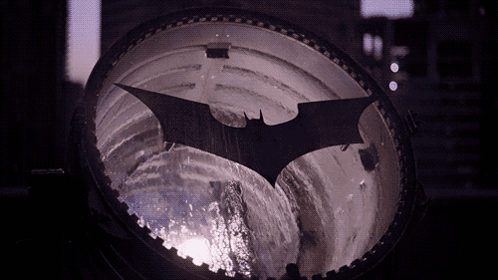
Bruce Wayne is Fukuyama’s “last man” made literal: the hero the city once needed, now purposeless because the peace he created no longer requires him. He has nothing left to fight for. The system consumed its own guardian.
Then Bane arrives – and he is not a criminal. His symbolic representation is the violent return of history; an ideological force that exposes what Gotham’s peace was actually built on: a lie, a covered murder, a manufactured hero.
Harvey Dent’s legacy wasn’t justice – it was the story the powerful told to justify keeping order on their own terms. Commissioner Gordon knew Dent had tried to kill his son. He kept quiet because the peace the lie produced felt worth protecting.
No lie holds forever. Gotham’s stability wasn’t reconciliation – it was a staged version of it. And a system built on a staged reconciliation is structurally indefensible from the first day, waiting only for someone willing to say so publicly.
This is Fukuyama’s nightmare rendered as cinema. Liberal institutions are frequently a thin surface over unresolved tensions – class resentment, failed recognition, buried betrayals, etc.
The people whose order Gotham failed didn’t disappear. They went underground, literally in Nolan’s telling, and returned not as criminals but as an ideological force carrying real grievances wrapped in something dangerous.
Batman’s return isn’t wish-fulfilment. It’s the acknowledgement that the end of history was always an illusion maintained by selective memory. The trilogy’s arc is Fukuyama’s argument and its refutation at once: the first film builds the system, the second tests it, the third reveals that the peace was always conditionally dependent on a lie that couldn’t hold.
Bulgaria, or: What Happens After You Arrive
Let’s go through Francis Fukuyama’s thought one more time:
“The nation will continue to be a central pole of identification, even if more and more nations come to share common economic and political forms of organisation.“
Bulgaria joined the EU in 2007, the Eurozone in 2025. It took decades of institutional work – imperfect, repeatedly revised, often humiliating – but every box eventually got checked.
The framework was adopted. The architecture is in place.
What the framework couldn’t deliver was the foundation beneath the architecture. You can import institutions, but you cannot import the decades of civic culture and functional accountability that give institutions actual weight.
What arrives instead is the form without the substance: elections without real accountability, rights without consistent enforcement, freedom of speech in a country where speaking still costs you something.
The specific Bulgarian mechanism is this: thirty years of post-communist democracy taught the population, at a practical level, that engagement leads nowhere and silence is survivable.
Not laziness, but rational adaptation.
The system punished the people who pushed and rewarded the people who waited. After enough repetitions of that lesson, active citizenship stops feeling like a civic duty and starts feeling like a personal risk nobody asked you to take.
Think about a small business owner who reports corruption and gets audited into the ground – because corruption survives by destroying such individuals. Perhaps a civil servant who refuses a bribe and gets sidelined. Or maybe a journalist who pushed too far and suddenly lost access, funding, or safety.
It’s always the one who stays quiet that gets promoted. Or the one who’s brave/stupid enough to narrate the convenient text for the convenient matter – although he/she may not believe in it at all.
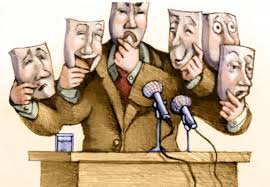
In other words, Bulgaria doesn’t lack thinkers; it lacks people willing to act on thought.
The result is the “last man” in its Eastern European form – not Fukuyama’s comfortable, purposeless Western citizen, but something grimmer: the exhausted citizen who stopped believing that effort connects to outcome. The vacuum that is created doesn’t stay empty. It fills with nationalism, nostalgia, and strongmen – not because the population is irrational, but because thymos needs somewhere to go when the official system refuses to receive it.
Fukuyama’s observation that the nation remains a central pole of identification reads differently here. In Bulgaria, it isn’t pride in what was built. It’s the last identity standing when everything else has been discredited.
History didn’t end in Bulgaria. It got stuck – stuck enough to produce the illusion of an ending. But stuck systems don’t hold permanently. They compile until they break in the direction of whoever was paying attention when everyone else stopped.
And on that note, I’ll conclude with a poem, which I hope will paint a vivid picture in your minds.
End & Origin
The end
is not a final
sum,
the beginning
not an endless
dance:
a thin,
but complex line
and the pendulum –
a sharpened blade,
or a samurai’s hands?
A cult –
most godless:
loaded,
hollow,
shattered
storefronts.
Gold diggers
dig for
yellow
precious
nuggets –
Californian.
Crowded streets:
well-mannered,
pleasant,
gentle –
almost
resembling
people.
But truth
is something else,
unpleasant –
a Tyrant
painting
other tyrants.
While
wanderers
labour
in the name
of freedom;
Machines
like pencils,
money laundring –
a temple…
beneath the heavens.
Caricatures –
good,
bad,
and most grotesque:
visible,
invisible…
all phantoms.
The last
man –
the last, or
the second?
A story
with no end –
with many more
exceptions.
It is true:
even the ready
can never
be prepared.
The end – beginning long awaited;
the beginning – a fate already ended.
The Stranger ensures that history never reaches its final form. Every system that claims to have solved the problem of recognition will produce the figure it failed to recognise – and that figure becomes the force demanding a reckoning.
Fukuyama saw the destination. He didn’t see what the destination does to the people who arrive and find it empty – or to the people who never arrive at all.
That’s not the end of history.
That’s the beginning of the next one.
The full Stranger taxonomy: @The Stranger, The Stranger+, The Stranger 2.0: To Be Continued…
Subscribe to my newsletter as well – sharp, thought-provoking and high in fibre.
Sincerely yours,
Ivaniel “The Wanderer Rising” Georgiev


Leave a Reply