DABOISASTRGLEDT (phrases) – by Ivaniel “Ivo” Georgiev
DABOIS are back—more struggling, more swinging, and still scraping through.
Another Sunday on the calendar brings another phrase to unravel. You know those moments when you stumble across a chain of interconnected ideas without even meaning to? Ideas collide like atoms in my head, and I’ve been riding the freedom wave all week long.
On Thursday, I dove into the broader, more societal side of freedom—Freedom as a Function: Between Liberty and Death. If that sounds like something you vibe with, feel free to take a dive, my fellows.
But today, I’m zooming in: my freedom, your freedom. How do we escape from ourselves? We can’t. How do we stay free in a free-but-unfree world? How do we breathe behind invisible fences? How do we manage to keep moving on while not destroying ourselves?
This week’s phrase is everything you need—or at least the first step to get everything you need. It comes from an episode of the Modern Wisdom podcast, hosted by Chris Williamson. His guest? None other than Naval Ravikant—the name that rings familiar to anyone who’s explored the deep end of self-development. Naval said something that’s stuck with me ever since because I’ve never thoug about it like this:
“Ultimately, you realise that you are also the prisoner and the prison guard, so you decide which way you want to go.”
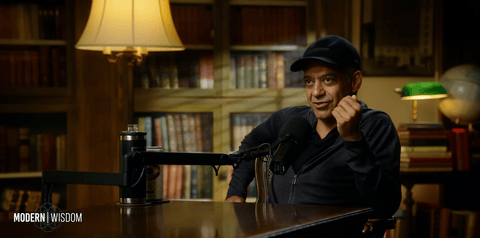
The weight of it settled in my mind: the majority of our chains are self-forged. And I thought, Damn, that’s it. Our chains? Self-made. Our suffering? Not just the world’s boot on our necks—it’s our beliefs, habits, fears. If we build the cage, we should be able to break it. It’s simple, isn’t it?
Yeah, it really does, but not everybody is Naval. However, everybody can be themselves and understand what they said. The guy wouldn’t drop that line without either the soul of a poet, a lived understanding of freedom’s nature, or the triumph of making money no one thought he could—and he is a potent mix of all three, indeed. He’s earned his corner of the internet—Google him if you’re sceptical.
As for me? I’m nowhere near his bag, but I’m here, pinching you awake—keeping myself from dozing off in the process.
We are what we believe, but our beliefs are often a mess—we half-believe in whatever it is, and much more we disbelieve. Worse, we act against our own truths—why? Because it’s easier. The short-term convenience robs us of long-term growth, joy, and the life we could’ve had.
Freedom is a choice and a sacrifice. No one can snatch it from you unless you hand it over. And I don’t mean laws—I’m talking about the kind of freedom that breaks mental walls without breaking rules (or maybe breaks rules, but it doesn’t necessarily put you behind bars… but that’s all on you).
Take me. I used to think I was one of the worst people alive. I denied it outwardly, but inside, I always had a whisper calling me out. Yet folks said I was a good listener, understanding—even wise. I was a slick liar—lying to myself, lying to people who hated lies yet loved being lied to because they did it too.
I was the master prisoner, sparking riots I wouldn’t join. A slick guard, bending rules with power I shouldn’t have wielded. The worst prison owner—building new cells, locking myself in, dragging every old chain behind me. If that’s not a mental disorder, I don’t know what is—and yet, doctors tell me I’m mentally sound. Believe no one, unless they tell you the ugly truth—even more, your own self. You dig?
Since ’21, I’ve been freer than ever. I’ve broken chains—fear of speaking my truth, caring too much about others’ opinions, dodging hard realities. Some chains remain. Talking to strangers? Sure, I can and I do—but not always when it matters. I overthink, map outcomes, and swallow my voice.
The last thing I remember is a cute girl smiling at me in a Queens coffee shop. It could’ve sparked a chat, but the guard won and the prisoner lost—fear of misunderstanding, being a bother, expectations, and the emptiness that often follows. Typically, I’m an optimistic person, but sometimes I tell myself, ‘I’m saving myself,’ letting realism overshadow optimism. You know how people often turn out as expected, but there’s always that chance—the uncertainty of truly knowing until you take the leap, right?
We’re all on different courts, playing the same game. Like Chester Bennington’s voice in my head—in the end, it doesn’t even matter (which should act the opposite way, but I’m not-yet-certified-weirdo). We build our cages—thoughts, routines, insecurities.
You’re the prisoner, the guard, the architect. Could I explain it better? Maybe. Maybe not. It’s not the point. But if you get it—if it resonates—share your take, because I’m hungry for it.
As tradition demands, salute to my returning DA BOIS and the new stubborn ones who STRGL indeed. Missed last week’s phrase or curious about my thoughts? Check: Wherever You Go, There You Are…
The Prison
Prison’s got many faces—any place you’re stuck. Four walls, floor, ceiling. The real escape? Make peace with it. The worst prison is your mind. That’s where you’re both prisoner and guard, owning a cell you don’t know how to use. You want freedom, you’re pissed you’re trapped, you waste time waiting for the perfect plan. It’s a maze with no exit, so don’t look for one—walk the way, sign the way.
Imagine owning something you don’t know how to use or let go of. You stew in frustration, blaming the world, but the real problem is usually yourself.
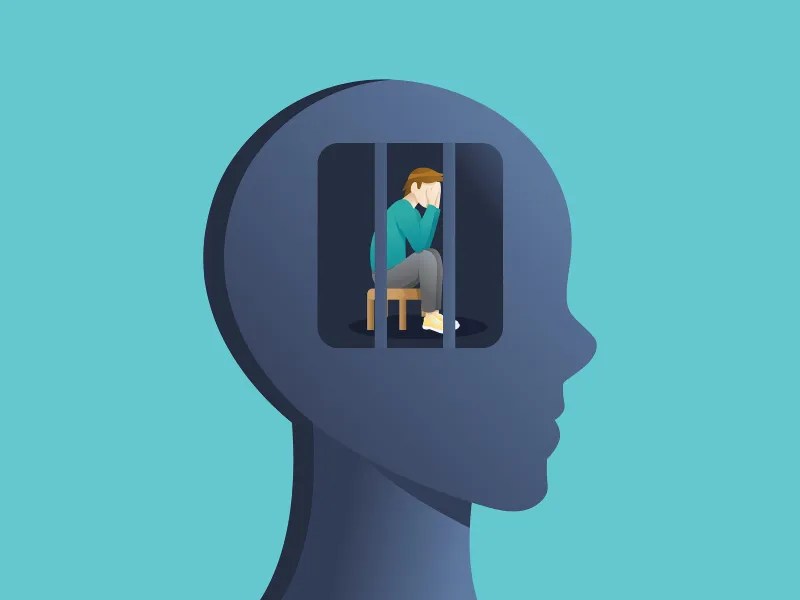
Most see prison as punishment—and sometimes it really is. But its more interesting role is being a portal—to face yourself. Fighting it’s like punching concrete instead of a sandbag— the system’s stronger than you, so strong that it’ll make you hurt yourself. I’ve known cages—not bars (though I spend some nights in cells), but thoughts.
What’s an actual jail? I don’t know. What’s a cell? Dirty, smelly, cold. But what’s the mind cage? Not fun. I only guess, but there’s nothing like being locked in your head. Yes, there aren’t “soap dropping” dramas, just bizarre, heavy air.
No one wants to be a prisoner. Yet we—me included—file into mental jails ‘cause facing ourselves is harder. Accepting who you are, what you can or can’t do, takes time and the proper use of tools: courage, reflection, and resilience. Some have one, some have a whole toolbox. And not everyone’s tools are the same, nor they use it the same way—regardless how similar everything looks on the outside (an axe in one’s hand is a way to defend oneself, another sees it as a building attribute, and there’s someone who will change the world with it).
Think about the people you admire. How many of them escaped some kind of prison? All of them broke free. Whether early on or later in life, they broke rules—some written, some unwritten—to get where they are. You could argue about who’s righteous and who’s not, but that’s not the point. The point is: everyone wrestles with their own confinement, and everyone carries the consequences of their escapes.
Escaping one prison doesn’t mean you won’t land in another. But someone who’s broken free once is far more likely to do it again. That doesn’t guarantee success—but it does improve your odds of survival.
And no, I’m not encouraging you to do something reckless or harmful. But if your path involves crossing a line to find a better version of yourself… then that’s your path. Just know what you’re trading for it.
Consider these examples:
- Malala Yousafzai defied the Taliban.
- Oprah turned pain into an empire.
- Nelson Mandela forged peace from 27 years in actual chains.
- Maya Angelou wove hurt into art.
Even ex-cons had good deeds for the world. Folks like:
- Gregory David Roberts fled cells to write *Shantaram* and aid Mumbai’s poor.
- Eugène-François Vidocq, once a criminal, became the father of modern criminology in France.
- Peter Kropotkin broke out of a Russian prison and became a leading voice in anarchist philosophy.
Sure, we can dig into each of their stories and find contradictions—moments that don’t fit the heroic narrative. Flawed? Undoubtedly. Dirty plays? Very likely. But they escaped—mentally, physically —and left marks.
Does that mean they’ve redeemed themselves? Not necessarily.
Does that mean they deserve unlimited forgiveness? I hope not.
But we all believe in second chances… or at least we want to—until it’s inconvenient to give one.
Redemption? Not always. Forgiveness? Not owed. We want second chances, but Most of us hate the idea of others who found peace in cages while we’re free and miserable. And that’s on them—on us. Maybe it’s just time to look inward and ask ourselves if we’re willing to fight our own cages. And if we are… let’s do it all the way. Fight your cage, not theirs—for you, for those watching, for DA BOIS who need light and rely on you.
Because freedom is possible—even when it’s not handed to you (especially when it’s not).
The Prisoner and The Prison Guard
You’re sentenced the day you were born—harshest cage, no true escape… until death (or maybe you buy heaven or hell). Prisoner from day one. But can’t the system bend your way? Hell yes.
If that logic feels distant, look at real jails—books, films show inside’s like outside. Systems rule: nature, society, you. Strong survive, smart thrive, weak linger, the confused stay lost—but all breathe the same air. Someone has to lead—that’s nature. You can choose to stray away and not follow—or follow with conviction, guarding what’s yours, not swallowing blindly.
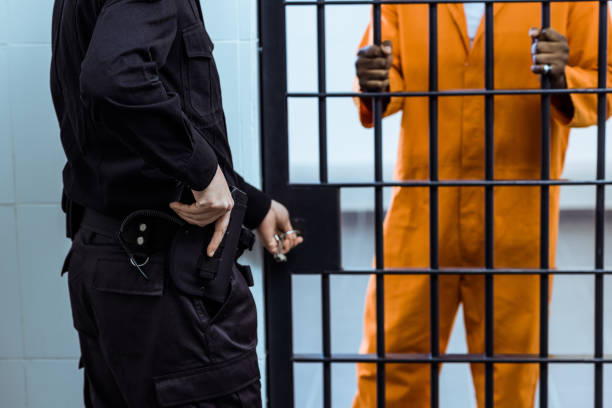
The guard’s no different—oppressing, restraining, even when there is no need. Job or habit, willingly or not, he’ll keep you down if you let him—we all get what we tolerate. Guards crave order— his problem is wanting order at all times. Now, this may work in a controlled environment like a workplace. But life rarely fits into neat boxes. Often, our best moments—our most creative, loving, chaotic, and alive moments—are anything but orderly.
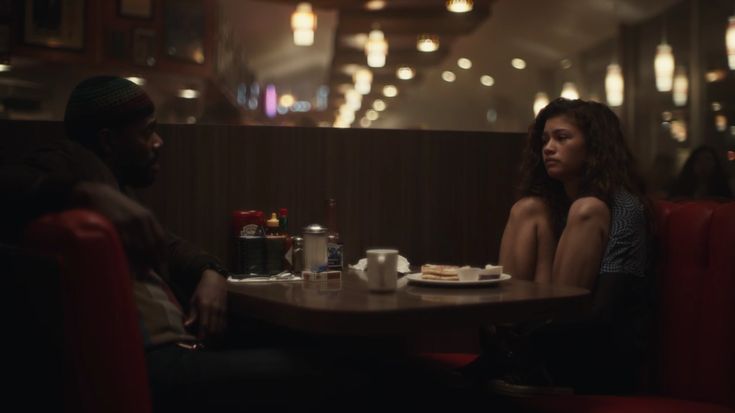
I had planned to explore both perspectives more—the prisoner’s and the guard’s—but then I watched Euphoria. There was a conversation between Rue and Ali which captures everything I want to say; if not better, at least as good. Their diner talk—raw, flawed, real—cuts deeper than my prose. I often try to sound sophisticated with plain words (or at least that’s what others say), but I’ll turn to the writers hired by HBO for some help here.
Why use the conversation between Ali and Rue? Because pain speaks louder—and the truth from Ali is literally gold disguised in words—than lectures and conversations is often perceived from outside better than someone explaining themselves—as it comes like giving a lecture (hauling someone over the coals).
Naval’s not alone, nor am I, nor you. Clean or broken, rich or poor, seen or invisible, experienced or not—you’re in this.
Ask: What’s my cage? Who’s the guard? What’s the prisoner doing?
The Truth of Addicts
Ladies and gentlemen, the wisdom of today presented by Rue (addict, teen) and Ali (mentor, ex-addict) while wrestling with the cages—drugs, God, purpose—in a diner. I happened to watch it the day I wrote this, like fate. Oh and let’s not forget to credit the writers—. Here’s their truth, trimmed for punch:
RUE: It’s funny. I struggle with that N.A. stuff.
ALI: How so?
RUE: Step one, I’m cool with — powerless over drugs, life unmanageable. Sure.
ALI: Okay.
RUE: But step two? Believing a higher power can restore sanity? I don’t know. I have a hard time with that.
ALI: Ah, I see. You don’t believe anything’s greater than Rue.
RUE: That’s not true.
ALI: No? Then name something.
RUE: A Mack truck.
ALI: Okay… another?
RUE: The ocean?
ALI: Try again.
RUE: Any Otis Redding song.
ALI: Come on.
RUE: Seriously. “Try a Little Tenderness” had more impact than I ever will.
ALI: All right, smartass. That’s not enough.
RUE: Ali, I don’t believe in God.
ALI: Doesn’t matter. He believes in you.
RUE: That sounds nice, but it doesn’t mean anything.
ALI: It does. If He didn’t, you wouldn’t still be here.
RUE: So, my dad died because God didn’t believe in him?
ALI: That’s not what I meant—
RUE: That logic makes me furious. People say, “I survived for a reason.” So what — the kid who didn’t had no purpose? My dad’s purpose was us. And now he’s just… gone.
ALI: Rue—
RUE: Don’t say he died for something. He died. That’s it. Just bad luck — like you said.
ALI: I don’t have all the answers. No one does. But life’s a mystery. Like Malcolm X — father killed, turns to crime, goes to prison, finds faith, sparks a movement, scares America so much they embrace MLK. Then — Civil Rights Act. Chain reactions. Mysteries.
ALI (CONT’D): So, why are you here and not someone else? Why you and not some better 17-year-old? I don’t know. But here you are. So now what?
RUE: Maybe I’ll start a revolution or something.
ALI: Haven’t you heard? Revolutions aren’t radical anymore. Everyone’s a revolutionary now — rich, poor, right, left. So many revolutions, no time to change anything.
ALI (CONT’D): I went to buy sneakers the other day. Giant sign: “Our people matter.” Felt good. Like, thanks, Nike. Then I saw the price — $139.99. Really?
ALI (CONT’D): Looked around. Black folks, white folks, all feeling good. Taking selfies. Then it hit me — fuck you, Nike. You don’t care. You’ve just monetized the message. Chinese Muslims sewing shoes for pennies.
ALI (CONT’D): If grunge were still popular, Nike would say, “Depression matters.” They just follow what sells. And your generation? Tracked. Predicted. Trapped. You think you’re rebelling, and Bank of America’s on your side?
ALI (CONT’D): Real revolution has no allies. It’s spiritual. A total reset — of priorities, beliefs, how you live. You gotta believe in something bigger than yourself. Not the ocean, not a song, not a movement.
ALI (CONT’D): Believe in the poetry. Everything else — people, systems, even yourself — will fail you.
(knocks table)
ALI (CONT’D): You’re sick, Rue. Your system’s collapsing. And the addict in you is selling you the same poison that broke you.
ALI (CONT’D): Your only hope is a real, full-on revolution. Inside and out. You have to commit. Every day.
ALI (CONT’D): Who knows… one day, you might make it.
There is a scene in between I’m going to skip. After Ali goes back in the restaurants, sits in front of Rue and this scene follows:
Ali glances over at the counter, where MISS MARSHA (lady who works in the joint) is counting tips.
ALI: Miss Marsha?
MISS MARSHA (looking up): Yes?
ALI: How long you been clean?
MISS MARSHA: Seventeen years—by the grace of God. Never thought I’d say that, but I’m proud of it.
ALI (nods): Why?
ALI: What if you had tried dating early in recovery?
MISS MARSHA: Then I wouldn’t be clean. I wanted both, but I didn’t have the energy. I chose sobriety.
(Ali glances at Rue.)
MISS MARSHA: Everything that feels good to you ain’t always good for you.
ALI: What would you say to someone with no hope?
MISS MARSHA: My grandma used to say, “Baby, trouble don’t last always.” Took me years to understand it. But it’s true—if you’re ready to change.
(Rue listens. Her high fading, eyes heavy.)
ALI: That’s the truth right there.
With that being said, their words aren’t mine, but they’re ours. DA BOIS feel this—cages, fights, hope. Also, Ali spoke about poetry, so I couldn’t finish without writing one.
Freebird
I forge the chains. I hold the key.
Born in prison—is the bird free?
My mind’s the cell; my will, the sea.
Is freedom fake or just hard to breathe?
Guard or ghost, I chose to roam,
Condemned for breaking silent laws.
I dwell in the prison—home sweet home.
A fugitive from self. Without a cause.
Bars of doubt, locks forged in fear,
The past still haunts; the path is clear.
Step by step, and year by year,
I chose the truth over any peer.
In the dark: a tear, a spark, a blade—
The son of GOD, a G.O.A.T. Himself.
This cage is mine. I pave the way.
My truth ignites. My soul rebels.
Prisoner, guard—I’m both. I’m me.
I freed myself from a world ill, yet free.
The sea is deep. The cage routine.
A grain of salt—freer than free will.
Modern Cages
The mind’s not our only jail. Literally everything could be seen in the form of a penitentiary. Whether you are on a vacation or at home—it’s you who builds the walls. Then the social media comes—likes, scrolls, (algorithms whispering… “conform”). Every post’s a guard, every click a lock. Work’s another—bosses demand order, not free will.
For Christ’s sake, today I stared at the screen since the moment I woke up. I’ve got things to do, but somehow the lazy part of my mind prevails. I know tasks are piling, while my soul is shrinking. I wanted to get up, counting every 10 minutes—until it turned out to be an hour. I don’t believe in ghosts, but I sure as hell trust them.
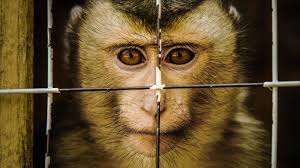
Society’s worse—labels, trends, noise. You’re too loud, too quiet, too you. In ’22, I broke free, wrote my truth in my diary, chains snapped—for some time. But then life pulled my fake expectations once again—post raw, get cut. I’m trying to say we’re free, but fenced—by tech, by eyes, by us. Break one cage, another waits. The trick? Know you’re the architect. Build a garden, not a cell.
What is Your Prison and Which Role Prevails
Where are you on the spectrum of life?
Does the keeper prevail—or the prisoner?
Is your prison a sentence, or can you still prosper within its walls?
Where are you on the spectrum—prisoner, guard, or architect? Does the keeper prevail—or the prisoner find his balance? Is your cage a sentence or a chance to grow?
Harmony’s a dream—a beautiful but impossible idea. On the other hand; happiness, freedom and peace are choices. Each day, you pick: live free or not.
Nothing is ever easy—but it’s also not as hard as it seems.
Some build countless prisons from a very young age, brick by brick, waking in cells they can’t love. Time slips, presence fades, joy dies. Walls grow—someone’s laugh offends, a rush ruins your day, loud breathing’s an attack. Don’t be that prisoner. Don’t let the guard win.
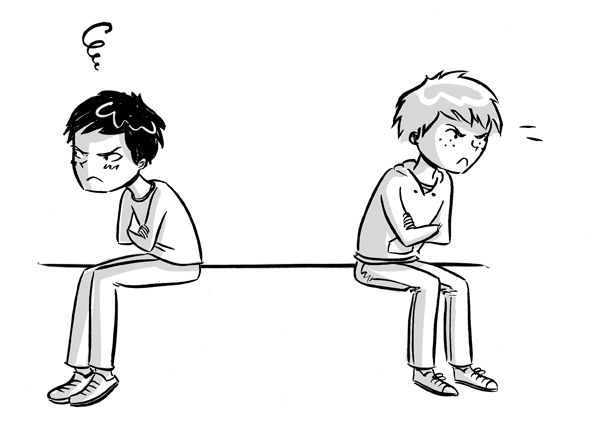
Remember the following: You’re the prisoner, the guard, the architect. Make them allies—in a good way. Turn your Scandinavian prison into a beautiful garden—stupid as it sounds (check out some pictures)—for reflection, growth, for play. You’re not alone. DA BOIS struggle, rule, rise.
Thank you for joining the fight.
Yours,
Ivaniel ‘The Prisoner / The Prison Guard / The Prison Owner’ Georgiev


Leave a Reply