DABOISASTRGLEDT (phrases) – by Ivaniel “Ivo” Georgiev
DABOIS are back, struggling more than ever—well, that may be a bit of an exaggeration. Still, no matter the extent, we are struggling.
“Forgiveness is the fragrance the violet sheds on the heel that crushed it”, Mark Twain once said. Yet my grudges? They’re the countless promises and lies I spilt—left hollow, unfulfilled, and lacking the action to match my intent.
It’s Sunday again, and the phrase is fresh out of the oven—new, sharp, and possibly unsettling. While there are many inspiring things people say, today’s edition focuses on the more nagging words that come out of people’s mouths. Negative? Yes—because they often stem from a place of loathing. Not just for others, but for ourselves too. Still, I want to explore them in a way that diffuses the tension—with an open, unbiased perspective. Wish me luck.
For the second week in a row, I find myself reflecting on freedom—what it means, why it matters. This week’s phrase doesn’t come from a film or a book—though it’s probably been echoed in both. These words are more personal. They come from none other than my father.
His argument? That empty men and bad people shouldn’t be outcasts in society—they should be dealt with. Given what they “deserve,” and put in their “rightful place.” In short, he believes we should have a world full of prisoners and very few free men, if any. That’s not exactly what he says—but it’s what I understand.
My dad isn’t a bad guy—though I’m not trying to defend him, either. If anything, I’ve called him bad more than once. But that’s because I’m directly related to him, and there’s a lot of unresolved emotion between us.
The truth is: He’s no saint. He’s just a human like everyone else. What kind of person he is depends on how well you know him. And the reverse is true, too—in a universal way.
Still, this isn’t a post about him. I’m not here to paint a portrait of the man.
I want to present his way of thinking—and compare it with my own.
The words that have repeatedly come out of his mouth are:
“Bad people shouldn’t be forgiven.”

And my response is simple: But why?
It sounds extreme, I know—but let’s hold off on answering that why for just a moment.
Let’s first admit something: People constantly disappoint one another. If not constantly, then often enough for it to hurt.
Think back—when was the last time someone made you so angry that your communication broke down? Not just annoyed you, but made you avoid their gaze, clash with them in public, or maybe even cut ties?
I’m sure it’s happened more than once. I’ve had dozens of those moments myself—and they sucked (well… I sucked.)
I was anything but innocent in those situations. And I’m not saying the others were villains in my story, either. The truth is, both sides usually share the blame.
But the real issue lies deeper—in our ideas of “right” and “wrong.” I usually steer clear of those binary terms, but in this case, they help illustrate the root of our problem.
Last week, I gave the sponge example—how we absorb what’s around us, often without even realising it. The same logic applies here. Especially when we’re young, we take in what we see and hear. And that shapes our worldview. That’s where much of the trouble starts.
Society has gotten to a point where it can’t forgive. Worse—those who’ve done wrong often don’t even want forgiveness (look at politics, c’mon). And even when conflicts are “resolved,” they tend to regress. Why?
Because most people don’t really care. They say things they don’t mean. And they rarely stand behind their words.
Mercy ain’t a truce; it’s a sound you send out—and I’m still waiting for its return.
You drag your grudges wherever you go. But forgiveness can break the silence—if you’re bold enough to act on it.
Let’s crack it open like an oyster and see if there’s a pearl inside—or the good old disappointment.
Before I go deeper into today’s theme, I want to take a moment to welcome all readers—new and returning. Thank you for offering your time to be here with me, to walk through the chaos I’m trying to understand.
My hope is that, over time, DABOISASTRGLEDT will grow into a community where forgiveness, understanding, and effort are more than just ideals—they’ll be the default.
So, BOIS and GALS—don’t stress. You’re not alone in the struggle. We’re in this huddle together.
If you’ve missed last week’s post, or if you’re new here, I’d recommend giving it a read: The Penitentiary, The Prisoner, and The Prison Guard…
Bad People
I stand by those words: people are bad. Bad by birth, bad in every way.
The Bible presents man as a child of God—on one side are his guardians, the angels, and on the other, all that embodies demons. I don’t know how much of that is true, but I disagree with the idea that man is a child of God. If God created man and gave him free will, it all sounds noble—until you realise something doesn’t add up. If the Lord is sinless, how are his children sinful? Did he lie with the devil while conceiving them—or is he just as bad as we are?
To me, man is the devil—at least by the very standards of good and evil that we, humans, have accepted. Sure, we’ve reached where we are today thanks to the combined efforts of those before us. But fundamentally, we’re not much different from lions—or monkeys. Everything that lives in nature seeks to dominate, to gain advantage, to survive under the most favourable conditions. To do that, they group together. And humans are no exception.
The difference is, we’ve evolved into the most intelligent creature in the known world. Whether that’s thanks to divine design or the result of countless lucky strikes over millions of years—well, that’s for everyone to decide for themselves. Either way, we’ve grown smart enough to realise we no longer need to slaughter each other en masse. We understood, at some point, that survival depends on consensus. Animals don’t have consensus. For them, it’s the law of the jungle. The strongest survives, takes the prize—no currency, just instinct.
We, however, have created entire worlds of study and inquiry—history, biology, chemistry, physics, mathematics, literature. I’m not dismissing them—actually, the opposite. If they hadn’t been invented, I’d probably be out there, sharpening a stone, getting ready to hunt with the tribe. These disciplines have built the structures that protect us. And yet, even with all the knowledge and compromises accumulated over centuries, the world remains unequal and unfair.
This is no accident. At our core, we are still animals. Driven by struggle, ambition, and craving.

We strive to see who can have the most, because—after all—the more you have, the more you have. Status, wealth, recognition—they become social currencies. You exchange them to rise in the ranks, to be chosen, to move more freely. And the ones who’ve gained the most from freedom? They’re often the very ones promoting it. These people are the engines of development. And we do owe them some gratitude, because without their bad examples, there’d be no one fighting for justice.
Today, in the so-called “free” twenty-first century, we live in a world more liberated than ever—especially in the West. But truth be told, I don’t see much difference between now and the days of ancient Egypt or Babylon. Sure, those eras were defined by more blatant violations of human rights, more death, more violence. But their societies weren’t so different from ours: constant games, constant hypocrisy. The only difference is that now the game is subtler—but just as destructive.
Some play behind the curtain. Others only play the games they’re allowed to play. So much progress—and so little evolution. But it makes sense. Self-preservation is hard-wired.
Everyone looks out for themselves before they look out for others. That’s nature. Nothing strange about it. And those who don’t see it—are either blind or willfully blind. Yet everything’s still done “for the good of society,” or so they say. Perhaps I’m wrong? It wouldn’t be the first time.
Still, I’m not against anyone. I’ve come to accept that the game is inherently unfair. The devil is the devil, no matter how well he wears his angel costume. Sooner or later, the real face shows.
Capital must be distributed—who gets what, how much, and when? I don’t know. I’m no Karl Marx or Adam Smith. But I do know that humans survive through trade. What they trade, who they trade with, and how often depend on the market they create—and the chances they’re given.
It always boils down to two things: resources—no matter the form—and relationships between people.
But those two rarely walk hand in hand. Because inevitably, someone ends up dissatisfied. At that point, a compromise is needed. One must apologise, the other must accept. And the world turns again. But this isn’t a fairy tale. Not for the individual, at least. Maybe for society as a whole. But they might not even realise it.
You know the silence, DA BOIS—slights you buried. Rage, you muted. What grudges are you muffling exactly?
To Forgive or Not To Forgive
And so we arrive at the all-important question: To forgive or not to forgive?
My dad once said, “Why forgive someone when they haven’t forgiven themselves?” And that’s absolutely true. So true, in fact, that I resisted acknowledging its clarity for years. But I don’t care about my ego anymore. I can admit anything to anyone. Whether they embody what they say—that’s another matter entirely.
There’s a lot of societal hate, but there’s equal parts truth in my father’s words. How do you forgive someone who will undoubtedly mess up again—and act like the last time never happened? The truth is: everyone makes mistakes. Everyone will make them again. But does that mean they shouldn’t be forgiven? Absolutely not.
Everyone deserves forgiveness—but not pardon. Once you’ve done something, you must face the consequences. But if society is to prosper, it must offer people the chance to make things right. Depending on the damage done, the consequences will differ. So will the second chances.
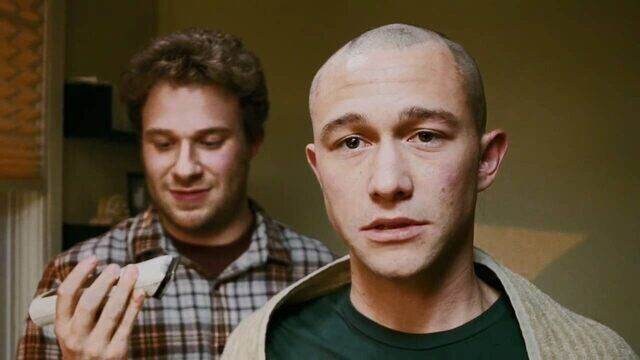
Still, some questions linger:
- How do you forgive someone who never cared why they did what they did?
- Why do some people repeat the same sins—or versions of them?
- Why is it often the one who refuses to forgive who ends up being the villain?
- Why do wrongdoers always seem to play the victim?
- Why don’t those who see the mistake step toward it and ask: What now?
So many questions, yet clarity remains elusive—the same uncertainty, the same restless search. Perspective shifts, bending with time, truths that linger but never solidify.
History walks beside us, its wisdom buried, its lessons overlooked by impatient minds. Our ancestors knew the weight of these roads, but we dismiss them—too proud, too sure.
We claim new discoveries, yet uncover old truths, forgetting that what was once found is never truly lost.
As for me—I haven’t forgiven enough in my conscious life. Then again, my life hasn’t been that long (if that counts as an excuse). Earlier, I spoke of how people absorb what they see and hear. I’m no exception. I’ve wronged many—on the other side of the argument, the conversation, the relationship. I don’t know if my wrongs were spectacular, but then again—what is small evil anyway?
Growing up, I witnessed too much injustice. Especially the kind that went unpunished.
That shaped something in me—the part that decided to do what I want, when and how I want. That behaviour didn’t lead to anything good. But it didn’t lead to anything catastrophic either. Unless you count the problems I’ve had—but then again, who hasn’t?
For a while, I held a kind of hate for my family, thinking it would lift me. It sank me. Mercy is a paradox: it lightens by weighing you down. But I couldn’t understand that at first—I think I do now (but do I?).
There are so many people I never cleared things up with. Thankfully, my family’s crossed off that list—though they still have a hard time understanding. Classmates. Past friends. Employers crossed lines with me—and I crossed them back. So many unspoken truths. And I don’t think it should be that way.
But then again, maybe I’m wrong. Maybe my dad is right after all.
To fully understand who’s at fault, when and where—you need complete control of the situation. But at the same time, you must give people the freedom to do what they feel they must.
And even with full control, someone will always break the rules.
On the other hand, when you give freedom, you’re bound to be disappointed—assuming you had expectations at all.
It’s always an either/or game.
There are always angry people.
No one is ever completely right.
But everyone, in their own way—is wrong.
The Consequences
In Bulgaria, to forgive often means to bet yourself a curt-capan—a slang expression that roughly translates to misleading yourself. Or, more precisely in English: walking straight into a dead end.
When it comes to forgiveness, there are two paths—two possible outcomes, though one is far more common:
- The first: the person you forgave proves you right. They acknowledge their fault, and your forgiveness feels earned.
- The second—and sadly, the usual one—is when they show you they never deserved it in the first place.
Both hurt. Both leave you with regret. There’s no right answer—only, hopefully, a good lesson learned.
Personally, I’d still advise forgiving. Or asking for forgiveness—if you’re willing to mean it. Why? Because it’s better to walk through life clean with people than to drag around old wounds that never healed.
Nietzsche said, “Man is the cruellest animal.” My cruelty was silence—and the dishonesty that comes when the silence breaks. One memory just popped into my mind: I was graduating. My dad was filming me as we walked through downtown. I remember telling him to get out of my face and stop embarrassing me. It wasn’t a good thing to say—the least to say (truthfully, it was pretty offensive).
Which reminds me: I haven’t asked for forgiveness for that. And that’s the next thing I need to do when I talk to my dad.
I bet your ledger’s marked too, DA BOIS.
- Was it your own doing—or someone else’s? Someone close, someone distant?
- How many times have you watched this play out?
- How many friends, relatives, or acquaintances carry grudges—silent tensions stretched across decades, shaping their lives in ways they barely notice?
History is full of stories like this. It’s all a game of egos and interests.

Let me point to a few global examples that have sparked some of the most brutal—perhaps avoidable, at the same time inevitable—conflicts of our time:
- The Treaty of Versailles (1919): After World War I, the harsh penalties placed on Germany bred resentment. That bitterness laid the groundwork for extremism—and, eventually, World War II. A more balanced, forgiving approach might’ve healed wounds instead of deepening them.
- Post-War Reconciliation in Germany: After World War II, Germany faced its past. It acknowledged its sins and sought forgiveness. That act of collective humility helped the country rebuild its relationships—and its identity. If that had happened earlier, maybe the Second War wouldn’t have been necessary.
- The Cold War: Much of it was driven by fear, pride, and a refusal to trust. Take the Cuban Missile Crisis—what if forgiveness, or at least understanding, had come sooner? Maybe we could’ve spared ourselves decades of suspicion and division.
These are just three examples—but they’re heavy, and fairly recent. What matters is the process.
After World War I, Germany was punished so severely that it led to more pain. After World War II, that same country took steps to atone—and couldn’t stop itself. Today, Germany is often criticised for going too far in the opposite direction: self-censorship, silence, and an inability to critique anyone claiming to be aggrieved. Another form of imbalance.
And in the world today, we see two new epicentres of pain: Israel/Hamas and Russia/Ukraine.
- Where is forgiveness in these conflicts?
- Does it even matter anymore?
The war in Gaza has raged, in one form or another, for over a century. Forgiveness, when offered, is temporary. It serves momentary interests—not healing. Not one forgives, and everybody remembers. Still, they try to show the world they’ve forgiven and forgotten—just to prove how much they’ve been forced to store away.
In Ukraine, the suffering goes back generations. Yes, Russia’s invasion is unjustifiable.
But the region’s history is thick with wounds. Groups like Azov have committed horrifying acts—burning people alive on buses or in courthouses, for reasons tied to language, allegiance, or simply identity.
So why don’t both sides reach a ceasefire?
Because there are always hidden interests. Because behind every institution are people who profit—politically, financially, ideologically. And most of all—because real forgiveness is inconvenient.
It gets in the way of power. Of pride. Of war. Of FINANCIAL GOODS.
Unforgiveness isn’t strength; it’s surrender.
Camus called life absurd. Clinging to hate? That’s absurd.
My absurdity could’ve easily ended my life—or carved a much darker path. But somehow, I’m still here—lucky enough to sit in front of a laptop screen, and talk about life’s misfortunes (and that’s not a brag… I’m just being grateful about it).
Final Words
Here’s the paradox at the heart of it all: the more I think and write, the more I see the truth in my father’s words.
Even Immanuel Kant—the great moralist—expressed scepticism about forgiveness. He argued that wrongdoing cannot be undone and that justice demands retribution, not mercy. To him, forgiveness might even contradict moral law.
Of course, many philosophers defend forgiveness. But most make one crucial distinction: forgiveness is not forgetting. And on this, I fully agree.
You can forgive—but you should never forget that someone once did you wrong. That awareness doesn’t erase forgiveness; it protects it from being abused. Because if the forgiven one demands mercy again at the first sign of discomfort, perhaps forgiveness was never truly accepted. Or maybe it was never truly given.
Still—justice without mercy becomes vengeance. And we don’t want to live in a world that needs vengeance to feel balanced. That’s why I believe mercy is what truly shifts the world.
One modern philosopher—Stephen Ingram, a lecturer at the University of Manchester—explores the prudential value of forgiveness. Not just its morality, but its practical power. He argues that forgiveness fosters cooperation and epistemic trust—meaning it helps us live together, learn from each other, and trust again. Not because it’s noble, but because it’s necessary.
That’s how I see it. Forgiveness isn’t weakness—it’s the only viable way forward. Or maybe that’s just some modern foolishness… What do you think?
Yes, forgiveness can look like surrender. But how else do we move forward if we’re too proud to admit we bleed? Strength breeds fear more often than respect.
- The Bible says: “If someone strikes you on one cheek, turn to them the other also.”
- The Qur’an says: “Bow to no one but the Lord.”
- Buddhism teaches non-attachment.
- Shinto honours purity.
Each path has its rhythm—but none offer a simple, universal answer.
So no, there’s no “right” step in history. No promise that speaking your truth will bring understanding. But still—I choose to believe we can grow. That conflict won’t be erased, but transformed. Not staged like today’s diplomacy, but real. Honest.
Grudge for grudge, or mercy for peace. I choose peace over dominance. Coexistence over control. And I hope you do too (said the dummy).
You’re the mercy you choose now.
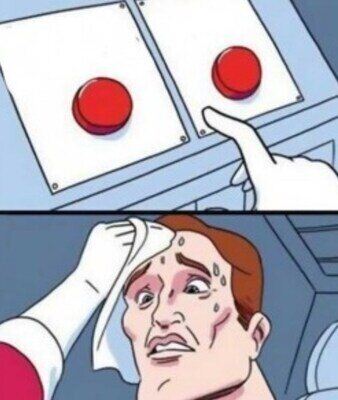
Forgive. Ask for forgiveness. Be the kind of person you’d want to meet in your darkest hour.
And if not—then may whatever you’ve buried deepest be the very thing you end up facing.
Thanks for walking this path with me.
Yours sincerely,
Ivaniel ‘The Forgiveness Seeker’ Georgiev
P.S. I almost forgot the poem.
To Receive Is To Give
I chase desires—blind and wild.
But do I give, or am I beguiled?
Do I recall the times when blessed,
or let such grace fade unconfessed?
Trust turns cold—once sacred flame.
I wear a saintly woven mask of shame.
I’ve built so little, stood so tall—
The prideful rise, but often fall.
A hawk ascends with fearless eye,
Its prey too stunned, too vain to cry.
The hawk does not kill—it leaves a scar;
In time, pain turns into a broken charm.
Some say forgiveness is defeat—
A bowed head crushed beneath retreat.
Yet in its silence, strength is found:
The forgiver—wounded, yet renown.
The forgiven—carries axe and crown.


Leave a Reply