DABOISASTRGLEDT, by Ivaniel “Ivo” Georgiev
Welcome back to DABOISASTRGLEDT. If there’s one thing I do every single day, that’s struggling. My suggestion? You should too – and intentionally.
Another Thursday, another deep dive – and my take on how to live life as you are observing. Let’s face it, there’s so much crap nowadays – not only under our nails but also in our minds and food – that makes the living part so terrible once you know how certain chains of command work. And yes, then there’s hope, but you’re almost entirely being proven that no matter what is happening, the worst is yet to come – and perhaps that’s a reminder to have fun and enjoy the moment… just because.
So buckle up. Today’s one gonna be a clusterfuck.
Freedom has been the topic for two weeks now – the wave just keeps rising, and I can’t help but ride it (this is the kind of indulgence I usually don’t hold any form of regret for).
Today, I’m bringing you a slightly different take: Many people wave their “freedom” like a white flag, while quietly handing it over in exchange for security, anxiety, comfort, etc.
And the worst part? They don’t even realise that trade costs them the very freedom they’re cheering for.
Freedom’s a spark. Security is the smog that chokes it. (Capiche?)
So I have to point out that we’ve never had so much freedom while being inside of such a technological vacuum as we are today. Some may say we are not so free; some will say otherwise, and yet, we’ll keep convincing ourselves what we want to convince ourselves – whether that’s lacking it or believing in thin air.
However, the postmodern world is a very individualistic and boundary-associated place where most of us are piling up on excuses, justifying our limits, and calling everything outside of our cage, discomfort zone.
Think back a few centuries – hell, even a few millennia ago. People fought, suffered, and died – for the right to live on their own terms… or their kinship.
And where did that bring us? In the day of fast connection, yet the shallowest of times. But at least we’re free to decide for ourselves. And we have art – so much that a bunch of lifetimes wouldn’t be enough to go through; perhaps we shall live a couple hundred years… sky’s the limit.
But this isn’t the point. As free as we are, we have given up on so many things that the majority doesn’t even take into account. Someone said that nowadays state leaders are very competent in certain niches, but then they lack a simple understanding of a whole lot more. And if that is our so-called leaders, then imagine ourselves who are having a hard time connecting both ends while being torn between countless different possibilities. That is why modern man gives up liberty every day, without a gun to his head. Nightclub checks. Airport scans. Vaccine mandates. “Safe” jobs with dead eyes and cubicle walls, website and application ‘cookies’, you name it.
And because freedom is mostly guaranteed all around the world – whether that’s on paper or not – it becomes expected. I think that it is so hard to appreciate something you’re born with because you don’t know a world without it – think of something invisible or unfelt.
Most people have no idea what it means to truly feel free – myself included – and we’re simply on our path of finding out.
The truth is, when you don’t know what your freedom is, you don’t know how to protect it. And that makes you easy to lead. Some go willingly. Some don’t. But either way, they trade freedom for whatever their reason is, as if that is a bargain.
Play them “Get Up, Stand Up” by Bob Marley until they finally understand.
Let me spell it out. Say you’re catching a flight. You go through airport security – take off your belt, shoes, jacket, and so on. You’re simply unpacking what you cherish most into a tray – and you wouldn’t do it any other way. I’m not saying these steps aren’t necessary because they seem to help. The problem is not the protection from the “occasional lunatic with a mission”, but the subconscious and literal access to much more.
So, while such “safety measures” are presented as protection “to protect freedom itself”, then what protects the measures from straying away from their only task?
So I ask you:
- Why does modern man voluntarily trade freedom for security?
- What is true freedom anyway?
- How has it evolved over the centuries?
- And why do we now live in such an anxious civilisation?
How often do you ask yourself questions like these? Honestly? I don’t. At least, not often enough. But here I am, three weeks deep into writing about freedom. Maybe it’s not that important, but then again, what could be more important than that?
So I invite every reader to join the conversation. Every perspective matters – whether it’s right or wrong… or anywhere in between. Because what matters is engagement, not perfection. Even the dumbest person says something brilliant once in a while. And very often some of the smartest people are spilling serious stupidity.
You know what I’m talking about, DABOIS. Remember that moment you played it safe, bit your tongue, kept your head down: What freedom did you trade that day?

Before we dive into today’s core, I want to welcome all readers, new or returning. Thanks for taking time out of your messy, overwhelming lives to struggle alongside me.
I hope DABOISASTRGLEDT becomes more than just a blog – I want it to be a community: A space for more forgiveness, more understanding, and above all, more conscious effort. So BOIS and GALS, don’t worry. You’re not the only ones fighting the fog. We’re all here. Huddled together.
And if you missed last week’s post – or just want more of this chaos – check it out @ “Drugs, Wrong Choices, Betrayal, Forgiveness, and More of Everything…” I normally try to blend seriousness, raw emotion, real stories, and a bit of humour – sometimes more dashes of certain spices than the recipe asks for.
If you like what I write about, you can check my newsletter for some daily refreshing pieces of information – Subscribe to My Newsletter.
Alright, that’s enough beating around the bush. Let’s get to today’s topic.
The Deal: Freedom or Security in Today’s World
In today’s world, we’re faced with a quiet but powerful trade-off: The exchange of freedom for security.
Security’s a blanket, but it smothers. And so, if freedom once meant risk, sacrifice, and rebellion, somehow postmodern life has turned it into something artificial. That is why we’re not standing at the gates of revolution anymore – we’re just logging, clocking, consuming… in uncomfortable comfort.
Wrapped in the illusion of choice, yet with many choices ahead of us. But then security shows up as convenience. And freedom, real freedom, fades – not with a bang, but with a whisper.
Modern man doesn’t always choose security out of fear. One chooses it out of comfort. And while fear may be somehow embedded in it, comfort drags us into all kinds of chaos – because comfort is very often predictable, yet neglected, and consequential. Something like “life is good enough” is indeed good enough. Therefore, why risk starting over, quitting, or speaking out? Why stir the pot when everything seems to be… working?
And let’s be real – fuck hustle culture (or anyone else who rebels their circumstances only in the name of the money.) Most people just want the money and the status, no matter the lie they have to sell.
But here’s the continuation of the dilemma: “If one is willing to give up their freedom for security, then one must be content with their life.”
And while the following sounds fair, it is quite hypocritical when you realise how many dreams, truths, and identities get buried in that kind of contentment.
Back in the day, freedom meant stepping into the unknown: Leaving the village. Fight for the woman. Defying the king. Crossing the border. Saying “no” when others couldn’t. Those who dared – who risked safety for truth – are the ones who left a mark; they shaped the world.
Today? Safety is celebrated. Stability. Insurance. Predictability. All noble goals.
But at what cost?
The more we lean on external security, the more we lose the internal flame that makes us us. Our choices become rehearsed. Our passions… postponed. Our real voice? Muted.
This isn’t just a societal shift. It’s existential.
Security offers grounding – but too much grounding means stillness. The systems meant to help us… are now defining us.
We abide not because we want to, but because it’s easier, simpler, and safer.
But freedom was never meant to be easy. First and foremost, it demands self-knowledge. Then courage to pursue what you’ve realised, and a spirit strong enough to bear a decent amount of pain. Because owning your identity is a heavy, uncomfortable responsibility.
And without it, you don’t really live – you just participate in someone else’s design. But maybe that’s the point. It was always someone else’s design. This is why you should learn to work with what you have, the way you can – in the best way possible (morally and ethically).
Here’s the irony: In chasing comfort, we erase the struggles that grow us.
We avoid hardship, so we miss evolution. We dodge risk, so we lose meaning.
Sure, today we enjoy peace of mind. But that peace?
Often bought at the price of original thought. Our spirits stay untested. Our character, unrefined.
The fire that once forged rebels, leaders, and profound thinkers now simmers quietly beneath deadlines and routines.
I’m not saying they’ve gone extinct, but they’re a dying breed.
When comfort wins, character stalls.
So maybe it’s time we ask again: What is freedom?
Is it just simply a right? Or is it a responsibility?
To be free means facing uncertainty. To risk. To own your truth – even when it’s inconvenient (especially then).
Maybe the point isn’t choosing freedom or security…
Perhaps it’s using freedom itself to build a different kind of security – one rooted in inner strength, not external systems.
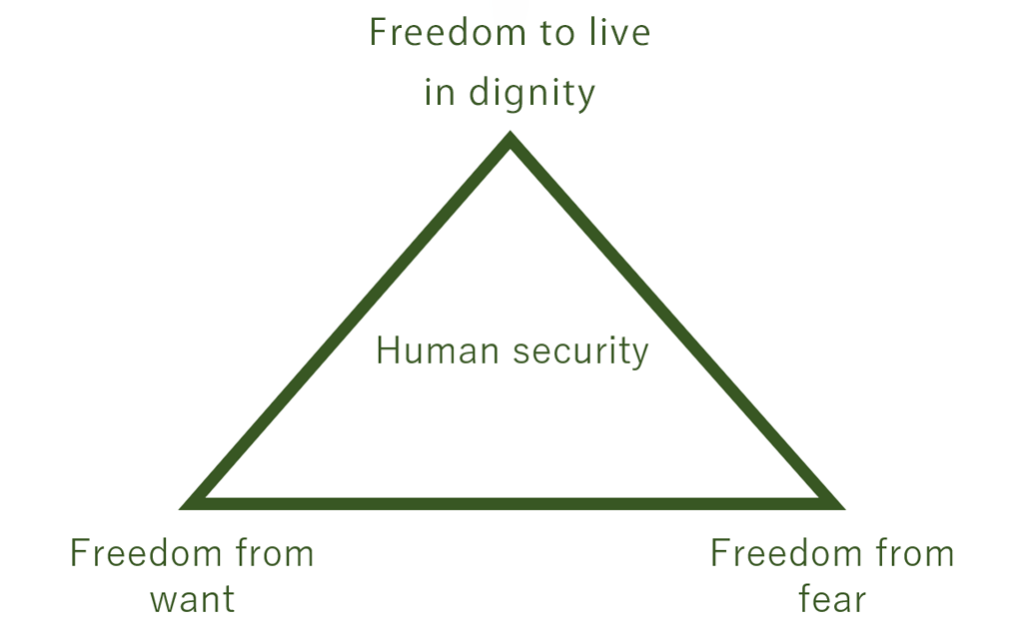
Because in that tension – between the safety of the outside world and the roar of your inner world – lies the modern paradox.
And maybe, in facing it… You’ll find the real you. If you don’t, what exactly do you lose? A blanket full of popcorn leftovers (come on…).
The Concept of Liberty: A Historical Perspective
The ancient Greeks dealt with it through public debate. Medieval folk stoked it through kinship. And today? Liberty flickers behind passwords, saved biometrics, isolation, and so on. Liberty, like all big ideas, has changed form. It was once a communal fire, and now… it’s more like a blown-out candle inside a room.
This points back to the Hellenic Civilisation, when freedom wasn’t an escape from responsibility but the very responsibility itself; therefore, to be free meant to speak, to show up, and to shape the polis with your presence.
You didn’t earn liberty by retreating from the world. No. You earned it by giving to it. It wasn’t a solo journey.
It was a social pact: You served, and in return, you belonged.
Compare that to today, where someone can sell snake oil online and shrug off the consequences: “But no one told me it was fake.”
Or blinding ads of those self-proclaimed 20-year-old millionaires who promise you the ultimate secret to freedom – only to trap you with “premium prices” for hollow hype. Their message is simple: “Let’s trade secrets like commodities” – offer something, however they can, with no guarantees. In this twisted logic, no one is actually qualified to teach; still, they have plenty to say, eventually handing you a free-for-all pitch (a liar becomes a very good liar with practice… trust me on that one).
As history marched forward, freedom shifted. Look at the pre-modern age, for example: liberty meant belonging (to faith, to family, to tradition). You knew who you were because you knew who you stood with. You didn’t chase self-expression because you fulfilled a role.
Freedom came from roots.
Now? That rootedness has been replaced with restlessness. We trade belonging for bank balances. We chase the next thing, the next upgrade, without asking. For what?
Then came modernity. And with it, a sharp pivot: freedom became negative liberty—freedom from rules, freedom from interference, freedom from anything that tells you “no.”
You retreat into a curated identity. You call the shots. Every choice is yours. Every screen is a wall.
But here’s the catch: when you sever all ties (traditions, structures, meaning), you don’t float. You drift.
They’ll still digitise your money, whether you’re pro or anti. The machine moves on.
With no village to serve, no story to carry, and no higher aim to align with – we’re left with the shell of autonomy.
- You can be anything… so what should you be?
- You’re free (but free from what?)
- And from whom, exactly?
This historical arc forces us to return to a deeper question: What does it mean to be free?
Is it doing whatever you want? Or is it perhaps something more – a relationship with self, with community, with something greater than both?
Some philosophers say true liberty lives in synthesis: autonomy and connection.
Individual will and shared meaning.
The more we chase total independence, the more we crave something to belong to – not blindly, but consciously. Because real freedom is two-sided: The right to walk alone, and the courage to stand with others.
But freedom has always had a cost. And today, we seem unwilling to pay it.
We want everything but give almost nothing.
Each age has its paradox. The ancients were interdependent.
We? We are individualised to the point of fracture.
And in that fracture, we feel the tension between our hunger for limitless choice and our ache for rootedness.
Between liberty of the self and meaning beyond the self.
In this age of infinite options and relentless noise, freedom feels heavier than ever.
We’re free to scroll, free to escape, free to disconnect.
But the deeper question remains: What are we free for?
And who says we’re free, anyway?
Maybe it’s time to stop seeing freedom as just a shield from the world—and start treating it
as a duty to something eternal (isn’t that the true point of Democracy?)
A responsibility to seek meaning. To preserve truth. To belong—intentionally.
Otherwise… What are we really doing here? Why even care about being free?
Surely, it has to be more than social media, travelling, and buying an outfit for a special occasion.
DABOIS, do you have anything to say that aligns with or is against my reflections?
The Role of Anxiety: An Instrument of Power
Power doesn’t need batons anymore. It doesn’t need cages or uniforms. It just needs your nerves.
In the modern world, power has changed its tactics. Brute force is outdated. Obvious. Inefficient.
Today, control wears a cleaner suit—its weapon?
Anxiety (it’s the fog that freezes you in place.)
Where violence once barked orders, anxiety whispers. Not through threats, but through feelings—ghosts of fear planted in the mind, shaping us gently, silently.
Look at the post-9/11 surveillance era in the U.S. People lined up to trade privacy for “safety.” They handed over their rights to feel freer. Security for freedom? Really? There’s gotta be something more behind that—but that’s one for the conspiracy theorists.
Or the COVID pandemic? An invisible enemy, repeated 24/7, achieved what no army ever could: submission without resistance—no tanks; no tear gas…just headlines, hashtags, and a rising case count.
People were denied work without a vaccine—then a second one, then a third… Come on.
The brilliance of anxiety as a tool of power is its invisibility.
It doesn’t break your bones—it breaks your inner compass.
It hijacks emotion before reason can even wake up. And when fear takes the wheel, self-reflection stalls.
You stop questioning. You obey. The mouse locks the trap, and calls it home.
Every image. Every alert. Every out-of-context quote—part of a soft orchestra of control.
Plenty of dictators hinding behind algorithms and curated feeds.
You’re “free.” Free to panic in your own echo chamber.
This new power is performative, theatrical. Every policy is a script. Every crisis, a scene. Every leader, a stage actor selling reassurance.
They don’t inform you—they provoke you.
And in the fog, we accept anything. We confuse protection with salvation and control with care.
A cynic—like me—might say: Modern politicians don’t sell policies. They sell anxiety relief. They’re glorified pharmacists of fear, dosing us with vague promises, smiles, and press conferences—like it’s a normal thing.
Our bold ancestors, the creatures of history, and then there’s us—spending a period in lockdown (and many other daily lockdowns we can’t seem to comprehend), counting floor tiles and fridge magnets (at least I did.)
What else was there to do—besides rewatching all the porn on the internet?)
But seriously, this isn’t just about fear. It’s about what happens when fear replaces dialogue. When emotion replaces logic. When citizens become clients of the emotional state.
In that world, critical thinking is rebellion.
And the real danger? Not that we’re controlled— but that we no longer notice. Or care.
So what now?
Maybe it starts with awareness. Just seeing the mechanism gives you back a sliver of autonomy. Not all of it—let’s not get naive. But a step.
And maybe the antidote isn’t just resistance or ideology. Maybe it’s humour. Maybe it’s a little self-irony—it helped me.
People say I look like I’m one step from suicide—while they follow instructions that slowly lead them there instead.
Because fear, like power, wears many masks.
And laughter? Sometimes it’s the only way to see through them.
Which brings us to now—we post the truth on X, because nearly everywhere else, you get shadowbanned. But over there, most everyone takes themselves way too seriously—and let’s be honest: that’s not exactly fun.
How’s that for freedom?
BOIS/GALS—do you agree?
Your chill is real too, DA BOIS: Scrolls. Mandates. Doubts—surely there are more.
So tell me—what’s the frost that damages your freedom?
The Age of Accelerated Change: An Identity Crisis
We no longer live in an era of occasional change. Change is the atmosphere now—constant, inevitable, and all-encompassing.
Technology. Globalization. Digitalisation—the landscape shifts beneath our feet before we’ve even found footing.
Soon enough, Artificial Intelligence might not just enter your search history—but your head (literally.)
This relentless innovation demands relentless adaptation. And with it comes a quiet, creeping crisis: Who am I in a world that won’t stop changing? Who am I going to be in 20 years?
I’m saying this because if you aren’t free—you can’t adapt (not really.)
In the past, stable institutions—universities, science, tradition—offered us maps. You knew where you stood. You had models to follow. Belonging was a given.
Now? These same institutions can’t even keep up with their own textbooks. By the time they speak, the world’s already moved on.
In their place, a new oracle rises: ask AI—it knows more than your father, your grandfather, and every over-decorated professor combined (though it is biased—so yeah, still trust your gut… as always.)
Social networks, once tools of connection, have flattened the hierarchy of knowledge.
Truth competes with trending. Wisdom with memes.
When’s the last time you sat at a table without your phone? We scroll endlessly, floating through infinite voices—but rarely connecting.
We “like” more than we listen. We react more than we reflect.
The result? An overflow of data, an ocean of choices, and a fractured sense of self.
You can be anyone—which often means being no one.
Porn is not sex, and sex is not porn—read that again.
Digital illusion hijacks our emotional compass. What looks like freedom often conceals profound loneliness.
Modern life is rich in possibilities—but poor in depth. Not because knowledge is hidden—but because the mind is drowning in rubbish.
Freedom becomes weightless. Burdensome. When unmoored from values, it floats aimlessly.
You fall—not because you jumped, but because there’s no ground left.
Just another scroll. Another option. Another void.
So, how do we reclaim ourselves in a world where tradition is shattered, and information is infinite? (If you don’t like that question, offer a better one—that’s not a brag, just an invitation.)
The answer isn’t to regress. It’s to reform.
We need new forms of connection—ones that blend individualism with solidarity,
freedom with responsibility. Autonomy must dance with belonging—not cancel it.
The self must evolve again and again—not anchored in rigid structures, but in fluid values that survive the storm.
This identity crisis, as unsettling as it feels, is also an opening.
A chance to craft new paradigms—where technology doesn’t erase tradition, but revives it.
Where invention doesn’t replace belonging, but gives it form—Blade Runner is calling.
The challenge is not to escape the past, but to integrate it—to let its echoes shape our new tools.
So that the individual is formed not only by personal choice, but by shared meaning.
Only then can we turn this stream of digital chaos into a current of inspiration— instead of the maze where we lose ourselves.
I believe we’ll make it. But the real question is: How much of ourselves will we lose along the way?
In this storm of accelerated change, identity might fracture—but it will also evolve (that’s without a doubt—unless a meteor wipes us out like the ever-evolving dinosaurs.)
And in that transformation lies a shot at reclaiming freedom as it was meant to be:
Not isolation—but belonging with direction. Not chaos—but creation.
The Need: A New Spiritual Narrative
In a world of relentless change, collapsing identities, and anxiety-driven governance, one thing becomes increasingly clear:
We need a new spiritual narrative—one that can stitch together the fragmented layers of culture into something coherent, meaningful, and shared.
Throughout history, grand narratives—religious myths, national legends, ideological visions—have anchored human existence.
They offered more than facts. More than rules. They mattered.
They guided both the mind and the heart. They gave people a moral compass, a direction, and a reason to belong.
But today, those old stories are dissolving—dismissed as outdated, outmoded, even laughable.
And in their place? A marketplace of isolated ideals. Individual truths. Spiritual selfies—sure there are plenty helpful, but they are overshadowed by the infinite sources of “freedom.”
We’re told we’re better off than ever—but the sick are sicker, and multiplying like cancer cells.
Progress, it seems, can be a very lonely place.
The new spiritual narrative must be a synthesis: a fusion of technological modernity and age-old human wisdom; a meeting place for rational clarity and emotional depth.
It must remind us that freedom isn’t just doing what you want—it’s choosing to belong. To carry burdens together. To share meaning.
That might just be the most important sentence you read today.
Freedom should no longer be seen as detachment, but as engagement—a conscious act of building a self that thrives inside a community of shared dreams, traditions, and struggles.
Forget about death—or accept it. Focus on what matters here and now—the rest is none of your business.

In a culture drowning in data and paralysed by possibility, the call for a new spiritual framework isn’t idealism—it’s survival.
This new story doesn’t promise utopia. It proposes integration: a life where autonomy grows in tandem with responsibility; where spiritual depth balances the sterile excesses of materialism.
At its core, this narrative must remind us: The meaning of life is found between people.
In connection. In the shared journey toward something true—I know I repeat myself, everything points to that.
And yes—humour belongs in that journey. Not just as relief, but as revelation.
Self-mockery isn’t weakness. It’s a tool of liberation. If you can laugh at your flaws, you strip shame of its power. You stop fearing imperfection—and start becoming human.
Fuck me, I’m inept at plenty: talking, thinking, dancing…though I’ve heard I’m great in bed—or they lied (like usual.)
Humour deflates helplessness. It opens new doors of seeing, being, and imagining. When we stop taking ourselves so seriously, we can finally start taking our actions seriously (I’ve said this before in other blogs—and I’ll keep saying it.)
Because it works. Ask yourself: Why do you feel good when you laugh?
This shift isn’t just personal. It’s generational. A call to build bridges across time— to blend the insights of the past with the tools of the present.
To live as part of a larger story. One we help write every day—choice by choice, step by step.
So let us not idolise ourselves. Seriously—who do you think you are, the president?
Let us serve something bigger. Let us laugh at our delusions. Then rise and build something real. Not a perfect world— but one that means something.
My Incompetent Opinion
I think I’ve said a lot today—but I wish I could say just one more thing.
I don’t understand freedom.
I wasn’t born into oppression, but I’ve certainly suffered in a time that feels oppressive—especially in recent years.
Despite all the supposed freedom we’re given, I’ve rarely felt truly free.
Whether that’s by my own doing, or the result of a world that beheads me daily—with its quiet puppeteers deciding what’s free, what’s more free, and what’s unacceptable—I don’t know.
Like most things that matter, the truth probably lives somewhere in the middle.
I’m free to the extent that I want to be. I can turn off my phone. Unplug the TV. Disconnect the router—that’s something I picked up from my dad. Draw the blinds.
But that won’t stop the sun from burning outside—or people from running full-speed into it (quite the opposite.)
So maybe the task isn’t to shut the world out—but to accept it for what it is.
To find a stable frequency inside ourselves: a rhythm that helps us endure what depletes us, and nurture what replenishes us.
A new narrative lights the way.
The Greeks had the polis—we have shared dreams (but only if we dare to actually share them.)
I’m no rebel, but I’m trying to become one—If you know someone’s hiring, please email me.

DABOIS, what do you think?
- Are you free?
- Do you crave more freedom—or more security?
- Are you honest with yourself?
- With others?
- Even half the time?
This isn’t an accusation. It’s a slap—meant to wake you up.
Here’s another one, to stir the stew inside your head:
The Never-Ending Dilemma
We hold a truth we scarcely comprehend,
pursuing wisdom others have long plated.
Guilty of yearn, of want, and of demand,
fed up with indulgence, lectures we hated.
Security isn’t solace—it weighs like a chain;
a shackle that binds, suffocating and heavy.
The fool proclaims truth the wise ones feign,
and in endless descent, our falls are plenty.
Freedom is struggle, a fight for participation;
it wounds yet bestows a rare, vital gift.
Not cast by ballots or solemn communion—
countless are the signs; the blind is pissed.
Anxieties, pandemics, paralysis, and turmoil—
powers are shifting; we fall into same-different slumber.
The blind is not merely blind but deaf and spoilt.
He who does not know why he lives, he is a foolish vulture.
The Amoeba’s Dilemma (haiku)
freedom or death,
liberty or security,
alive but dead.
Thanks for the slog.
Thanks for the read.
Thanks for being here!
Yours sincerely,
Ivaniel “The Trying” Georgiev
P.S. Special props for the insights of this article to the Bulgarian TV show “Circle Square.”


One response to “Freedom Or Security: The Modern Day Dilemma…”
[…] But you already knew that. The link for it: Freedom Or Security: The Modern Day Dilemma… […]
LikeLike