DABOISASTRGLEDT (phrases) – by Ivaniel “Ivo” Georgiev
DABOIS, what’s happening with you? How’s life treating you lately?
I’m back with another blog—thought I was done with freedom, but nah; seems like it’s baked into my bones, and today it’s tangled with identity, that itchy, heart-exposing beast.
So let’s start here:
- Are you born who you are?
- Or do you become who you are based on what you absorb?
- What role does DNA play? Family? Trauma?
- Is your personality a story you inherited or a script you keep rewriting?
- What can you do about any of it?
- Kid or knife-twister? Who the hell was I? Who am I now?
The more I think about it, the more I realize why I love TV shows so much. They’re not just stories. They’re slow, layered biographies of fictional souls. You watch someone evolve—or stay painfully stuck—week after week. You start to ask yourself: Who am I watching here? And why does it feel so familiar?
So let’s talk about Succession. Not just one of the best shows I’ve ever watched—probably the best. Today’s reflection is sparked by a single scene in Season 3, Episode 8. The timestamp is 28:26. Shiv and her mother, Caroline, are mid-argument:
SHIV: “I was ten, Mom. I was a fucking kid.”
CAROLINE: “You were thirteen. And you knew how to twist the knife. You knew then, and you know now.”
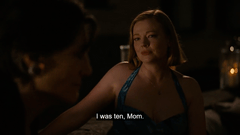
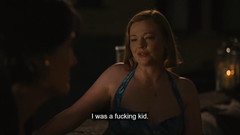
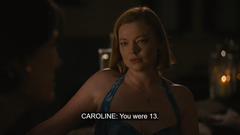
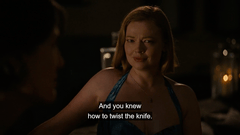
That exchange hit me like a slap. Maybe it hit you too, DABOIS—does it?
I’ve had almost the exact same conversation with my father—plenty of times. I blamed him for the damage he caused me in my youth, for parenting mistakes that moulded me—and some sit even today. And he? He blamed me. I’ve always been hardheaded. That, even as a child, I refused to listen. That I was always going to do what I wanted anyway, no matter how he raised me. (By the way, this is a part of what the book I’m writing right now is about.)
And honestly? He’s not completely wrong. I am a stubborn bastard. Always have been. But still—parenting plays a massive role in how the idiot inside you gets expressed. Whether you’re five, ten, or twenty, there’s a line between guidance and neglect. Especially in your teenage years, when you start to pull away from your parents, absorbing other people’s opinions, ideologies, and vibes. You start building your version of selfhood—out of clay they helped knead.
So I think about that line again: “You knew how to twist the knife.”
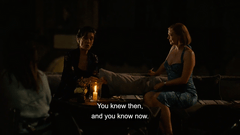
Did she really? Did I?
I don’t think so. And here’s why: just because someone does something, it doesn’t mean they understand the nature of it. Caroline, let’s be honest, is a terrible mother (and that’s not even a spoiler, trust me). My dad isn’t as extreme—but he’s not a paragon either. Both of them blame their kids for things they failed to model. That’s a universal screw-up.
There are always two truths—yours and theirs. Everyone’s the hero in their own mind, and judgment is often a matter of vantage point. But even if someone on the outside tried to tell you who was “more right,” it wouldn’t matter much.
Life doesn’t operate on verdicts. It operates on impact.
So we return to the question at the root of every late-night spiral: Who am I?
Not in a philosophical sense—but in a raw, personal one.
Am I who I was always going to be? Or am I the result of choices I’ve made despite that?
Maybe both.
Identity’s a brawl between what you’re handed and what you choose—or am I wrong?
That’s what this blog is about—how inheritance and intention blur into each other. How we’re shaped by things we didn’t ask for… and how we still try to fight back. Sometimes awkwardly. Sometimes beautifully. Always messily.
So bear with me.
And before we dive deeper, let me say this: Thank you. For reading. For joining me each week in this digital therapy session. I hope that DABOISASTRGLEDT continues to grow into a real community—a place for less shame, more honesty, and above all, more effort. You don’t need to have it figured out. None of us does. But you do have to try.
And hey—if you missed last week’s edition: The Dating Manifesto… go check it out. It was a little atypical—more humour-heavy than usual—but still straight from the heart.
If you like the type of content I’m sharing here, you can definitely check out my daily newsletter for some more interesting twists about different aspects of life (and some free goodies) – Subscribe to My Newsletter.
The Europe tour checkpoint: We’ve been to Serbia, Bosnia, Croatia, and we are exploring Italy right now. So far, so good. There’s so much to talk about, but right now I’m trying to focus on the journey and my upcoming book, while travelling and living life—as much as all that combined is possible.
Now, back to today’s topic.
Legacy: The Background Music of Our Being
From the moment we open our eyes, we’re already under the influence of something invisible—but incredibly powerful: our genetic code (known as DNA).
I like to think of it as a kind of ancient script, handed down through generations. It’s not written in ink, but in instincts, reflexes, and emotional rhythms. It quietly shapes the framework of who we’ll become—our temperament, our default reactions to stress, the way we handle conflict, how we love, how we rage, how we shut down, etc.
But heredity isn’t just about DNA strands dancing around. It’s also the emotional climate we grow up in. The culture that surrounds us. The voices we hear in our heads that sound eerily like our parents—and man, there are so many. It’s the atmosphere of a home, the silences that were louder than words, the jokes that taught us what’s okay to laugh at—mostly not (at least for me, because humour is very strangly perceived in Bulgaria—, and the unspoken rules that told us who we’re allowed to be—that one for sure.
Why do I think about and will describe it as background music? Because that’s what it feels like. A low, constant hum plays underneath everything. It doesn’t dictate the exact notes we play—but it definitely influences the key, the tempo, the instruments we instinctively reach for when life asks us to perform.
That melody we inherit can be haunting. Or comforting. Or both.
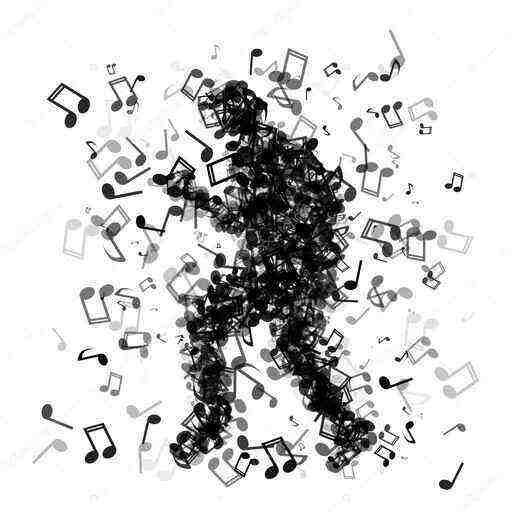
But here’s the good news: background music doesn’t set the entire score. You can build over it. You can change the rhythm. Remix the melody. Even add wild, unexpected solos. Yes, the instruments are given to you—but what do you do with them? That’s where your freedom lives.
And I don’t know anything about music, so better ask a musician if that’s true—but I’m confident.
Our lives, then, are not rigid compositions but open symphonies—shifting, evolving, rewritten again and again. Legacy gives us the starting chord, sure.
But the rest? The rest is interpretation.
The rest is yours.
Free Will: The Duel Between Predestination and Choice
Who we are is the product of two forces—one pulling us backwards, the other pushing us forward. Hereditary predispositions, family culture, historical baggage: they act like gravity.
Constant. Quiet. Invisible. And then there’s the force we claim as our own—our will to act, to change, to resist.
To me, identity is the result of a constant war between the given and the chosen. It’s like a Tango—watch “Scent of a Woman.” Some steps are born from instinct, others from creativity. Sometimes we move with the rhythm of our past; other times, we deliberately break it.
No one’s DNA or upbringing gets to dictate who we must become. That script may have been handed to us, but we don’t have to read it out loud. Every decision is a chance to edit the narrative—to chip away at the old structure and build something more reflective of who we choose to be. Heredity may provide the columns of the building, but it’s free will that decorates, demolishes, or rebuilds the rooms—this is the best I came up with.
In this context, rebellion—whether in the form of action or refusal—is more than defiance. It’s consciousness. A kind of spiritual punctuation that says, “I see what I’ve inherited, and I want more than that.” These small resistances spark internal revolutions. They clear space for new values to grow.
Still, not every protest is profound. These days, a lot of what passes for rebellion is noise—people screaming about causes they don’t understand or even believe in (I mean, I’m happy to watch some toppled females parading the streets of Paris… but come on). However, the real dissent, the kind born from inner conflict, is what matures us. It’s what happens when you stop asking what your family expects of you and start asking what you expect of yourself.
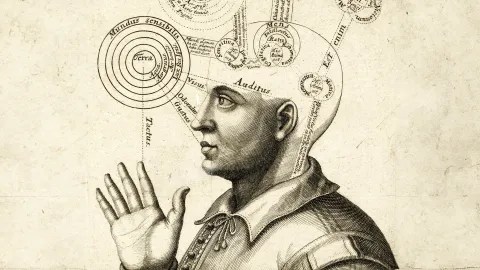
I’ve felt that most during arguments with my father—where anger and longing blur together, where accusations become a strange kind of connection. Painful as those moments are, they start something. They’re the spark. They peel back the roles we’ve been playing and reveal the space where something new can begin.
- So, what is personal freedom?
- Is it the refusal to follow the script?
- The audacity to say, “No, I don’t want to be that kind of man”?
- Or is it the silent courage to do nothing at all—to let go of old expectations without the need for a dramatic break?
I don’t think freedom is clean. It’s messy. Because we’re not entirely our own creation, and neither were our parents. Life doesn’t divide neatly into heroes and villains. There’s optimism, sure. But there’s also the sobering awareness that none of us escapes our contradictions.
Maybe that’s what the yin and yang have always tried to tell us: that growth lives in duality.
Still, in the end, it’s personal choice—not genetics—that draws the map. Even the smallest decision can shift our trajectory. When we say no—especially when we say no—we’re choosing not to be ruled by the past. Or at least, that’s what we hope.
Those tough conversations with my father? They remind me that every critique carries within it a strange kind of invitation: “You can be different.” And maybe that’s the point where inheritance and choice stop being enemies and start being co-authors.
We may not control the forces that launched us into this world, but we are responsible for our trajectory. There’s no grand finale to this story—just an ongoing process of creation, destruction, and reinvention.
Free will, then, is not a static idea. It’s like an object hurtling through time and space, unbound by gravity, altered only by the collisions it endures. Still moving. Still becoming. No matter the direction.
Rebellion: The Path of Personal Transformation and How to Create Our Own Reality
When we speak of rebellion, we shouldn’t reduce it to free will alone—it’s also a form of protest. And in that protest lies something creative: an individual’s transformation unfolding in real time. The question “Is everything I don’t do a form of rebellion?” doesn’t simply imply refusal—it gestures toward a deeper resistance. A resistance against internal and external norms that no longer align with our vision of a better life.
Rebellion doesn’t have to be loud. Sometimes it’s silent. A decision not to act. A refusal to play a role written by someone else.
I didn’t know shit at 13, just felt the weight. Identity’s a slugfest: DNA, family vibes, trauma—they throw punches, but I try to swing back (did I… I have no idea). I was a kid, sure, but stubborn as fuck—to a dregree still am.
In my case, it’s certainly both. How about yours?
To me, rebellion is how we assert our right to a different script—even when we can’t prove it. It’s how I try to claim a path aligned with my values. That struggle alone keeps me going.
The refusal to be defined by genetics or culture is, for me, the seed of hope—a hope that maybe, just maybe, I’m overcoming the inner split I’ve long carried. The pain of the past—its contradictions and conflicts, especially those rooted in my relationship with my father—hasn’t disappeared, but it has become the raw material for personal growth. And to be clear—I said hope.
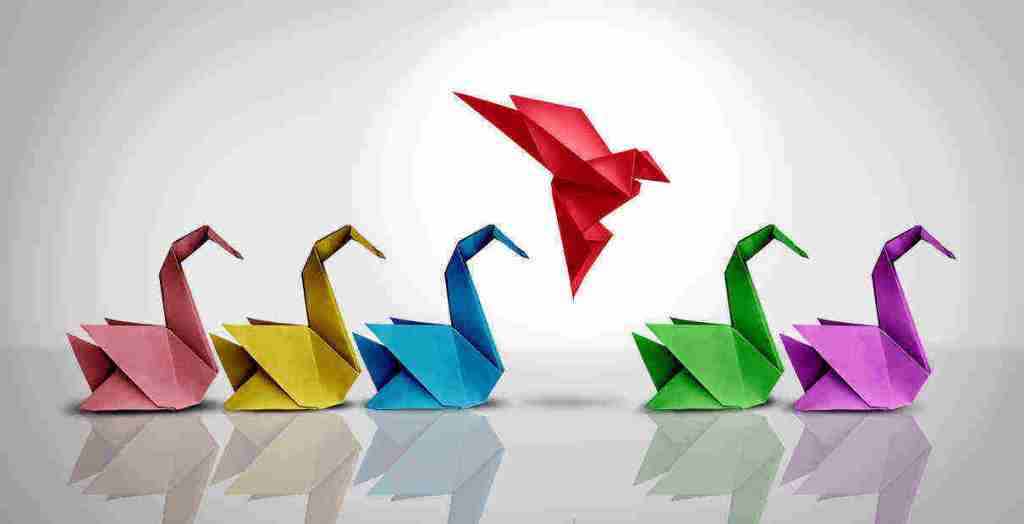
This isn’t about rejecting everything we inherit. It’s about choosing—consciously—which parts of our legacy to carry forward and which to leave behind. It’s a sorting process. A mechanism for building a stronger, more authentic self.
What do you think, BOIS and GALS?
As we move through life, trials are inevitable. These are the moments when we have to realise we’re not just products of the past—we’re participants in shaping the future. For me, those moments often emerge from difficult, emotionally charged conversations with my father. They spark something. A kind of personal revolution.
In these moments, I see free will not as a single choice, but as a practice—a muscle strengthened over time. And through that practice, I’ve learned that some systems—family rules, historical expectations—simply no longer serve me. It’s through deliberate choice that I paint the canvas of my life.
That act of creation is not only mental or emotional—it’s spiritual illumination.
When I look at Shiv—when she says she was just a kid—I feel it. Because I was, too. A kid. Carrying the scars of the past and the possibility of becoming more. That doesn’t excuse what’s been done. But it does give room for reflection.
This contrast—between the child and the adult, between inheritance and personal choice—is what reminds me that life is not a fixed identity. It’s a constant rebirth—though a short one (but long enough to stop repeating the same mistakes).
And everyone deserves a new chance… and maybe even a new self.
If we pause to analyse, we’ll find there’s no absolute truth—no final formula for who we are meant to be. Every choice, every moment of doubt, even those paralysing indecisions—they’re all part of the human script.
A script we write, erase, and rewrite over and over.
So when people ask, “Are you born who you are, or do you become who you are?”—the answer isn’t clear-cut. It never was. This is a lifelong dialogue. Genetics and family trees might provide the backdrop, but the transformation begins the moment we decide to change the plot.
We’re not just passive observers. We are all in this—together.
And yes—this process is hard. It hurts. Awareness can sting, sometimes unbearably. But that pain? It carries the seed of change. Within it is the strength to stand up again, look around, and walk forward—slowly, maybe… but gloriously. Relatively.
Revolt Dialogue: From Succession to Personal Conversations with My Father
One of the most striking reflections of inner conflict—and the possibility of liberation—I’ve seen recently comes from this brief but powerful dialogue in Succession.
A few short lines… yet they carry the weight of generations.
They reveal how, from a young age, we’re shaped by silent forces: family dynamics, unspoken expectations, and buried pain. For me, that scene wasn’t just TV—it felt like a live session. A reflection of my own late-night conversations with my father.
In these exchanges, the line between blame and understanding blurs. I hold him accountable for past contradictions, moments where his actions never quite aligned with his words. He, in turn, sees my resistance not as a valid search for identity, but as a choice to disobey. A kind of betrayal. It’s not unlike the tension between Shiv and her mother—where personal disagreement meets the weight of inherited patterns, and neither side can fully untangle the thread.
Often, I catch myself thinking: Is this rebellion?
Not wanting to be who he wants—not in the way he imagines it. Because he has said one thing and done another far too many times. And maybe that’s why I push back. Maybe that’s why I distance myself from the mould.
Yet, on his side, there’s always the same refrain: If someone is born with a rebellious spirit, nothing can change that. Fate will win.
He believes in a kind of predestination—that some paths are set, no matter the method of parenting. But that raises the question: Is rebellion fate… or is it resistance?
This back-and-forth, this interchangeability of blame and responsibility between us, brings me to the same old question: How much of who I am is inherited, and how much is chosen?
Parents do that—blame the kid to skip the mirror conversation with themselves. It’s true I lied to survive their silences, spun stories so wild I lost the truth, and that is a horrible thing to do—but what about their part? (I can’t accept the words, “We did our best.”)

In this dynamic—just like in the dialogue between Shiv and Caroline—there’s something profound. A quiet, burning possibility: the power to choose against what’s been handed down. To say, “No, this ends here,” even if it doesn’t always look like a revolution.
- But can we really separate ourselves from what’s passed down?
- Or are we simply rewriting the same story in a different font?
What do you think, DABOIS?
Philosophical Reflections: Insights and the Truth Behind Freedom
Since antiquity, the question has echoed through time: Are we prisoners of an unchanging essence, or can we shape who we become?
Plato and Aristotle offered opposing blueprints for the self. Plato looked inward—toward unshakable ideals, suggesting that our truth lives in a fixed inner world of forms. Aristotle, ever more pragmatic, insisted that who we are is formed through repetition—that virtue, and therefore identity, is carved slowly by action, choice, and habit.
This binary makes me wonder: If our genetic and cultural rhythms are merely a starting point, could free will be the instrument through which we recompose our own symphony?
Friedrich Nietzsche, in contrast, breaks the mould entirely. To him, self-creation is not a rejection of what we’ve inherited—it’s a bold act of revaluation. A creative rebellion. Not an escape from limits, but a transformation of them.
It’s not an easy journey. Each act—whether resistance or surrender—carries with it the sharp edge of pain and the promise of renewal.
We are not one or the other.
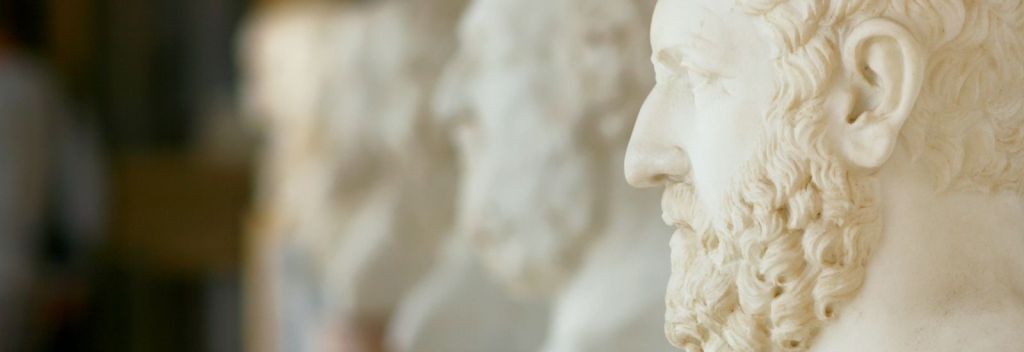
We are both rooted in inheritance, yet reaching toward choice. Bound to a lineage, yet free to redefine its meaning.
This fusion of forces—deep biological echoes and the daily decision to act otherwise—is the eternal paradox of identity.
- Plato teaches that ideals are timeless, yes—but they do not dictate to us.
- Aristotle reminds us that goodness is a practised muscle.
- Sartre disrupts both, urging us to accept that our essence is not prewritten; thus, we are not born with meaning; we create it, moment by moment, in decision after decision.
- And Nietzsche? He hands us the chisel and says, Carve your own name into the world.
Freedom, then, isn’t about erasing the past. It’s about confronting it. Reshaping it. Taking what’s been handed down—and choosing what to carry forward.
This, to me, is the truth behind freedom. Not escape, but authorship.
Final Thoughts: The Dialogue That Goes On Forever
What does all this mean for us—as humans?
It means our identity is not a fixed sculpture, but a living dialogue. A dialogue between past and present. Between pain and hope. Between legacy and free will. Our history doesn’t have to define us unless we let it. It can truly become ours—if we dare to will it into something new.
Here are a few questions to hold in your heart as you walk the path of becoming:
- If the lines of heritage are only a starting point, how can we use free will to break old patterns and forge a new way forward?
- Can the inner pain of childhood memories be transformed into strength—into fuel for something greater?
- Is refusing to follow inherited scripts actually a form of conscious rebellion—a brave interruption of automatic responses?
- And how do we balance what we’ve received from our parents with the person we choose to become, step by step, through our own decisions?
The answers, I leave to you. I’ve said quite a bit. But if there’s one thing I’d urge—it’s this:
For anyone caught between the weight of parental expectations and the yearning for personal freedom, the key is simple—but not easy: Have the courage to ask the questions. Even if the answers don’t come right away. And then—be honest about what you find.
Let’s not be passive witnesses to life. Let’s be protagonists. Every “rebellious” act—however small—is a brick in the foundation of something real. What will be your next conscious act of rebellion against the predetermined? Maybe in that single act lies the true power of our humanity: The power to rewrite history. The power to ensure that no legacy is final. The power to compose a new symphony—one choice, one note at a time.
May the tension between Shiv and Caroline in Succession, and the conversations between my father and me, resonate with you. Because every word, every moment, every decision is part of the bigger story you’re here to write.
Let’s ask the kinds of questions that tear apart ready-made frames. Because it’s in that tension—in that struggle to define ourselves—that the magic of life is born.
How do we live in a world where inheritance and free will are so tightly interwoven? The answer will always remain open. But it should move us—to courage, to love, to a fight worth having.
Because in the end, we are not simply what we’ve been handed. We are what we choose to become.
So I’ll leave you with even more questions that walk beside every thinking human being:
• What does it truly mean for you to become who you want to be?
• How will you use the gift of free will to overcome the inherited limits in your story?
• Will you dare to embrace the pain of the past as a catalyst for transformation?
The answers may never be final. But the seeking, the trying—that is the gift. And may that gift inspire you to keep moving. To build not just a better self—but a more honest, emotionally intelligent society.
After all, identity is a dialogue without end. A prism of countless reflections. It stirs doubt, yes—but that doubt teaches. That doubt makes us grow.
What story will you choose to tell?
The pen is in your hand.
Let this be an invitation not just to think—but to act. Legacy does not have to be a chain. It can be a chance—a chance to prove that the chain is not a curse, but a test. Freedom, though difficult, gives us the rarest thing of all: the opportunity to be real.
How will you continue writing your story? That’s the question to keep in your heart. Because you are the choice. The one that shapes not just you—but the world around you.
Let every action, every word, and every question you carry forward be a part of this one truth: Life is a continuous process of choice, rebellion, and creation. You are not merely a product of the past. You are a child of the future.
So, how will you paint the picture of your life? You may not be a good painter or feel ready—but pick up the brush anyway. Try. Again and again.
I Was, Am, Will…
Born into confinement, without the right to be asked,
my existence unchosen—a fate was set in motion.
With roots I never desired, yet I love with all my heart,
spellbound—good or bad—together we are growing.
I seek understanding. Love, even when scarce:
Why am I who I am? Why, why must it be me?
I wander slowly, amidst insults—I’m a rebel—
searching why I live, why I love jazz, why I am free.
Yes, I am the one they see and know… perhaps.
But I am far more than their bold announcements.
Between truth and lie, in the very world of facts,
I am who I was, who I am—narrator of this legend…
Think about life—deeply, not obsessively. Don’t overthink past regrets or future “what-ifs.”
Just remember: Life was never meant to be easy.
Sticking to the script fucks you up. I carried Dad’s “born stubborn” label like a tattoo, lied to fit it, lost years to shame—but I never cared about shame… until I decided to be conscious, which took so, so long.
Identity’s no statue—it’s an arm-wrestling match you keep fighting.
My lies put me behind bars; now my freedom’s my pen—or keyboard…whatever.
So burn your script or try to learn your part. In case you can’t, grab your pen and start somewhere—anywhere.
There’s always more to be said. But nothing said will matter if you don’t make the decisions you know you need to make.
Thank you again for your time!
Until the next one.
Yours sincerely,
Ivaniel “The Child of Future” Georgiev


Leave a Reply