
DABOISASTRGLEDT – by Ivaniel “Ivo” Georgiev
DABOIS, Mr “Struggling” himself, is back with another round of questions—not to make your life easier, but more meaningful. And as we all know, meaning takes effort—which means more struggles.
This week’s blog was sparked by a suggestion from a friend of mine—we’ll call her Divine—who’s slogging through a period of doubt and relentless introspection. You might know it as that modern condition: overthinking the overthinking. A loop with no finish line—or as I like to call it “life’s glorious shitstorm.”
She asked me to explore a theme that’s simple on the surface, but impossibly heavy underneath: Control. Thoughts. Emotions. How successful can we really be in directing the lives we’ve been given?
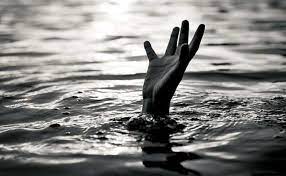
So while she’s drowning in doubt, overthinking the overthink, that got me pacing. Let me say it plainly—there’s very little we actually control in this world. Our thoughts? Maybe. Our reactions in the face of chaos? Possibly. But everything else? External forces. We can try to shape them, sure, but effort doesn’t guarantee outcome.
Divine’s problems are not unique. But they feel unique—because they’re hers. Because she’s the only one who can deal with them. And lately, it seems she’s let the tide guide her direction. Personally, I think that’s dangerous.
When you give up the wheel, the waves decide.
I’m not here to judge her. On the contrary—I’m trying to step back, observe, and maybe find a few clues. The painful questions and their numbing answers. Because often, when pain returns in cycles, it’s not just life being cruel—it’s life pointing at something you keep avoiding.
Out of respect for her privacy, I won’t speak to her exact situation. But I will talk about the pattern. The human pattern. What happens when we’re cornered by what we can’t change, but still want to change? And the strange power that grows in accepting the difference.
Because, let’s be honest: the world is complicated—but our lives aren’t always. We make them so. Not because we’re stupid, but because we stop talking. We assume. We hide. We get quiet about the things that hurt
And why is that? Maybe because silence gives us a false sense of control. Maybe because secrets feel like weapons. They kind of are. But what do you win when you outmanoeuvre someone emotionally? What do you really get from having the upper hand?
Money, power, control—those are human inventions. Nature doesn’t deal in that. In nature, there is only dominance—and it’s physical. We, on the other hand, evolved a different kind of muscle: strategy. We use it to make the game unfair. And maybe… that’s normal.
After all, evolution brought us here. If it wasn’t meant to happen, maybe it wouldn’t have.
But in this evolved chaos, one truth still stands: for every force that tries to tempt you, trick you, or test you—there is a force inside you that can withstand it. If you’re willing to develop it. If you choose not to give up.
And then there’s the moment when you try to be open—very often we are misunderstood (which is equally as bad… if not worse).
Divine’s stuck, I’ve been stuck—hell, you’ve been there, too. Hiding, assuming, dodging—but for how long?
Volcanoes erupt and it’s never pretty—but we are not volcanoes, so let’s not erupt and exhale gracefully.
Before we dive deeper into today’s topic, I just want to thank all of you for joining me again. Another week. Another chance to reflect. I hope DABOISASTRGLEDT becomes more than a blog. I hope it becomes a home—a space for more forgiveness, more understanding, and most importantly, more effort.
So BOIS and GALS, don’t worry. You’re not alone. We’re all struggling—just doing our best in the huddle.
If you missed last week’s edition or want to catch up, here’s a link to the latest post: Do You Really Want To: Or Do You Just Want To…
Europe tour update: Bordeaux, La Rochelle, Angers, and Le Mans were all great. Paris is a league of itself—there’s too much to describe its beauty. We have just arrived in Luxembourg and will spend the day here. Next is Belgium. Will be in touch.
How and What We Can Control
Some people live with the conviction that we control everything that happens in our lives. And to an extent—they’re right. Whatever we experience, whether it was “meant” to happen or not—did happen.
It’s a fact. It’s real. And we must move forward regardless.
But in their confidence, they often ignore the obvious: the existence of external forces. And the simple truth that sometimes, we don’t understand why things happen to us.
For some, that clarity comes after years. For others, a lifetime isn’t enough.
Then, there are those who blame everything but themselves. The world. The people around them. Circumstances. And you know what? They’re also a little bit right. Some are born with less. In countries that don’t serve their citizens. In homes where freedom is a luxury. In systems that never let them breathe.
But that still doesn’t mean the blame game gets you far. Because more often than not, these “reasons” are really excuses. For avoiding decisions we know we should make. For clinging to something we’re afraid to lose. For holding on to beliefs that feel good, but have nothing to do with truth. It’s easier to stay stuck—even when the stuck place is hard.
Divine’s spiralling, wanting to steer her life, but the world’s a rigged game—systems, luck, other people’s noise, etc.
You can’t control the waves, only your paddle.

So instead of asking why things happen, maybe it’s time to ask: What can I actually control? And how do I do it well?
Let’s break it down:
1. Thoughts
Your mind is a hurricane—a very destructive one (if measurements are not taken). A place where thousands of things swirl—and only some ever become real.
Thoughts don’t come out of nowhere. They’re shaped by beliefs, values, and experiences—both good and bad. Becoming aware of those thoughts is your first tool. It lets you spot patterns, filter distortions, and stop spirals before they take over.
Your thoughts define how you see the world—and how you see yourself.
2. Reactions
This is your secret superpower. How you respond to what happens is always up to you.
Reactions are one of the few freedom tools that no one can take from you. They may be impulsive, automatic, messy—but they are also teachable.
Through them, we learn. We evolve. You can choose whether a reaction leads you toward growth or keeps you locked in a cycle of harm.
3. Choices and Actions
What you say. What you do. How you spend your time. The way you treat people—and yourself.
These are the building blocks of your life. Tiny choices. Massive consequences. You don’t have to live in the shadow of the past—but you do have to show up in the present.
Choices are decisions born from thought and emotion. Actions are their physical expression. Together, they build your future. But only if you act with discipline, honesty, and the courage to step forward—even when you’re afraid.
Mastering thoughts, reactions, choices, and actions? That’s the closest thing we have to real power. Because in a world of chaos and uncertainty, the only real control we have is within.
But that kind of control doesn’t come easily. It takes:
→ Awareness
Seeing your thoughts clearly and tracing their emotional fingerprints. And yes, it’s hard—maybe the hardest thing of all. Because awareness makes you feel more. Suffer more. Notice what others miss. You’ll see people unravel and won’t always be able to help. That hurts.
But it also lets you see beauty. You’ll find meaning in tiny details. You’ll be present in moments that others let pass. That’s the trade-off: pain and peace, side by side.
→ Redirection
When your mind goes dark, you don’t need to flip a switch—you just need to guide the current. Not all negative thoughts are harmful. Sometimes they carry insight. Sometimes they’re warnings. But you have to ask: Why am I thinking this? What’s behind it? What situation triggered it? Redirection isn’t denial. It’s understanding the root, then choosing what to water.
→ Gratitude Practice
No, not blind optimism. Not fake positivity. But real gratitude. Grounded in realism. (I talk about this plenty). A practice that requires effort—not some weird and unnecessary preaching. Gratitude is an action. It’s doing hard things out of love and principle. It’s enduring discomfort now for peace later. Definitely not easy—but in the long term, always worth it.
Because when you really feel it, you no longer need to escape. You see what’s already there—and that changes everything.
Let’s not lie to ourselves. Life is unfair. People are flawed. Systems are broken. But within that mess, there’s still room for agency. Not control over the world—but control over how we show up in it.
And that… is enough to change your life.
One more—just in case you haven’t paid attention:
- What’s control? A lie—but your fight’s real.
- Thoughts? They’re a storm—track them, don’t tame them.
- Reactions? That’s your blade—sharpen it like a Japanese katana.
- Choices? Your map—draw it with honesty.
Can We Be Effective at It as Emotional Beings
- Can we ever be one hundred per cent effective?
- And if so, what does that even look like?
- What does true control mean?
Thoughts. Reactions. Emotions. Choices. Actions.
These are the five inner forces that shape us—everything else is background noise. External factors may nudge or shake us, but our real power lies within.
Control over the world? Illusion.
Control over property—our mind, body, attention? That’s the real asset.
But let’s be real.
Absolute control—one hundred per cent mastery—sounds more like a utopia than an attainable goal. Our thoughts aren’t born in a cardboard box. They’re shaped by culture, trauma, mood, desires, and fears. The world throws triggers at us like someone training their aim at the shooting ground—and bullets can ricochet.
When I talk about “control,” I’m not advocating for suppressing thoughts or chasing some fake perfection. I’m talking about awareness—knowing why certain thoughts arise and being able to respond, not just react.

That takes work. Habits. It takes building practices that act like anchors when the tide hits:
- Mindfulness.
- Honest reflection.
- Talking it out.
- Meditation or simply slowing the hell down.
Not to suppress the mind’s chaos—but to look yourself in the mirror without your eyes flinching. To say: “I see you. I get why you’re here. But you don’t run the things around here.”
| Area | Approach/Habit | Meaning/Example |
| Thoughts | Awareness, self-reflection | Recognizing where your thoughts come from |
| Emotions | Acceptance, meditation | Reflecting rather than repressing or running |
| Reactions | Pause, contextual analysis | Shifting from impulse to intention |
| Choices/Actions | Planning, healthy routines | Investing in long-term outcomes through daily decisions |
These are just examples. Not the “right” ones. Not the final answer. Just what’s worked for me when I’ve tried to steer the wheel from the inside out.
Look—full control over our thoughts and actions is a myth (you gotta get over it).
We live in a world that constantly tempts, distracts, and disturbs. Sure, you can train for years. You can become a disciplined machine—joint the monks if you wish. But if, one day, you’re handed exactly the thing you’ve been avoiding, and you give in for just a moment?
Poof. Years of progress can vanish.
What we can do is work on what we actually influence: ourselves.
Let’s take Gandhi. He didn’t magically suppress his inner chaos. He didn’t operate outside of human impulse. He understood his environment, disciplined himself, showed up with consistency, and used the tools available to him at the right moment. He didn’t have control of the situation; he just mastered some parts that let him operate successfully.
That’s the game. Control is limited—but within those limits, we’ve got gold. If we miss the warning signs, if we fall into old habits—our new, healthier patterns should ring like fire alarms. These inner habits become internal systems of accountability.
They remind us who we’re trying to become.
So maybe it’s not about controlling every thought. Maybe it’s about understanding the source of our thoughts and becoming aware of the decisions we make because of them. Does that make sense? I really hope it does—because I think it’s one of the most relevant truths.
Another thing: We’re made of emotion. That’s not a weakness—it’s a fact.
But emotions are often just a need of what you lack. The desire for something we don’t have. The fear we’ll never get it. The shame of having had it and lost it. The itch for meaning. The pull of fantasy. The sting of imperfection. (Feel free to add more.)
So it’s fair to ask:
- What is it that we want so badly?
- Do we even need it?
- And if we get it… what then?
These are the kinds of questions that slow emotional chaos down just enough for us to breathe through it—try and see for yourself.
Even after years of growth, one strong wave—one bad day—can knock you off your feet.
And that’s okay. Success isn’t about never slipping.
It’s about standing up faster. Stronger. Clearer. Each time.
Perfection is a trap. Immunity is a myth. Resilience is the real flex.
It all comes down to context. Knowing your environment. Knowing yourself.
And more and more, I’m convinced: Real power isn’t in trying to change the whole damn world. It’s in building an inner refuge that can weather the storms of the world around us.
So maybe the question isn’t “Can I control everything?”
Maybe it’s “How far am I willing to go to build resilience?”
Through choices. Habits. Awareness. Self-compassion. Curiosity. And, most importantly, honesty.
This is what growth looks like. It’s messy. Ongoing. And every mistake is a new chance to rise.
Let’s stop thinking of control as a switch—on or off—and walk the journey while paying more attention.
So, BOIS and GALS—Don’t be shy. Don’t stay silent.
Your voice matters. Not just to me. But to the world.
Let’s talk about it. I’d be grateful to hear your take.
Relationships and Their Part In Our Life
Relationships—whether friendships, family ties, or especially intimate connections—form the fabric of our lives. They offer inspiration, creativity, and emotional depth, but they also bring challenges that can shake us to the core. These aren’t just external battles—they stir internal storms. Emotions and thoughts blur together, confusing the mind and often obscuring the path toward what we might call the “right” decision—or, perhaps more importantly, the one that does the least harm.
At times, relationships feel like the arena in the Colosseum: not only a space where we receive affection or love, but mostly where parts of us are stripped away.
In such emotional terrain, people often say: “Trust your gut.” But gut instinct, while appealing, is often a cliché—at least to me. It offers little when we’re caught in the tangle of strong emotions and blurred thoughts. I don’t believe the core question is whether we follow our instinct—because instinct can be shallow and reactive. Instead, I believe the real task is recognising patterns. Noticing recurring methods and emotional cycles that quietly return, time and time again.
If you look at history, it never repeats exactly—but it rhymes. The wheel turns in familiar ways. Some people build empires or avoid destruction by spotting patterns early. That’s just an example, of course—but it’s proof that the mind can be used as a compass, not just a container filled with scrap.
So in the arena of relationships, the question becomes: Are we capable of noticing what repeats? Are we honest enough with ourselves to see our own role in the loops we keep re-entering?
It takes knowledge and experience. Not just the knowledge of the body or the street, but of psychology, philosophy, behavioural science and so on. Personally, I believe theory matters—it gives us the vocabulary to name what we feel. But theory must be embodied. It must become action. That’s where wisdom lives: in the fusion of knowledge and lived reality. When we dare to try, dare to fail, dare to understand—again and again.
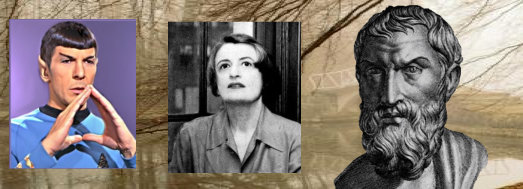
Because ultimately, what we are trying to understand is ourselves. And when other people enter that equation, the challenge deepens: we must understand them, too—how they act, why they react, and what their needs might silently scream beneath the surface.
→ Recognising Repeatable Patterns
Instead of leaning solely on vague instinct, we must become detectives of pattern. Relationships—especially intimate ones—often fall into predictable cycles. Conflict. Distance. Reunion. It’s not always dramatic. Sometimes it’s subtle: the recurring argument, the unspoken tension, the craving for validation.
These patterns arise from unhealed wounds and unmet needs. But once recognised, they become manageable. We don’t have to be perfect—just aware. We can learn to pause before reacting. We can shift from impulsive emotion to intentional response.
I’m not saying you have to become Sherlock Holmes—but in a way, you have to.
→ Knowledge & Experience: A Dual Force
Theory sharpens our understanding. But without practice, it’s inert. Relationships demand that we not only know better—but do better. That means building habits, choosing conscious behaviour, and reflecting on past choices with courage—not self-blame.
When we know how people tend to act in specific emotional contexts—when we understand the why behind behaviours—we gain the power to protect ourselves and offer something healthier in return. This isn’t manipulation. It’s maturity.
Others may blame you for being aware—but that’s their problem if they do… well, I think some kind of a pattern hides in there.
→ The Power of Habits & Self-Control
To manage our inner world in relationships, we need systems. Habits act like an internal “fire alarm”—alerting us when old patterns return. The goal isn’t to eliminate emotion. It’s to integrate it.
We feel, but we don’t collapse. We acknowledge, but we don’t obey every emotional impulse.
The ability to hold space between emotion and action—that’s the skill. And it’s one built slowly, over time, with practice. With intention.
Trust the process—but never lie to yourself (and if you catch yourself doing it… act immediately).
I believe that relationships can block our truest self-expression if we don’t reflect. If we move blindly through cycles. If we don’t stop to ask: Why do I act this way? What am I really seeking?
Before the final poem and haiku, I’d like to share two personal stories. They are not told for drama. They are told to illuminate. To show the patterns I speak of. To connect the abstract to the real.
Because in the end, we don’t grow by reading alone.
We grow by living—and then looking closely.
There Is No Such Thing as a GRAND FINALE
Story #1 – For a while, I was seeing a girl I truly believed things would work out with—that maybe this time, it would go somewhere new. We met in the summer of ‘22. She was interesting, even different. Maybe it was the way our upbringings mirrored each other, the quirks we shared, or the character she carried.
But despite the familiarity, we were also separated by a thousand visible, yet invisible walls.
I had certain ideas about the world and filtered it all through a peculiar sense of humor. She, on the other hand, wasn’t much into anything—more fears than interests, more hesitation than desire. I spent a lot of time trying to “heal” her, to help her see the world differently. But she didn’t possess what I speak about in this blog: awareness, or the desire for it. She chased dreams that required sacrifice but was unwilling to pay the price.
In hindsight, maybe she didn’t even like me as much as I thought. But I don’t believe that was the issue. The issue was me, trying to change someone who didn’t ask to be changed—or did but never really meant it.
I pushed her into places she didn’t want to go—and that drove her away. I tried to have an honest final conversation with her, thinking she’d understand now that there were no feelings involved. But she’s deeply emotional—and truth, no matter when delivered, still triggers defense.
I am not perfect. I’ve said it many times before. That’s why I seek feedback, why I ask questions. But with her, I got nothing—literally nothing “ahem, ahem.” I tried again after a few months, still believing I saw something valuable. It was a déjà vu—the bad kind.
And even though it didn’t lead anywhere, I don’t regret it. I learned. I hope she’s okay, and that her life has moved in a better direction—because the one she was living in was quietly destroying her, whether she admitted it or not.
Story #2 – This one’s been unfolding my whole life. If you’ve followed this blog, it won’t surprise you that the protagonist is my father—or the sidekick… whatever.
You don’t choose your parents—and though you can walk away from them, it’s rarely the best answer. No one will care about you quite the way your family does.
Our relationship is… destructive, yes. But it’s also instructive, if you look closely enough at the patterns. We’re a kind of blood-bound Don Quixote and Sancho Panza—or maybe Rick and Morty, minus the sci-fi but with just as many explosive arguments.
He denies me; I deny him. He disapproves; I retaliate. Over the years, nothing really changed—except maybe me (a tiny bit). I’ve come to accept him, albeit with a sprinkle of sharp critique. But beneath all of it—this chaos—there’s affection. Twisted and layered, but real. Maybe we trick ourselves into believing we’re protecting what we have.
He’s incredibly hard to talk to—though I’m sure he’d say the same about me. I’ve noticed people mellow with age. He has, too, in his own way. He’s more emotional now, but the part of him that must be right? It hasn’t softened. It’s only gotten louder, like it’s preparing for civil war.
I used to try and change that. I don’t anymore. I still lecture him sometimes, then remember all the past attempts and think—maybe I should just enjoy the moment. He, of course, keeps trying to shape me into something meaningful. From his view, and mine, we’re in entirely different worlds.
Do you remember that old TV show about that alien creature who crashed into the Tanner family’s house?
So, who is the Alf in our family? Him? Me? Or are we all just Alfs in our own environments?
There are many recognisable patterns in this relationship—and some I simply don’t have the need to untangle anymore. Change cannot be forced. You cannot reshape another person against their will. If someone wants something—anything—they’ll get it, for better or worse.
I hope I’ve explained clearly why I think the way I do. More importantly, I hope this has helped you in some small way.
As tradition demands, we close with two final pieces:
I Want To, But I Can’t (poem)
The world and its people are awash in pain,
each day a battle with countless mishaps.
Many times indeed, I reached out to help,
fail upon fail—recurring endless relapse.
I meddle where I shouldn’t,
helpless to do more than watch.
Still, I persist—I’m a human:
I must fix… I believe I can patch.
Only to remind myself that time’s a bitter game—
that fooling oneself is the fool’s favourite play.
Like a swallow, a ray of sun, a trembling bell—
I may have my moments, but can’t repaint this hell.
Deep down I know, what each soul truly needs:
a kind word, some help and the warmest embrace.
And though they bleed and refuse, I offer still—
I shoulder their blame, enduring pain after pain.
Mismatch (haiku)
Frost in the summer,
thrashing throughout the winter—
nature’s never wrong.
At first glance, the poem and the haiku may seem disconnected from one another and to a degree, with the idea of today’s blog—but they are companions. Just as nature has its laws, so do people. Some things cannot coexist. You can try to change them, but nature will resist. That’s the truth behind both pieces: wanting to isn’t enough when something simply isn’t meant to be.
Usually, I avoid interpreting my own work. I believe every reader should draw their own meaning. But this time, I felt the need to clarify—because misunderstanding often steals the essence.
I remember swearing I’ll “be better” for Mom—lied, flopped, hurt her anyway. Every “I’ll control it” was a trap—thought I could fix Dad, fix me, fix the world. Truth’s a cold case: you can’t force change, only face it. Divine’s stuck ‘cause she’s dodging patterns—same as me, judging Dad while mirroring his stubbornness.
I’m not Gandhi, not a monk—just Ivo, scribbling, flopping, fighting (the way only Ivo can).
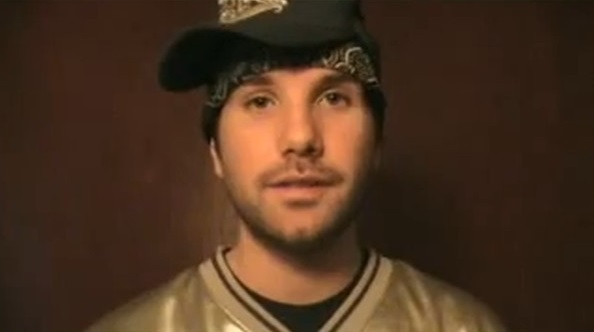
So let me close with this:
Be more aware. No matter how painful that awareness may be. Because within awareness lie the few true gifts this life offers.
Everything else? Illusion—bound to fade.
Don’t waste what little precious time you have on people who don’t deserve it in the first place—yes, try, but if you recognise the patterns… run as fast as you can.
Don’t try to change those who aren’t asking for it—even if they talk like they are.
Don’t believe lies. Not even your own. Especially not your own—I said it before, I will say it again.
My lies were my cage; awareness is my key.
That said, when you look in the mirror, be honest. That’s advice I give often—because it’s some of the best advice I know. In that moment, you can face what you’ve been avoiding. If you have the strength to look—so try, and time after time… you will get better at it.
The real change? It lives in you.
And no one is coming to save you from the things you keep hiding in the corner.
Ditch the illusion, grip the truth.
Thank you for being part of the predicament!
Sincerely,
Ivaniel “The Chameleon—in a good way” Georgiev


Leave a Reply