DABOISASTRGLEDT (phrases) – by Ivaniel “Ivo” Georgiev
DABOIS, we’re back with another phrase to crack open – just like the clam that doesn’t give up.
And to the core of my being, I’m certain this one carries more weight than it seems. What I’m about to explore touches something mythological, something uncomfortable, something most people pretend to understand but never actually confront. It involves God. And no, I’m not suddenly religious. I’m past that stage in my life. Past the atheist stage, too. These days, I’m agnostic in the strictest sense: I can’t define the “greater something,” can’t feel it, yet can’t dismiss it. That kind of oblivion is exactly why this topic grabs me.
Here’s the line that pushed me into this entire topic:
“Even Christ, Who is the very Truth, if He had to speak before a church council, wouldn’t speak with the language He uses when talking privately to His beloved friend…”
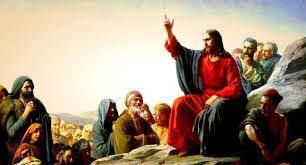

Let that sink in. Repeat it (multiple times if needed). The truth has layers – not because it’s hidden, but because people aren’t equally capable of receiving it.
It isn’t elite or esoteric. It’s universal, yet only the attentive ever hear it.
This is one of those moments when a brick shatters the window shop (baaaam!).
And it’s not about religion. It’s about communication, honesty, and the secrets we carry without knowing they’re secrets. This single idea explains more about human life than a thousand self-help books combined.
While the phrase I drew from this particular book (“Spirit and Love”) isn’t explicitly a self-help concept, it is the essential self-help all of us truly need. It’s written by Simone Weil, and honestly, I didn’t pick it for its theme – I barely knew what it contained – but Weil herself is impossible to ignore (and that comes from someone who ignores plenty).
She was a philosopher with elite credentials who walked away from the comfortable life she had earned. I mean, how many women have you heard of who joined a civil war in Spain, then the French Resistance? It’s so obvious that thinking wasn’t enough for her. Philosophy wasn’t a theory to polish; it was a discipline of the soul and a way to live. A way to experience her ideas even when that meant suffering for them. A life so dedicated to purity that it eventually killed her. You don’t see that often (then or now).
That’s why I’m bringing her – apart from what she said – to the conversation. Not for biography. For the way she saw and preached truth: not as an academic puzzle, not the old gibberish omniscient and very well-structured sentences, but as something intimate, dangerous, and personal. Her notes were messy and scattered, but that’s what happens when you live fully. Mine are scattered, too, and this is why I find her so interesting – the difference is she actually lived up to hers. And I’m here to follow a great example.
Now, before we continue – Thank you! (YES, I’LL NEVER SHUT UP ABOUT IT!)
You choose to spend a slice of your time here, and I don’t take that lightly. My goal isn’t preaching. It’s seeking clarity; it’s asking the questions that cut through the surface noise – and very often that is painful. But beauty is the child of pain, right?
I hope this place isn’t mistaken for some theory zone; I try to make it about the things we swallow, hide, and rarely articulate. Because if something here feels uncomfortable, good – discomfort is one of the best teachers. And this is the theme – struggling.
Curiosity lights the match; action makes the fire; the effort put in keeps it ongoing.
In case you missed the previous post, check it @The Left/Right Dichotomy: Useful, yet Imprecise…
And if you enjoy this journey, subscribe to my weekly newsletter. Short, sharp and useful!
Let it echo in that head of yours one more time:
“Even Christ, Who is the very Truth, if He had to speak before a church council, wouldn’t speak with the language He uses when talking privately to His beloved friend…”
Let’s dive deep now.
What Makes It a Secret
Here’s where things get uncomfortable (and the more, the better).
A secret isn’t sacred because it’s hidden; it’s sacred because not everyone can handle it. Weil’s point speaks to a critical need: truth adapts to the listener.
In other words, truth can’t be democratic: the same sentence can be medicine in one ear and poison in another.

And this is where my own story enters – not for drama, but for clarity.
Over the last few years – especially with philosophy in the mix – I’ve been absorbing far more than I can comfortably process. While this constant influx of ideas isn’t new to me, the challenge of expressing it has become acute. My thoughts stack up inside me like pressure in a sealed room; while some make it onto the page, most remain unsaid.
This isn’t because I’m afraid to share. And it’s not about lying – because that was my “go to” in the past. Yes, then there was a time I used to think authenticity meant getting to the position of never switching masks; to speak the same way everywhere, be the same person in every context. Somewhat of a noble idea. But in reality, naïve.
Life doesn’t work like that. People don’t. The conscience does.
No, I finally understood something I used to reject: not all truth belongs to a crowd. Some truths require a specific listener to survive. (And sometimes, a particular way to present the truth.)
Because when you spend enough time alone with your own thoughts – all those late-night wrestling matches with the inner demons – you begin the very long journey of eventually learning that honesty has two forms:
- The truth you say aloud.
- The truth you carry inside because most can’t handle it.
Sharing everything indiscriminately is being sold as courage these days – and that’s a trap I fall into. And like everything else, it took time to see it for what it is – carelessness.
Not everyone deserves full access to your inner world. What are they going to do with it? Not everyone cares. And even if they do, not everyone is prepared for it.
Fuck me, how many times was I given the truth – knew it stung because it was true – and still did nothing? I told myself I had time. I’d fix it later – and that’s partially true, but you get what I’m saying. That said, I’m grateful now to those who tried, because even after years passed, their words finally landed. But the toll was heavy and very much avoidable – foreseen by others and neglected by me. That time is gone now, or at least, I’m trying to prove it is.
So yes, the truth matters, but there’s a fine-dining etiquette to serving it.
That’s why Weil said Christ would speak differently to a council than to a friend – and I will add, to a “friend” than to a friend.
While secrets lead to lies, a secret itself isn’t necessarily a lie – I see a secret as a responsibility. (But don’t try to twist my words, you know what I mean.)
People constantly confuse this. They think that withholding is manipulation. Withholding can be love, discernment, or even survival. The key is intention:
- Do you hide the truth to protect yourself from judgment?
- Or do you transform it so the right person can actually receive it?
That’s the real difference. And this brings me back to you, BOIS and GALS:
- How many of you already know what Weil meant – not intellectually, but from experience?
- How many of you learned the hard way that some thoughts die the moment you expose them to a crowd?
- And if you haven’t learned it yet… how do you plan to handle the weight of truth when it finally lands in your hands?
Why the Difference
This is another important question.
If a secret were just information, everyone would handle it the same way. But… but… they don’t.
Weil’s point is clear: truth lands differently depending on the receiver, the state of the receiver, and the elixir of values, intellect, open-mindedness and so on. That’s why a private exchange feels more special, and the public teaching feels diluted. The setting changes the substance extraordinarily.

When you speak to one person, it’s that eye-to-eye conversation cutting through the silence. When you speak to a crowd, you are trying to suppress their noise. And the problem with that noise is that it’s the after-effect of each and every person’s baggage. It’s not that individuals don’t carry baggage; it’s that groups amplify it. An individual’s baggage can be just as disorganised, but there are far more ways to manoeuvre around it. However, the entire group thinks as loudly as it breathes. And loud minds – whether collective or individual – can’t hear subtle truths.
Remember what Weild said about Christ and how He would never speak to a council the way He would speak to a single beloved friend. The message doesn’t change, but the vessel determines the form.
It’s absolutely true because some people treat a secret as a treasure, and others treat it as trivia. The content is the same; the readiness is different. One listener is transformed. The other shrugs and moves on. That gap – that difference in capacity – is the real issue.
What makes it sacred is the fact that different people will use it differently: some will weaponise it, others will trivialise it… and the rest will simply let it die in their hands.
History has already given us so many clear examples. And while I haven’t read the Bible, certain lessons from it resonate deeply:
- Take the “Sermon on the Mount”: thousands heard the words, but only a fraction truly lived them. Why? Because listening isn’t the same as receiving. Presence isn’t the same as participation. A crowd hears; an individual understands and commits.
- The moment when Jesus overturns the merchants’ tables makes perfect sense through this lens. Plenty of people read it as rage against commerce, but what it truly signifies is the recognition that truth cannot coexist with distraction. All that white noise suffocates meaning. The “house of truth” had become a market, and markets don’t produce silence. They produce chaos. Thus, no message survives chaos.
- The way Christ speaks in parables publicly, and how he speaks plainly in private. His disciples ask why He won’t “just say it directly,” and the answer is brutal in its clarity: “To you it is given to know the secrets… but to them it is not given.”
Our post-modern ears hate this. We want everything accessible, everything open-source, everything for everyone at all times – at all costs. But reality hasn’t changed: you cannot pour the ocean into a glass. You cannot force depth into a mind that isn’t ready to hold it. Some things just can’t be universalised.
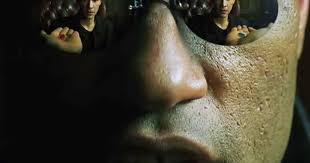
Even “The Matrix” gave us the same message in a different setting. And while many think they understood it and broke the blue/red pill dichotomy, in the movie, we saw that only one truly did – and in reality, only a few ever do. Imagine Morpheus walking into an office building and announcing the truth to everyone. That would have been absurd, right? Because, as history consistently shows, any such public manifestation is instantly followed by the denigration of the messenger and the general opinion that “he’s gone mad.” Therefore, to succeed, he chose one person, in one room, with one decision because truth requires choice, not exposure.
That’s why there must be a difference between the secret word and the public one. Not because truth is elitist, but because truth is personal. It requires silence, readiness, and an ego small enough to listen (best if it’s a dead one).
With that being said, I think it’s clear why most of us are so far from ourselves; why, when the right secret finally reaches us, we no longer recognise it as ours; and even if the moment is perfect, we may still fail to connect the ends.
That’s why the most important conversations of your life will never be recorded. That’s why the deepest things you know will never go viral. That’s why some nights you sit in the dark and finally understand something you’ll never post.
What about you, BOIS and GALS:
- What bells do these stories ring?
- Do you see where Weil is pointing, and more importantly, do you see where you stand in that spectrum of readiness?
Why It Matters
So why does any of this matter? And how does a secret take root inside us without being lost in the noise?
Well, I believe Vladimir Gradev – the translator and the man behind the introduction of “Spirit and Love” – gives the clearest answer:
“The collective is the big beast – a creature of public opinion that must be trained and manipulated, or else it devours the one who approaches it.”
He’s right. The beast doesn’t hate truth. It just has no stomach for it.
This is why you don’t feed “the beast.” You stay away from it as much as possible. And even when it comes to your doorstep, you don’t let it consume you and transform you.
Because the only thing that keeps you grounded – that keeps you human in a world where noise is the new religion – is the “secret word.” Not the kind typed into chats or discussed over a call, because honestly, that is just some garbage. (Straying from the topic for a little bit – is that what we really evolved to become?) The truth exchanged between two people who are actually present, that’s the power of honesty – in fact, this is the form of love Weil talks about.
One-on-one. Unmasked. Undistracted. With the whole of your being.
That’s the only setting where a human being becomes real – or maybe I live in some fairy tale, hm?
Well, in a perfect world (one obsessed with justice, clarity, and love), maybe. This would be enough to start something larger, but I know that a perfect world is nothing but a “make-a-wish.” (Which answers my rhetorical question.)
Yes, I don’t like it, but it’s the truth. Here’s another interesting insight: every great individual force eventually gets swallowed, distorted, or erased. Helen Keller, Liu Xiaobo, Mairead Maguire and so on. And I bet you haven’t heard some of those names, right? If you did, good for you. If not, that’s exactly my point. Because even if we think about the big names like Gandhi, MLK or Malcolm X, even their most powerful ideas were repackaged and softened by the world that feared them – so where does that leave us?
Which proves another point: sometimes the truth-bearer never gets a stage at all.
But let’s not be so pessimistic. We have two figures who can infuse us with that blind, undying hope, and one of them has proven his historical existence. I’m talking about the two notorious fellas, Socrates and Jesus. They might be the only two whose images weren’t fully rewritten by time. (Can we name many others?)
My point is, this isn’t cause for despair. It’s the opposite.
Because what survives isn’t the hero. It’s the word – the quiet and personal one that slips past the beast and reaches many individuals.
And that one word paints “the image” of the hero who later inspires many to follow his steps. That’s the flame. That’s the torch. That’s the only hope worth having and carrying along. And it passes hand to hand, in the dark, one to one. That’s the only way to keep a reality check and stay alive (in a most real way).
So, if you’re sceptical, good. You should be. I’m not preaching certainty – I’m telling you that when everything else collapses, the only thing left standing is the truth you share with yourself, and then selectively, deliberately, with others who can actually hear it.
And now the usual hors d’oeuvre (poem and haiku), which I hope will be able to express everything my prose couldn’t.
The Fear of Loving/The Art to Say Enough
High upon the peak –
where everything is clear;
but how to truly see
when nothing feels it’s near?
The real storm, it rages –
underneath the clouds severe.
Love starts at jungle’s gate –
many enter, handful leave.
Before the gathered crowd
you try your best not to offend;
yet the hand that warms your own
you claw, then try to mend.
So what is truly love –
a force or a fragile bend?
And what’s a liar’s tongue –
fear, kindness… or a warning sent?
Lambs will always bleat –
it’s simply how they live.
And if they wander or retreat –
does it mean they never give?
But how to tell them gently
their search is built on sand?
How help without deceiving
when life misleads on demand?
You gather them together,
tell stories they must hear –
knowing you won’t be understood;
knowing that they guard their fear.
And maybe they’re right –
but does that make you wrong?
Whoever wants will find a way –
eyes wide shut, yet spark belongs.
Even for a moment,
in a private, honest space –
stay awake, remain whole,
let your spirit find its pace.
Because eventually, one day –
a thought will seal the stormy fate;
not theirs, yours my friend –
it’s you, who the odyssey dictates.
The secret? I must share;
It’s for everyone who seeks:
So to say, you trusted them…
but never ever trusted me.
Yes… and No
Love – a strength,
ungraspable to many,
everything to one…
Maybe this topic matters to you, or maybe it doesn’t. But if it does, then ask the questions you’ve been avoiding. The ones you skip while looking for shortcuts and the ones only you can – and have to – answer. (Nothing that a blog, a guru or a whatever-guide can spoon-feed you.)
Because not many people dare to face themselves, this is a mission worth pursuing – that is the only army in the world worth getting larger. And just a few act on what they discover (it takes one to know one). So, I know how hard it sounds, but the world desperately needs more of “the few.”
This is why I stand with my whole being behind this statement: The whole point of philosophy is not to solve life, but to ask the questions that make your chair uncomfortable (at least, that’s how I see it).
And here’s Weil’s message that remains and shall remain undefeated: you can’t walk the whole path alone, but you must take the first steps alone (no exceptions… NONE). If you don’t, the “big beast” will gladly walk them for you, and it will be at the expense of you and those dear to you.
This is why I came to the conclusion truth must be held until you are ready to use it without betraying it. Not because someone said something meaningful. Not because something worked for someone else. No.
You have to find your path to it. You owe that first to yourself – and only then to the world.
And even then, you will never owe the world your whole soul; you owe it your best judgment about who can carry a piece of it.
So, whoever you are, you are the ruler of your destiny, but don’t forget that destinies could end either way. This is why you need the truth as your sword, slicing through the darkest voids.

How many of us are still chasing that bloody “comfy feeling?” How many are still performing for approval? And how many have learned – the hard way – that some truths die the moment you share them with the wrong person?
Gratitude. Humility. Love. Until next time.
See you on the other side of the silence.
Yours in measured truth,
Ivaniel “Secretive, not because I must, but because I choose to” Georgiev


2 responses to “It’s Not About the Secret, But Why It Is a Secret…”
[…] If you missed the last post, catch up @ It’s Not About the Secret, But Why It Is a Secret… […]
LikeLike
Hell yeah. We need the right kind of truth 🙌.
LikeLike