DABOISASTRGLEDT – by Ivaniel “Ivo” Georgiev
DABOIS, welcome back for today’s strange occasion.
Strange because the individual known as “The Stranger” isn’t the rare figure he once was. He might be the default setting of the 21st century.
You’re sitting with people you’ve known for years. The conversation moves the way it always does. You laugh at the right moments – or the worst. You nod. You contribute. And somewhere underneath all of it, there’s a quiet, persistent feeling that you’re performing a version of yourself – that the person in the room and the person doing the watching aren’t quite the same.
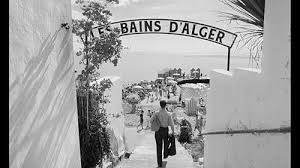
And even though most know about this dynamic, they simply don’t care – because if they do, they will be left alone or end up super successful (not exactly sure which one’s worse).
I came across an essay by Alfred Schutz, named “The Stranger”, while having a class on Common Sense and Pragmatism. That piece, combined with enough of my own life, made me realise something uncomfortable: the stranger didn’t vanish from modernity – he multiplied, evolved, and became harder to spot and easier to become.
So, I started asking:
- Who is the stranger now?
- What does the concept mean in a world where people feel alienated from their families, their circles, sometimes even themselves?
- And if that’s true, is anyone actually “local” anymore?
Schutz wrote his model in 1944 – right before the end of World War Two – and somehow the pattern still fits. The difference is that today it applies far beyond his original example.
Here’s how this essay works.
It’s all the same clichés. My internal Ricky Gervais would say, “Nobody taught you any of this. It accumulated.”
Schutz called it thinking as usual – the invisible autopilot that carries most people through most of their lives. You know which street to avoid at night. You know how to read your boss’s face before a meeting. You know which jokes land in which rooms. (Or you don’t, but you feel like you do.)
The stranger has none of it. He walks in, and the map is blank.
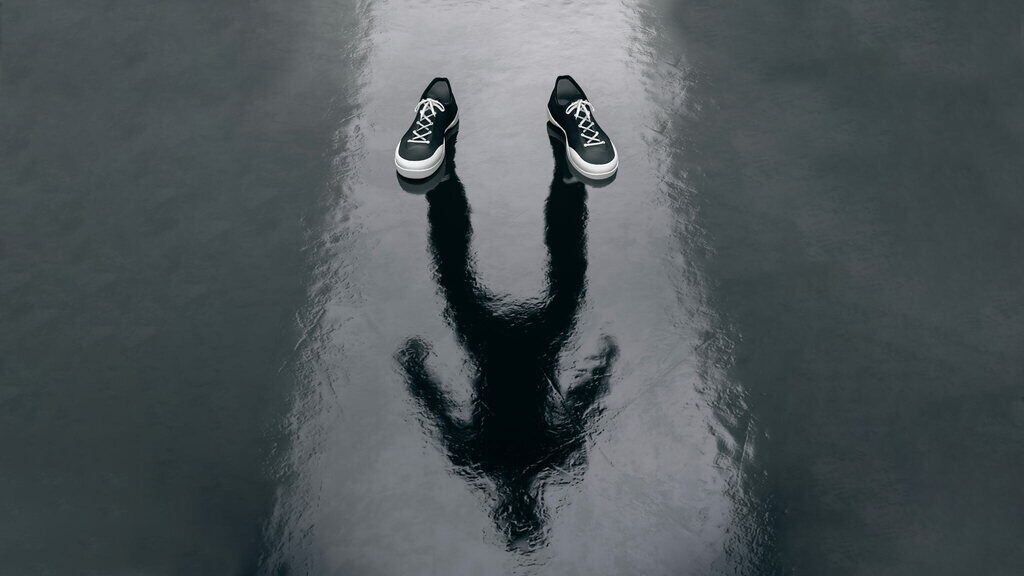
That’s not a metaphor – it’s the actual experience.
Imagine a programmer who leaves Sofia for Silicon Valley. The skills that made him exceptional become table stakes. The social pace he never had to think about – how direct to be, how much to push back, how to earn trust without performing it – none of them transfer.
Now, imagine he moved to Japan instead of California. The rhythm would be much more harmonic. But now what read as confidence in Bulgaria reads as arrogance in Tokyo. Therefore, he has to relearn not just the culture but himself inside it.
The stranger’s only advantage is also his burden: he cannot afford to stop observing.
While locals move on autopilot, he moves on with full attention, which means he sees everything they’ve stopped seeing – the hypocrisies, the inefficiencies, the things everyone does because everyone’s always done them.
The most uncomfortable questions in any room come from the newest person in it.
The cost is that he never gets to rest. Every room is a maze he’s still decoding.
Think of the idea of today’s blog like the two Blade Runner films: same universe, different conditions, eventually a new kind of human.
Before we continue, thank you. I know time can’t be returned, and I’m genuinely glad you’re spending part of it here.

If you’re new: this isn’t a place for preaching or selling. It’s a courtroom with no verdicts – only questions that open into more questions.
Today’s loop: “Children” by Robert Miles. I couldn’t picture a better track in synch with what’s ahead.
The Stranger We See a.k.a Stranger+
The Stranger+ is what happens when this condition stops being temporary.
He’s not between two worlds anymore. He’s between all of them, permanently. He’s fluent in multiple languages and native in none. He can read every room and belongs to none. He’s competent everywhere and at home nowhere. He knows what the locals expect of him – and he can deliver it – but the delivery is always slightly conscious, slightly performed, slightly exhausting (very much… not him).
The Stranger+ isn’t lost. That would almost be easier. He’s suspended – very capable of navigating but unable to arrive at where he’s visualising.
And the longer he stays suspended, the more the suspension starts to feel like identity. He mistakes the maze for the destination. He stops looking for the exit because looking requires admitting he wants one.
Everyone knows the feeling. First day at a new job – everyone shares jokes you don’t get, references rules nobody explained. Or moving somewhere new and realising the city wasn’t the problem: you just hadn’t become part of the culture yet, even if you spoke the language fluently.
It’s a day filled with turmoil and/or anxiety. It could be a day like any other. Maybe a date. Maybe a mirror self-realisation. I trained basketball when I was younger, so I will put it this way: It’s like joining a team practice without ever receiving the invitation everyone else got.
So you fool around, do things to impress, improvise, copy and altogether, hope no one notices – but they always do.
The Stranger We Don’t a.k.a Stranger 2.0.
If the Stranger+ knows the game is rigged but can’t stop playing, the Stranger 2.0 believes he’s redesigning the game entirely – only to realise it was never his to redesign.
He’s everything the Stranger+ was + everything else that the Stranger+ will never be.
He doesn’t escape the maze. He redecorates it and calls that freedom.
He doesn’t question the walls – he hangs pictures on them to make sense.
He speaks the language of authenticity fluently and has never once been authentic.
He mistakes self-expression for self-knowledge, adaptation for transformation, comfort for arrival.
The tragedy isn’t that he’s lost. It’s that he’s certain he’s found.
In Blade Runner 2049, Officer K spends the film believing he’s the chosen one – the replicant born, not made, proof that something new is possible. The moment he discovers he isn’t breaks him. And then it frees him. He sacrifices himself for something real, for the first time, precisely because he’s let go of the story, he once told about himself.
The Stranger 2.0 is K before that moment – indefinitely. Comfortable in the fiction. Decorated with certainty. Waiting for a revelation he’s actively avoiding.
He’s not a type. He’s a direction. One that modern life makes very easy to follow.
Home, Sweet Home…
Bulgaria.
Our crisis is not unique. But it’s ours, and we are living through it with what makes us unique and/or what proves that we are the same. There may not be chains on our limbs, but that doesn’t mean we are free.
The fracture is seen best here in ways that make the theory impossible to ignore.
We don’t talk about alienation in the abstract. We live it in specific, textured, daily ways – and then pretend we don’t.
Here’s what chronic instability actually does to people: it severs the connection between effort and reward. Not occasionally – structurally. When the path between work and outcome is reliably sabotaged by corruption, by nepotism, by the particular exhaustion of a system that seems designed to punish people who try, the mind stops connecting to them. Ambition doesn’t disappear. It transforms. Into envy. Into cynicism. Into the very specific Bulgarian reflex of cutting down anyone who rises, because rising feels like betrayal of a shared understanding that rising isn’t possible.
- We don’t envy because we’re envious. We envy because envy is what ambition becomes when it has nowhere to go.
- We don’t lie because lying will get us somewhere. We lie because lying means freedom in our own backyard.
The elders demand a better future while refusing responsibility for the present they built. Now both they and their children are trying to escape what was established. Both things are true. Neither gets said.
The young oscillate between apathy and rage. Apathy when the system feels immovable. Rage when someone reminds them it isn’t natural. That shows different places work differently. And while both are understandable, neither is particularly useful.
Conversations rarely go deeper than money, politics, the material, and who’s “above” whom – not because we’re the shallowest of all people, but because depth requires safety, and safety is a most luxurious thing here.

There’s a concept named “people from everywhere, somewhere, and nowhere”. This framework is really good. And I don’t think that the categories are the problem, but more so what’s underneath them:
“Everywhere” isn’t sophistication. It’s insulation. The Bulgarian who left, built a life abroad, returns to diagnose what’s broken, and boards the return flight without staying to fix it.
“Somewhere” isn’t backwardness. Staying is its own kind of choice, and it’s seldom respected – least of all by the people who made it.
“Nowhere” isn’t failure. It’s trauma dressed in indifference. The person who left mentally before they left physically. Who has no investment in this country and hasn’t built one anywhere else. Floating – not free.
And the honest thing – the thing Bulgarians rarely say out loud — is that none of these is are cultural positions. They’re psychological ones. They’re about dignity, belonging, and self-worth that chronic instability has been quietly eroding for decades.
Orthodoxy was the glue once. It isn’t now. Not because faith died — but because the institution survived the meaning. The cross is still everywhere. The conviction is harder to find. What replaced it wasn’t a new shared story
The national instinct isn’t pessimism – pessimism at least engages with the possibility of something different. This is something quieter and harder: a collective agreement not to ask the question that would make the answer unavoidable.
So what’s left? Nostalgia for a past most people didn’t actually live in. Escapism toward a West that is also fracturing, just more expensively. And a mirror that everyone looks at and nobody looks into.
How do you love a country when you haven’t learned to respect yourself? That’s not rhetorical. It’s the question underneath every conversation Bulgarians have about leaving, staying, changing, or giving up.
The Stranger 2.0 feels most at home here – because this is a country that has mastered the art of rearranging furniture in a burning room and calling it renovation.
The Stranger’s Guide to the Galaxy: A Strange World Indeed
Humans were nomadic for most of their existence. The idea of being from somewhere – rooted, static, native – is the historical anomaly. Belonging was never a fixed address. It was something you built and rebuilt, in motion.
What’s new isn’t the stranger. What’s new is the scale. The speed. The fact that modern life produces alienation as a feature, not a bug – and then sells you products to manage the symptoms.
The Stranger+ can become something. The Stranger 2.0 can wake up. But neither happens through more adaptation, more performance, more optimisation of the maze.
It happens through the thing both figures are most successfully avoiding: the moment of honest reckoning that Officer K only reached by losing everything he’d built his identity around.
The stranger isn’t tragic because he’s lost. He’s tragic because he mistakes the maze for the world.
And that’s why I will contribute to the picture with the following poem:
The Stranger Kind
We come from place no map has ever measured –
no compass, no direction, no command.
We searched for truths we’ve never truly treasured:
a diamond raw, uncut by mortal hand.
There was an age when thought was scarcely spoken,
when depth was neither wanted, nor required.
Then feeling cracked the earth – a fault-line broken;
when storms arose, the soul went seeking fire.
Man learned too much – believed he grasped the meaning;
he questioned shadows, even all the seven skies.
He ran through halls of doubt – both reason and a feeling;
and when truth failed, he forged it out of lies.
Yet somehow, through the centuries of fire,
the modern man emerged – tamer of the nature.
He forgot his roots; everything is now desire –
a fallen angel roaming past his Maker.
And so he walks – half-blind, half-self-deceiving;
for joy is born of love, not the mind alone.
The seeker – like a vampire deprived of feelings,
but even he learns… that sins can be atoned.
And still – beneath the ruin, something lingers:
a warmth no winter found a way to kill.
If the stranger is the last of all the humans,
then let him choose, or don’t… he will.
You don’t choose whether you’re a stranger anymore.
You are a stranger. Everyone of you.
The only question worth asking is what kind – and what you’re doing with it.
The only choice you have is whether you face it – or hide inside it.
BOIS and GALS, don’t be a stranger to yourself.
If you missed the last post, catch up @The Apology…
Subscribe to the Newsletter – sharp, thought-provoking, and high in fibre.
Sincerely yours,
Ivaniel “As-strange-as-it-gets” Georgiev
P.S. My grandfather passed away a month ago, and I skipped sharing a story. At last, he is resting. We’re left with what was, moving toward what will be. Life is strange. A new journey isn’t a new beginning – the old one continues with another path to be chosen. We apologise, but we can’t be eased of who we really are. The struggle continues. #DABOISASTRGLEDT


Leave a Reply