DABOISASTRGLEDT – Ivaniel “Ivo” Georgiev
DABOIS, as is so often the case, you know full well that the titles I choose are ambiguous. And today I’m staying true to my style, inviting you to delve into the destructive notion of owning, or wanting to own, and replacing things, whilst the very essence that actually needs changing remains exactly the same – or almost the same.
First, I won’t make excuses, but… the past couple of weeks have been a lot: I fell in love, I fell sick, I travelled to a new destination, and I eventually came back to the place where all my problems started – and where they continue in this current moment.
So… how did I come to today’s topic? I very often have the chance to speak to my grandmother, who became a widow seven months ago. I can’t say we talk any more than we did before my grandfather passed away – but in the past she used to leave the phone with him and join the conversations less often, always finding something to keep herself occupied. The difference I’ve noticed now is that whilst we’re talking, she doesn’t put the phone down. Even if she has something to do, she carries it everywhere. My assumption is that there’s a lack of presence in her life that left a void: a presence that used to be an inseparable part of her, and although it used to stress her out at times (sometimes too much), it gave her a sense of comfort she never fully understood. And which she will most likely never understand.
People like her aren’t particularly interested in the world around them – or at least not in ways that translate into action. They live by rules written by others, and in moments when those rules don’t suit them, they rewrite them to their own advantage – only to discover that these rules are no longer serving them, and the problem is that even after suffering as a result, they cannot quite come to terms with what has happened to them.
What I am saying may sound like a criticism of her (and all people acting in similar ways), and I cannot pretend that to a certain extent it isn’t. But this criticism is in no way linked to disappointment or cynicism. On the contrary, it stems from love – or rather, from a desire for love I wish to share. But I cannot be a teacher to someone who isn’t prepared to understand why the lesson is being offered in the first place. And here’s how the dynamic changes: I become a banal person who claims to understand more than others. That hurts. Sometimes more, sometimes less, but it certainly hurts (especially when someone close is in the mess).
Her pain from the loss lies deep within her, and she seeks every possible way to escape it. The methods don’t matter – after all, everyone finds their own way to neglect. What matters is that they’re merely short-lived substitutes of little real use. As for the pain that lives within me: it finds a way to surface to some extent, writing being the primary outlet, but a part of it remains lodged somewhere in the back of my mind. Since I cannot bring myself to let it go, sooner or later it turns into indifference. (I say this with the greatest regret.)
Does the title strike you as interesting? At first, I thought it was too abstract and trying to do too much, but then I found relief because this is the paradox of life: you cannot want something and get it without giving something else in return; hence, you cannot change what is outside without eventually being forced to face what is inside. (And yet most of us try… for all the wrong reasons.)
Here, I’d like to suggest the following idea. Imagine that every person on earth is entitled to twenty items of clothing (why exactly that number, I can’t say). This total includes everything a person might use, from socks and underwear to outerwear and shoes. When a baby is born, their parents or guardian choose what they will wear. (Please don’t take the metaphor literally — as always, find the truth for yourselves between the lines.)
This continues until the child grows old enough to exercise some freedom of choice. But the process does not stop. It simply changes. Anyone wishing to obtain a new item is entitled to exchange some of their old ones for new equivalents.
And this system I propose has three very important conditions:
- Whatever you return must have been used for a minimum period of time.
- Whatever you take cannot be the same as what you return.
- There is a specific criterion that allows you to receive more than the set number – or to lose some. Receiving more is very difficult and demands a great deal. Losing items is particularly easy, as the individual often fails to meet the requirements without realising it.
Hold that image in mind. We’ll come back to it in a bit.
· · ·
Before we continue, thank you. (YES, I WILL NEVER STOP REPEATING IT!)

I know time cannot be reclaimed, and I’m genuinely glad you’re spending some of it here.
If you’re new, this isn’t a place for preaching or selling. It’s a courtroom with no verdicts – only questions that lead to further questions. My aim is to reveal what has not been revealed – or, if it has been, to at least offer a different perspective on it. (And, of course, to do something with what’s already been recognised.)
I highlight the things we accept, swallow, or hide and pretend every day that they do not shape us (even though that’s what truly happens). So, if something here makes you feel uncomfortable, then you’re on the right track: discomfort is perhaps the best sign that we haven’t yet learned how to anesthetise it.
1. Curiosity lights the match.
2. Action keeps the fire alive.
3. Effort is what everyone talks about until it becomes necessary.
And, of course, right here is our checkpoint for today’s loop on DABOIS radio: “People Are Strange” by The Doors. Not entirely about today’s theme, but if you focus on the abstract aspect of people, you’ll see why changing one’s wardrobe – especially when done with the sole purpose of moving on without really moving on – is the strangest thing indeed.
Whether you’re tuned in or not, I hope you’ll stay until the end… but that’s up to you.
· · ·
The Change
Let’s leave my grandmother aside for now – we’ll return to her at the very end. She was a good way into the topic, but now we shall look at the rest of us – and what better place to start than by pointing the finger at your boy?
A large proportion of people change cities, relationships (romantic, friendly, professional, or otherwise), their hairstyles, eating habits, values, cars, and so on. All of this movement, this constant, restless, exhausting movement, is usually described as growth. It usually isn’t. I see it as going round in circles.
That is precisely what I call the wardrobe swap. Something old is returned and something new takes its place. The new item may be different, but the person wearing it certainly hasn’t changed. And because the person wearing it hasn’t changed, this new item becomes, in a surprisingly short space of time, indistinguishable from the old one – very often making things even worse than before.
This is the first and most important thing the metaphor reveals: change is not the same as transformation. Change is transactional while transformation is structural.
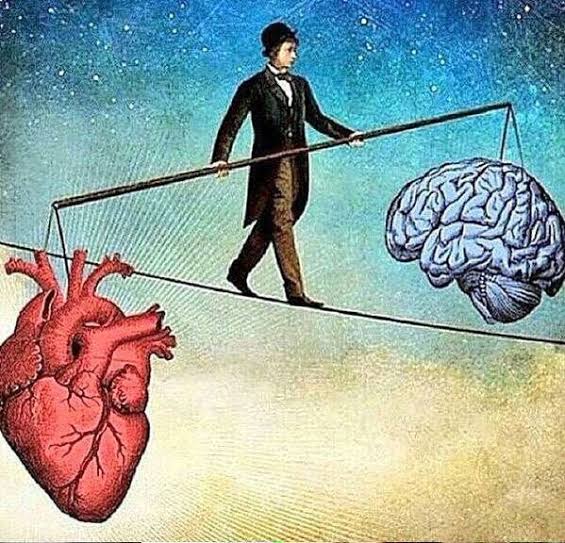
The first condition of the system matters precisely here: whatever you return must have been used for a minimum period of time (but there’s a catch). This is the condition people most often violate in spirit even when they honour it in practice. They wait the required time, but during that time they don’t actually wear the item. They carry it without feeling it. They maintain it without letting it touch them. Then they return it and call the exchange honest. It isn’t. An item that has never truly been worn has not been used. It has been stored. And what you keep without using teaches you nothing. It simply takes up space.
· · ·
The Problem with New Things
There is a particular exhilaration that accompanies new things. I am one of those people who have frequently changed where they live – and every new city carries the promise that there I will be a different version of myself, more focused, more present, better, because the context has changed. It’s the same with every new acquaintance: the promise that I will finally be understood in the way others have failed to understand me.
These promises are, for the most part, lies. Sure, context does shape behaviour, and new environments do produce new versions of the self (temporary, genuine, sometimes surprisingly good), but the problem is not that new things change nothing; the problem comes from the fact that they cannot change the things that most urgently need changing, because those things don’t lie in the new city or the new relationship. (They lie in the person who moved, who made contact, who took the action.)
Disregard is the mechanism here – not the dramatic kind, not the obvious or self-destructive, but the quiet kind, the kind that accumulates in the gap between noticing something and doing something about it. I’ve noticed that the ways in which I try to deal with conflicts in my life rarely yield results – and even when they do, it’s more down to luck. I observe things clearly, without deluding myself these days. But not so long ago, and more often than I’d like to admit, I took paths that followed the exact same arc of self-deception anyway – because the very act of noticing brings temporary relief that mimics the feeling of having acted. That is how observation becomes a substitute for the change.

And this is what I truly mean when I say that realising too late is merely a fleeting realisation. A realisation that never makes its way into behaviour may be genuine, but it remains unfinished. It gives us the experience of clarity without changing anything. One item is returned, another is taken, and the system continues to yield the same results.
· · ·
The Criterion Nobody Understands
The third condition of the wardrobe system – the one that allows you to receive more than the set number, or to lose some – is the one almost never explained clearly. Most people never understand what it actually requires. They grasp the slogan “get more” without realising what that demands. Almost nobody reads the small print explaining that what they have may be taken away, and they only discover this in hindsight – when they notice that the wardrobe has shrunk, or that the clothes they have left no longer fit the person they’ve become. (That can have a positive side, but recognising it requires an open mind and plenty of courage.)
The criterion, as best I can put it: a genuine encounter with what is already there. Not exchange, not replacement, not addition. The willingness to wear what you already own – all the way through – until you understand what it was meant for. And what does “what it was meant for” mean in practice? Understanding a relationship. Accepting grief. Recognising a habit. Taking responsibility for a decision. (You name it). But to me, it means understanding what an experience reveals about you before rushing to replace it with another. And above all, it means attending to the uncomfortable items – the ones that don’t fit quite right, that you’ve long intended to return, but keep stored somewhere towards the back because on most days you’d rather not look at them.
Avoidance is the primary method by which people lose items without realising it. You don’t need to actively destroy something to lose it. You only have to consistently fail to engage with it. A relationship whose problems are never confronted can slowly lose its essence. Grief never fully processed leaves a residue that clings to everything that follows. The version of yourself constantly put on hold – the one who was going to resolve this, address that, become something more – eventually ceases to be available. One day you reach for it and it’s simply gone. The wardrobe is smaller than you remember, without you having the faintest idea why.

Disaster, in this framework, is rarely sudden. It is the cumulative consequence of consistent avoidance – of items worn only halfway, returned before their time was truly up, replaced with things that look better but fit worse, because they have little to do with who you actually are. Until one day nothing in the wardrobe suits you, and you’re standing in front of the mirror wondering how you got here.
Everything happens gradually – until the gradual becomes sudden.
· · ·
What Actually Changes
So, what exactly changes? If every change in one’s life simply transports the same person to new coordinates, then what is the mechanism that actually produces what most people are looking for when they change their wardrobe?
The right answer to me is: friction. The prolonged, unglamorous and particularly tedious friction. The kind that doesn’t produce a sense of momentum, because from the inside it seems as though almost nothing is happening – whilst from the outside, quietly, something actually did.
This requires a specific kind of patience that modern life is structurally ill-suited to support. Modern life is, at its core, a wardrobe system that actively incentivises rapid exchange. The economy runs on replacement. The attention economy runs on novelty. The social grammar of most people’s lives operates on the assumption that movement equals progress, and that staying with something uncomfortable is either weakness or complacency.
But the resolution is neither. In most cases, it is the only thing that actually works.
The distinction isn’t between staying and leaving, but more so between making a decision that genuinely addresses the underlying problem and making a change primarily to escape confronting it. Moving to a new city can be seen as some sort of avoidance, but it can also be the first genuinely constructive decision someone makes. Staying in a difficult relationship can be seen as growth, but it can also mean repeating the same old pattern while wearing the costume of patience. The difference lies not in the action itself, but in whether it is accompanied by a genuine encounter with what’s already there. (If none of this is taken into account, the individual is most likely living a very shallow life that is also full of confusion.)
That’s why it’s particularly important to stay in difficult conversations when there’s something worth working through, rather than walking away simply to escape the discomfort. That’s why it’s particularly important to return to a painful memory with an open mind rather than burying it. And last but not least, that’s why it’s particularly important to work with the version of yourself that is currently available, rather than waiting for the aspirational one to arrive. Those people aren’t standing still. They are making the only kind of movement that produces genuine transformation: inward, rather than outward.
· · ·
The Wardrobe We Inherit
There is one complication I haven’t yet named, and it’s what makes this whole framework more difficult than it sounds.
The first twenty items you got were chosen for you. That is the condition the system establishes from the beginning: when a baby is born, their parents or guardian choose. Which means the wardrobe each of us works with (the one that determines what feels familiar, what feels foreign, what suits us, what irritates us) was assembled by people doing their best with a wardrobe that was also, in large part, assembled for them – but most aren’t doing their best, and that makes things even harder than it should be.
This is the legacy I’ve been developing across “The Stranger” publications. What is passed down is not trauma in any clean or definable form. What is passed down is the strategy for coping with what causes pain – and whether that strategy serves the person who inherits it is quite another matter. Most inherited strategies are poorly fitted to the body that receives them, because they were tailored to a different era, a different set of pressures, a different person. They can be useful starting points. They can also be the back-of-the-wardrobe items you’ve been meaning to address for years.
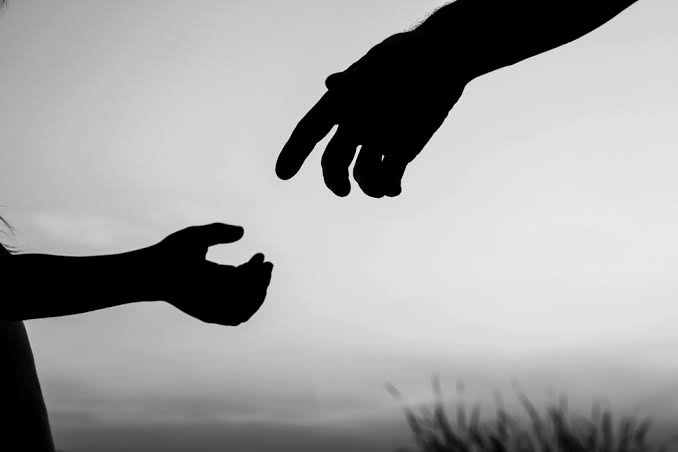
Now is the time to return to my grandmother. She bears her grief in the way her generation was taught to bear such things: very quietly, very practically, through motion, superstition, and distraction – without ever fully setting it aside to examine it. I do not regard this simply as weakness – or at least not fully. This is the wardrobe she was given. The items she owns, she has worn for a very long time, and she has no desire to change them – and just because someone younger has decided that she should, it does not mean she would.
What I can do – what each of us can do and should do in cases like this – is try not to inherit the avoidance alongside everything else. To notice what has been passed down before we’ve worn it so long it feels like skin. That noticing is not comfortable (believe me). But it is where the criterion begins – the one that allows you to receive more than the prescribed number. And more, in this system, does not mean more possessions. It means more space, more capacity, and a greater ability to carry what is actually there without flinching.
· · ·
Let’s Take the Clothes Off
Before I get to the “naked part”, I want to draw one connection to the previous blog because these two pieces are more related than they might appear.
In Love, Neediness, Envy: The Freedom of Shooting Bullets and Getting Shot At… I examined how the desire to give love can become entangled with neediness – and more so, how genuine love requires giving without possessing. This essay arrives at a related problem from another direction: the desire to help someone can become entangled with the desire for them to change. Good intentions don’t automatically make behaviour helpful. Understanding someone doesn’t grant authority over them. Loving someone doesn’t give you ownership of their decisions. And recognising a problem in another person doesn’t mean you are entitled to decide how they must solve it.
My grandmother’s situation makes this lesson especially difficult – because I genuinely want to help and in the previous story, I genuinely wanted to love.
That’s exactly why it’s worth writing about such feelings.
Now the “naked part” – not that I wasn’t honest with you so far.
I am not someone who thinks they’ve solved the wardrobe problem. Such a claim would be a flat-out lie. I know how deeply ingrained in me are all the things I’ve inherited. But it is precisely the awareness of this that allows me to fight against what I feel doesn’t correspond to my values or my idea of who I want to be.
At various points in my life I’ve changed so many things. Cities – literally, and very often just in my head, without moving, or without following through once I did. Relationships – without changing the pattern inside them. My understanding of a given situation – without changing my behaviour within it. I know the specific feeling of a realisation that passes without leaving a mark. I’ve experienced it enough times to recognise it whilst it’s happening. That is progress of a kind – of a kind, yes. However, recognising it and interrupting it are still two very different things.
The items I own are a mixture of things I chose, things I inherited, things I took too quickly (affected by emotions), and things I’ve been meaning to return for such a long time. Some of them fit. Some don’t. Some I keep towards the back, where I don’t have to look at them every day. And although many of the things I’ve chosen have suited me well enough, just because something suits you doesn’t mean it’s the best thing for you.
My grandmother has started smoking more since my grandfather’s death. She works much more than before, simply to keep her mind from the thoughts that arrive the moment she slows down. She is also buying many more new things to fill the void. She is in a state of mind I call “being everywhere and nowhere at the same time”.
So what I can do is stay on the line a little longer. Not to teach her anything but because my presence – even a partial one, mostly over the phone these days – is one of the few things that offers her some comfort. And what does it cost me, really? Very little, when it comes to someone who has done so much.
BOIS and GALS, that’s all for today. Think about what you’re actually carrying – and what you’ve been keeping towards the back.
Until next time.
Yours sincerely,
Ivaniel “Rearranging-and-slowly-understanding-the-whole-wardrobe-thing” Georgiev


Leave a Reply