DABOISASTRGLEDT (phrases) – Ivaniel “Ivo” Georgiev
DABOIS, for the last two weeks, an idea has taken root inside my mind, and it’s not letting go. I don’t think it’s because the problem is existential, but because of patterns that make it so. Here’s the question in brief: why do we humans follow the same series of steps, over and over, to attract more of whatever there is?
I could, of course, quote Plato – the cave allegory fits almost anything – but something told me to look elsewhere this time. So I did something unusual for me: I theorised and researched at the same time – it was a very spontaneous and parallel process. It turns out – which doesn’t surprise me at all – that plenty of people have noticed this pattern before, each in the language of their own era.
After some Googling, the phrase that matched my suspicion most closely belongs to Guy Debord, writing in the 1960s:
“In a world that is truly turned upside down, the real is a moment of the false.”
That’s from his The Society of the Spectacle. Simplified, it looks like this: capitalism manufactures images of the future, sells them back to us, and bends reality until it matches the image.
My own version of the same thing: the future is very predictable because it is all around us – it manifests itself at the moment it is created. That’s the king sentence for today’s idea, and everything that follows is orbiting around it.
· · ·
Before we continue, thank you. (YES, I WILL NOT STOP REPEATING IT!)
I know time can’t be returned (NEVER), and I’m genuinely glad you’re spending part of it here.

If you’re new: this isn’t a place for preaching or selling. It’s a courtroom with no verdicts – only questions that open into more questions. My goal is to reveal what has not been revealed – or if it has been, to at least give a different point of view on it.
I point out the things that we accept, swallow, or hide and pretend daily that they don’t shape us – even though we’re under their control. If something here makes you feel uncomfortable, then you’re on the right path – discomfort is perhaps the best sign that we haven’t yet learned how to anesthetise it.
- Curiosity lights the match.
- Action keeps the fire alive.
- Effort is what everyone talks about until it becomes necessary.
Today’s loop: “American Daydream” by Electric Guest. Not literally what I’m talking about – but at the same time, exactly it. I know I’m using the same song for a second time in a short period; I guess I’m highly partial to it, and whether you like the blog or not – whether you prefer to listen to it as you read or not – if you haven’t been introduced to this tune yet, I’m sure it will definitely become one of your favourites for whatever occasion you may have.
Let’s see how this one will go, shall we? (I hope you stay until the end… but that’s up to you.)
· · ·
How It Works
Advertising does not describe the world. It creates it.
The suggested chain looks like this: a future is proposed, and only afterwards is it treated as something simply discovered. It’s marketed first as luxury, then convenience, then convenience becomes the standard, and finally the standard becomes an absolute, inevitable necessity. By the time “the future” officially arrives, you’ve already been living inside its prototype for a decade(s). Advertisers aren’t selling products. They’re selling the inevitability of a way of life – building the runway… way before the plane lands.
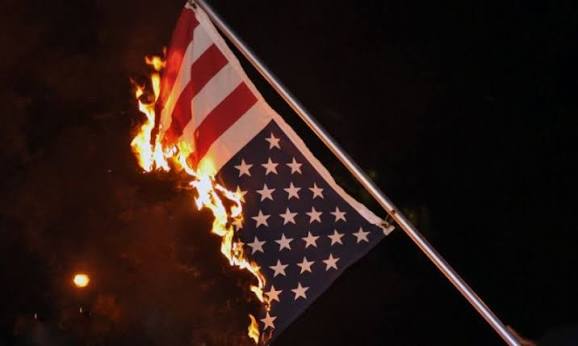
This isn’t to be mistaken for the idealistic question of freedom to choose what to do or say. The deeper problem is the impossibility of freedom despite its apparent abundance. Sartre wrote that man is “condemned to be free.” In this contemporary context, the condemnation looks like this: you’re free, genuinely free, to choose between several pre-manufactured futures – each one its own ratatouille. It looks like one thing, but it’s a mix of ingredients you didn’t choose: your responsibilities, your half-formed dreams, the things you inherited without asking for them. You get to pick the pot. Not the ingredients.
That is why, when it comes to underdeveloped capitalism, reality ceases to be the basis for images. The images become the basis for reality. The spectacle doesn’t wait for the future to arrive because it creates the future in advance – in real time. Contemporary society runs on representations, and these don’t distort reality so much as they create a vacuum: the only space in which reality is permitted to appear. The real survives only as something embedded inside the false.
Plato would say the chains are an illusion you can walk out of if you turn around. Aristotle would counter that the good life isn’t found through one dramatic turn but through small, unglamorous practice until virtue becomes habit. Per usual, I find myself torn between both – except I keep noticing something neither accounted for: a system that has learned to manufacture the turning around itself; basically, to sell you your own escape as a product, already wrapped in cellophane.
That’s the actual fight. Not whether freedom exists, but whether the freedom on offer was built by you or built for you.
· · ·
Religion vs. Advertising (Language and Imagery in the Roots)
It’s hard to follow the end of the previous point because what at first glance looks like cynical commentary on life is actually a fairly compelling theory, among many others.
Everything is ambiguous – I believe that, just by nature. Nothing you ever do or say is completely real, but everything has consequences, so they have to be real – at least a little.
There will be people who reasonably object: religion did this first. Mass projection of a future, demanding belief in advance of evidence, but that’s not new. They’d be right that the model is structurally similar, but to me, the mechanism has changed completely.
To simplify religion: the driving force is absolute dogma, the way it operates is explicit prohibition, and the goal is fear of the afterlife.
To simplify advertising: the driving force is an algorithm tailored to desire, the mechanism is implicit permission, and the goal is fear of missing out.
Religion controlled the masses through visible boundaries and a named authority. Advertising does the opposite in a quiet, sneaky way: nobody tells you to obey anyone. The public is fragmented into personalised echo chambers, each person feeling like the one deciding, while the structure underneath stays unchallenged. The old God was singular and demanded submission. The new one is invisible and demands only that you keep doing what you’re already doing.
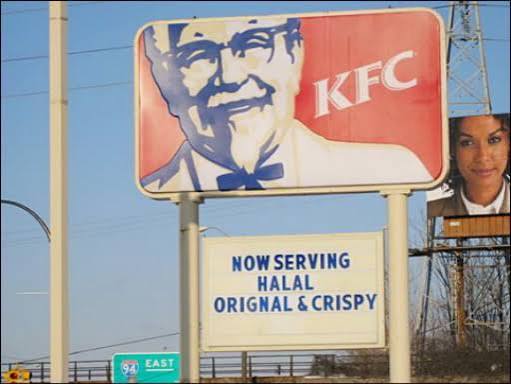
I’m hopeful in the long term. But today, this connects to a concept I’ve written about before: the Stranger+ – my update of Alfred Schutz’s original Stranger. If the Stranger was once shaped by religion, he is now equally shaped by the rhetoric that constructs reality through advertising.
· · ·
Is It Hard to Resist
The obvious objection: who’s actually doing this? A room somewhere, a blueprint, a small group deciding the future for everyone?
The more interesting answer is also the more uncomfortable one: nobody needs to be in the room. The system requires endless growth, predictable markets, and passive consumers just to survive. Any company that wants to succeed is compelled to behave this way, whether or not anyone planned it. The plan doesn’t need to be secret. It’s sitting in public, and people are polarised around it without anyone having to hide it.
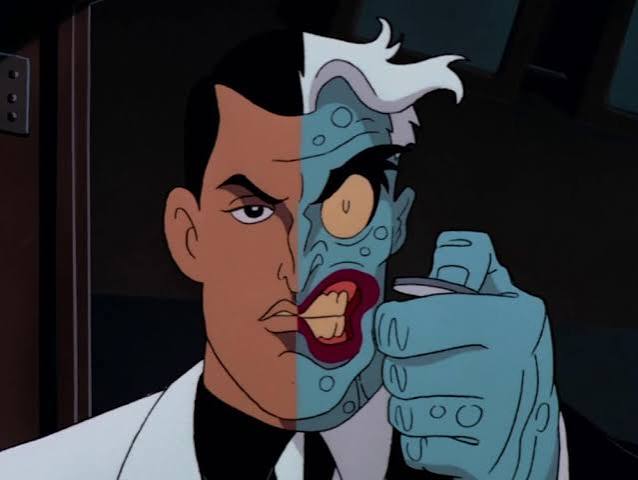
But here’s the more honest complication: capital doesn’t usually originate these movements. It scavenges them. It didn’t invent the cultural ruptures of the last century. However, it watched them erupt and benefited from them by commercialising whatever was already burning. The narrative isn’t authored by a singular architect. It’s authored by whoever gets there first with momentum, and capital arrives afterwards to put a logo on it. The “well-orchestrated narrative” in my own title might be a misnomer – less a single hand, more several hungry systems feeding off each other’s leftover heat.
If nobody needs to be in the room, how does it hold together without visible force? Through something closer to incantation. Certain words function less like arguments and more like spells – say them, and the opposing position doesn’t get refuted; it gets disqualified before it’s heard. The only resistance available isn’t a counter-argument. It is the act of refusing to flinch when the word lands.
There’s a third piece that changes what resistance even means: the difference between problems that get solved and problems that get managed. Some systems train people to expect resolution – a gap appears, an authority closes it, and people learn to expect every gap can be closed. Other systems run on problems that aren’t resolved but are circling in the public space as if they would be: problems get postponed, diluted, deferred, and lived with, and the people inside develop, over generations, a tolerance the first kind of system never has to build. The labyrinth I keep describing isn’t a problem anyone is trying to solve. It’s a problem being managed – kept at a low simmer, never dissolved, because dissolving it was never the actual goal.
Trump belongs here too, briefly: not because of politics, but to provide evidence. If the structure runs without anyone in the room, it should be vulnerable to exactly this kind of disruption – someone graceless, uninterested in managing the narrative correctly, who breaks through anyway. That’s not proof of the structure failing. It’s actually proof that the structure was never one coordinated plan to begin with. (A single blueprint doesn’t have this many holes in it.)
“Everything is possible, but nothing is certain” might be the best description of where this leaves us. Never before has there been this much information, that many ways of living, this much capacity for self-expression – and yet no shared ground of truth left to stand on, only competing managers, each insisting their version of the unsolvable is the real one. What gets sold as liberation is closer to the opposite: a specific, modern exhaustion; some form of hyperanxiety paired with helplessness, in a shape that never quite existed before.
· · ·
The Stranger in the Maze
This is where the Stranger+ belongs in full. He was born a stranger, not made one – a child born a little before and during the post-Cold War, all the way to when Covid-19 happened. What separates one stranger’s behaviour from another’s isn’t their temperaments. It’s the shape of the world he’s already inside before he has any say in its architecture. He doesn’t choose the labyrinth he was born into. He discovers its walls by walking into them – some turns reveal good fortune, others don’t – and he navigates through all of it until, metaphorically, his software can no longer update.
The manufactured future is exactly this: a blueprint built on someone else’s blueprint, built in advance, and so on. Every new Stranger inherits these corridors while being told he’s choosing the design in real time.
We don’t discover the future. We are trained to accept it.
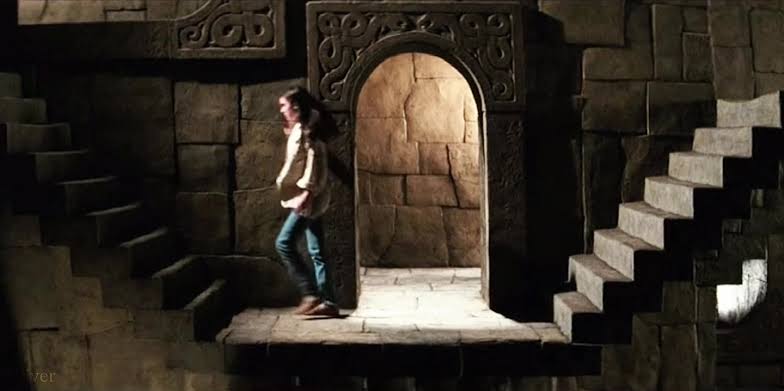
Aristotle would object that there’s always room for deliberate, chosen action – and he would be right. But I also think this is not the Matrix – at least not the way we think it operates. There may be some similarities, but we aren’t going to wake up from inside a capsule. This message here is for those who can resist – and must resist; resisting itself, however, isn’t for everyone, and Karl Marx had something to say about that: “From each according to his ability, to each according to his needs.”
But I don’t want to give futile hope to anyone, and that’s why I’m not sure it changes much for the people already deep inside the maze – some of whom are already doing something about it, with or without needing the rest of us, while others may need everything that they can get… and that still may not be enough.
· · ·
Ivo, Not Batman
None of this means I hate the world I’m describing or that I’d refuse to live in it given the choice. I simply don’t have the choice. None of us fully do – unless we think we do, which is a different question entirely and one that keeps sneaking back into this text and life in general, regardless of how many times I close the door on it.
I’d like to offer a cure. I honestly do. It would mean the world – if there was a grand finale, but there isn’t. And the truth is, even if I had a cure, it would be dismissed – as a lot of other things in life are. People can diagnose a disease without being able to do anything about it, though it’s never too late to try.
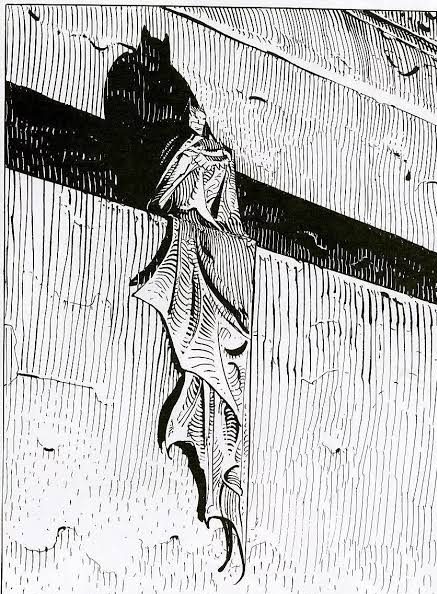
I know it sounds like I’m joking, but I’m being really genuine here. There’s a part of me that insists there’s always something to be done, as long as someone actually wants to do it – and that same part of me usually loses interest before the thought finishes forming. So I wonder whether the cynicism is correct, or whether I just find it easier to live inside the vacuum than to test it. Either way, life continues. It always does, regardless of which answer turns out to be true.
There’s glory and shame, no matter the path you take – which is why texts like this shouldn’t matter in a literal sense, but at the same time are needed to offer patterns that are usually neglected.
I’m not Batman. I don’t fight the people building these labyrinths, and most days I can’t even manage to fight the parts of myself that already agreed to live inside one without complaint. Maybe that’s the real difference between a problem that gets solved and one that gets managed – and like most others, I’ve been managing mine WAY more than I’m actually solving.
The tragedy isn’t the labyrinth itself.
The tragedy is that with every step, we try to convince ourselves we’re walking freely.
· · ·
Alienated
In the end, I’ll prove a liar once again:
who finds beauty in parting with the world.
Weary, or simply swollen with resentment –
I’ve contradicted myself for as long as I’ve observed.
Still, I look toward the future with a giant hope –
though long ago I drew my black and final line.
Whatever comes is mostly out of my control;
people seem to wait for a moment to define.
The future will mend the lives that falter;
the future will make the good even better.
It’s full of candidates who lack exhaustion,
while I remain a passerby, a one‑man temple.
Surrounded by a reality too tempting to resist –
a slow‑simmering vision of what eventually will be.
A multitude of people, each alone, a matchstick;
in this darkness, my hand reaches to reveal.
And I’ll search myself until the end is here,
corner after corner, and beneath each stone.
I’ll find something, and I’ll cling to it in need –
I’m a street‑born breed; the plan is having none.
Then the day will come when strength becomes a stranger;
what once belonged to image will be now forever mine.
I’ll be tearful and smiling, an expression as translation:
I’ve seen sunrises, sunsets… that is my wealth sublime.
· · ·
Vision
Not how I will live;
Not how I will fight to stay –
But what follows next.
· · ·
Sincerely yours,
Ivaniel “Not-as-Distant” Georgiev
In case you missed the last blog, you can check it out @ The Quest of Being a Man: A Task as Hard as a Morning Wood…
Oh, and if you find the information here useful, you can subscribe to my newsletter as well – sharp, thought-provoking, and high in fibre.


One thought on “The Distant Future, or the Very Well-Orchestrated Narrative Creating a Reality…”