DABOISASTRGLEDT – by Ivaniel “IVO” Georgiev
As you may have guessed, today’s topic is personal. Last week, I dissected human courtship – if you missed it, you can check it out here: https://daboisastrgledt.
wordpress.com/2025/02/26/about-human-courtship/
Today, we’re diving into relationships between men and women. I must say that same-sex relationships aren’t my area of expertise… unless we’re talking about what guys scissors… uh pay attention to…
So let’s stay on track.

If we’re going to analyse dating, we need to do it with a cold, detached eye – like a scientist studying a bizarre social experiment; thus, emotions should be set aside.
To say that modern dating is chaotic is the least.
It’s like Monopoly, except the stakes are real, nobody knows the rules, and just when you think you’ve won, you realise you’re the one in debt. You can roll the dice, land on someone’s property – no, not that property – and feel like you’ve hit the jackpot, only to realise you have to pay up.
Or in relationship terms: “It was so much better before we moved in together.”
In the beginning, love – like most things in life – feels effortless. Everything is peaches and cream… until it’s not.
And suddenly, you’re stuck in what was once familiar territory, faced with two choices: fight to make it work, which requires a spine most people simply don’t have, or cut your losses and move on.
The second option is often easier, sometimes even right, but you won’t know until you know.
So, BOIS and GALS, why does it feel like the game of love is rigged?
Expectations vs. Reality
We all walk into relationships with expectations – well, not me, as I seem to be allergic to them.
What I’m trying to say is that society drills into our heads that relationships should be the perfect blend of romance, communication, and effortless compatibility – the same nonsense blabber.
Sure, those things matter, but love is more than just a neatly packaged Tinder post – we will get to that later.
It’s personal. It’s messy. It doesn’t come with a script.
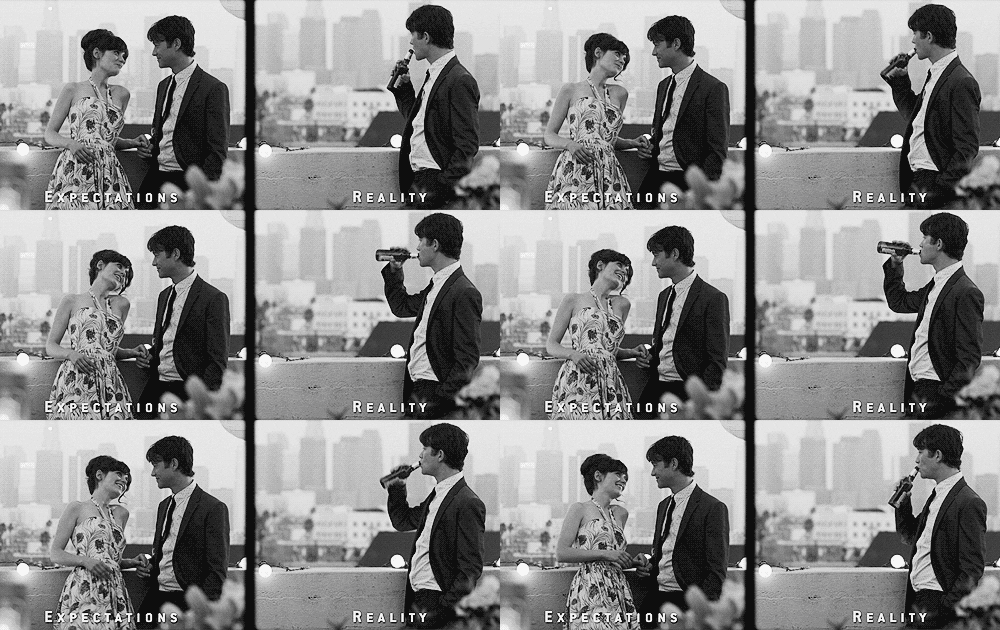
Yet, everywhere we look, we’re fed the same highlight reel. The perfect couples on YouTube, the love songs that make heartbreak sound poetic, the Instagram captions screaming #CoupleGoals – all of it making you wonder, “Why can’t I have that?”
But reality rarely fits that picture-perfect mould. I’ve watched thousands of movies – maybe that’s why I have my misconceptions.
Observing helped me realise that expectations are a recipe for disappointment, especially when your partner isn’t the flawless, scripted version you built in your head – they never are. The only solution is to put everything on the table and work with what you have.
These days, it feels like people want a damn robot with feelings – pre-order yours from Tesla while supplies last!
What is important when it comes to love is that the damage isn’t physical – at least not always. It’s emotional self-destruction; very often, a breakup turns into a social media headline, a.k.a. public tragedy everyone wants to dissect.
The problem isn’t that we expect too much; it’s that we expect something unreal. A fantasy that crumbles the second it collides with human nature.
Seriously, we’ve got the attention spans of goldfish and the emotional stability of customer service representatives. And if you think that’s an exaggeration, let me put it this way: our focus lasts about five times less than the average man in bed. (Yes, that’s not a joke.)
Trying Too Hard to Impress
With that being said, we can barely focus for a full minute, yet we’re obsessed with impressing someone instead of just being ourselves, which, by the way, is pretty hard when you check your phone every time you breathe.

Both men and women fall into this trap. Society pushes men to perform for the woman of their dreams, while women are conditioned to seek perfection in their partners.
Sure, Hollywood proves otherwise, but let’s be real: Hollywood has produced more illusions than happy endings.
Wherever there’s a rainbow, there might be something lurking behind it.
So, what happens when the performance is over? Two people built their connection on a shaky foundation, each pretending to be someone they’re not – and maybe already keeping a Plan B in their back pocket.
Who knows?
The first few weeks or months – sometimes until the very end – of dating are often a carefully choreographed act. The arch is the usual one: dress up, drop impressive facts about yourself, and laugh harder at jokes.
Side note: please use your sense of humour; without it, you’re half the caricature (and that’s a bad caricature).
Some people try to keep things moving – and hopefully, it’s worth it. But if there’s no intention to follow the facade you just built, then maybe you should try when you’re ready for the responsibilities.
Why am I saying this? Because eventually, the performance fades. Time reveals patterns – you don’t need vision to sense the “invisible”. And when that happens, you might find yourself wondering if you ever really knew the person you gave a part of yourself to, or if you’ve just been dating a version of them – a version that, the more you see, the less you like.
Which leads where? Eventually, you might just end up hating them – and with a reason on top of all. But you may be on the other side of this, too.
The Unrealistic Search for Perfection
It’s no surprise that many of us enter relationships searching for someone who ticks every box – emotional availability, physical attractiveness, financial stability, etc.
Sounds nice, right? But in reality, if you follow such steps, you’re setting yourself up for disappointment. Worse, when you chase perfection, disappointment is indeed guaranteed. And when that happens, the easiest thing to do is blame the world around you – until, of course, you catch your own reflection.
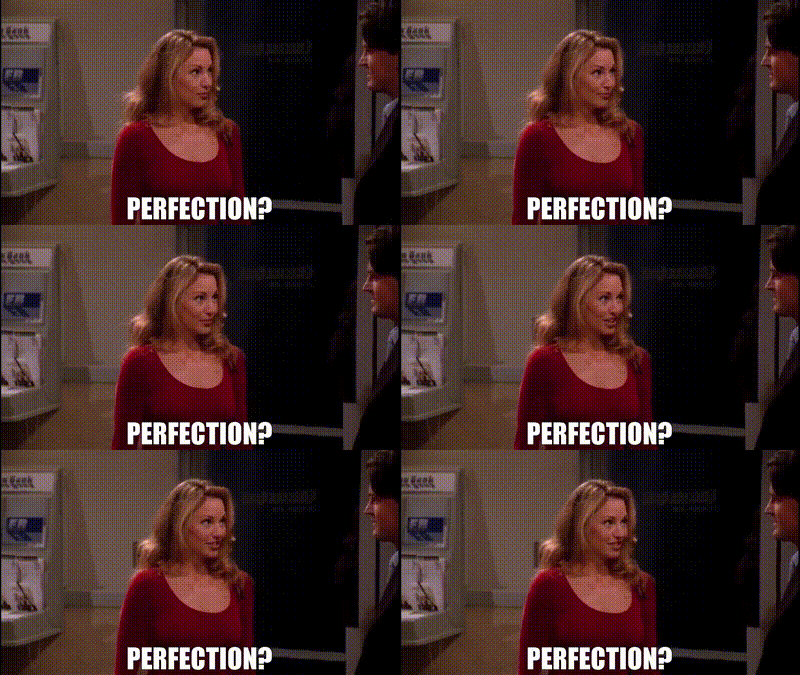
My suggestion? Next time that happens, take a good look at what’s staring back at you. And no, don’t just grin like you accidentally ate the wrong mushroom. The truth is, no one is perfect – and if someone tries to convince you otherwise, run.
We all have flaws, and that’s what makes us human. That’s why the real key to a healthy relationship isn’t about finding someone who meets your wishlist, but recognising what actually works for you and whose imperfections complement yours.
The ideal scenario? Two people, both flawed, but willing to grow together.
Nowadays, people mainly love to prove things to themselves, and that’s why forced relationships aren’t sustainable. That’s another reason why it’s smart to lower your physical standards – the mental department depends, but it has to be a well-thought-out choice.
The way I see it, a great relationship isn’t about chasing perfection; it’s about embracing imperfection – not just in your partner, but in yourself first.
When someone points out a flaw in you, there’s a good chance they’re right – I know because I’ve had to admit things I didn’t realise about myself.
People might see you as a good person, but even good people screw up. The moment you accept that a truly great relationship isn’t about perfection, but about acceptance and growth, then the pressure starts to lift. And if you can reach that level of clarity, then you get a front-row seat to the real, hypocritical world – which is one of the worst places to live if you’re searching for meaning (and that’s not only about love).
Dating Apps ≠ Speed Dating
But when the questions point to relationships, I can’t miss addressing TDA (The Dating Apps).
The post-modern world we live in is full of people swiping left and right, hoping to find love, or at least a temporary distraction – I’m very confused which one prevails.
So if we have to look at TDA, we have to go from the very start of it – not the old-school arranged process.
Speed dating was originally introduced in the ‘90s in Los Angeles, helping busy people find a match in a fast-paced world.
Later research in New York found that out of ten possible matches, people realistically connected with three, at most.
And then came online dating: out of a hundred potential matches, it’s a miracle if even one person shows real interest.
A hundred people, and barely one swipe right?
Have we become that bad at dating, or is the system itself built to fail?
The answer isn’t simple, but one thing’s clear: the two are connected.
Dating apps claim to expand our dating pool, but they shrink us down to a few photos – sometimes over-edited, nowadays even AI-generated – and a one-liner that’s either cringe, or somehow still better than what most people would say in person.
Therefore, swiping left or right is based purely on appearance, ignoring the fact that real relationships are built over time, through many conversations, shared experiences and forgiveness with the intention to work towards sustainability.
That is what creates an actual connection.
Instead, we judge in seconds, often swiping past the person we might have clicked with in real life.
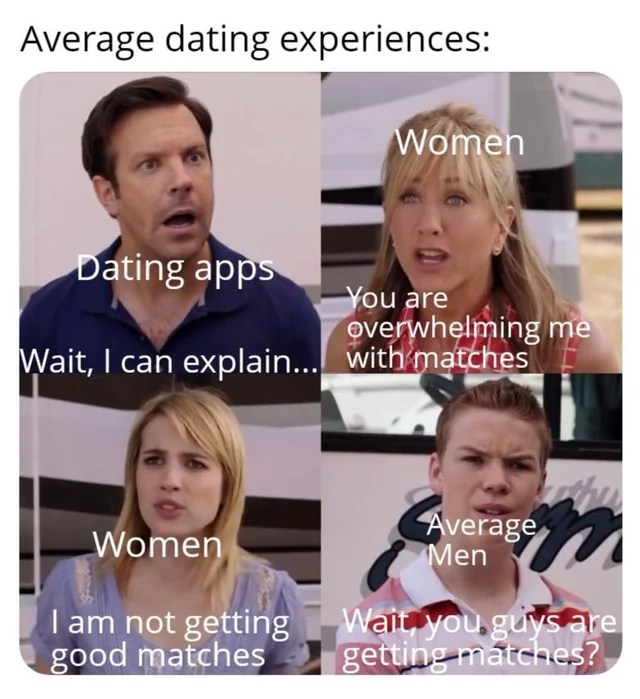
So, let’s talk about what dating apps have really turned into – business ventures. There’s at least one photo with strategically placed black bars over intimate parts, advertising something silently.
Could that be a picture of romance? To some, it is, and that’s a scary thought. I feel for such people. Not in some sobby way, but truly as one human to another.
But the real issue with dating apps isn’t just their superficial nature, though that’s a huge part of it. It’s that they reduce dating to a game, rather than a meaningful experience.
Eventually, you match with someone, and after an exchange of a few messages, you might get what you’re looking for – or maybe get ghosted without an explanation.
But life doesn’t stop its meat grinder. And, poof, onto the next one without realising what you’ve been through, without time to breathe, to stop and look at yourself, and all the wrongdoing you have done.
I don’t know BOIS and GALS, dating apps are cool, but enough time spent there might lead to you what I’m trying to picture so far.
Emotional Baggage: We All Have It
Even if you manage to find your person amidst the online realm, reality is inevitable – and with it comes something we all carry, whether we like it or not.
No one escapes unscathed from past relationships, heartbreaks, or life’s tough moments. Yet, we step into new relationships pretending we’ve left it all behind – when in reality, it’s just a mess waiting to resurface.
Some people don’t even realise they’re dragging their past with them. Others do, but it’s easier to leave the unpacking for another day.
The truth is, a healthy relationship isn’t about ignoring that baggage. It’s about being honest – with yourself and your partner – about what you’re carrying, and if you are open to, how you’re going to rearrange it together. That’s how you build trust, intimacy, and real connection.
People say, “Better late than never,” but why can’t we just see things as they are, in the moment? I think we do, but because “we established something,” it’s better to fool ourselves until it’s too late – I know how ridiculous it sounds, but some manage to fool themselves their entire lives.
Then, when reality finally hits, it’s time to apologise through tears – if we even have emotions in the first place – wondering what went wrong. And the worst part? Even then, we still don’t fully understand.
I never did the whole “Let me apologise and beg for another chance” thing – mainly because I never lasted enough to get to the “in love” part. My ego and selfishness always held me back, and I walked away.
Now? Now, I want to apologise, but I can’t seem to find a girl willing to listen to me, or one I can listen to for more than ten minutes straight.
I’m like Benji from Real Pain – if you haven’t watched it, you probably should. Small talk isn’t my thing. I go straight into the deep aspects of life and lurk around to find what brings trouble.
No matter who you are, if you can’t openly discuss what troubles you, you can’t be helped; therefore, you shouldn’t ask for help – the same goes for friendships.
I’ve heard all sorts of clichés, and perhaps, so has everyone.
We don’t have all the time in the world. We may have plenty, but it’s running out, so we might put in some effort when we are doing things.
Have you ever noticed how the so-called rules of attraction always feel like a power struggle? Foucault once said that power isn’t about dominance, but about influence. And in relationships, we’re constantly trying to influence each other – whether we realise it or not.
Maybe that’s why “I don’t need you, but I want you” sounds so much better than “I need you”, even though the latter is usually a lie. Maybe that’s also why breakups happen so often: because real conversations and real understanding never actually take place.
There’s also a lack of real fights. Not physical ones – no household or a-future-to-be-household, should look like a UFC or CSI: Miami scene. There is a lack of fights that lead to actual understanding.
Instead, people turn their backs on each other at the first sign of trouble – and some of them dare to be silent about it, hoping for something positive. Some believe in make-up sex, but I can’t agree with the solution – don’t skip it, but don’t think of it as a repairing tool.
We are not just animals, are we? Because if we are, then we shall stop pretending otherwise.
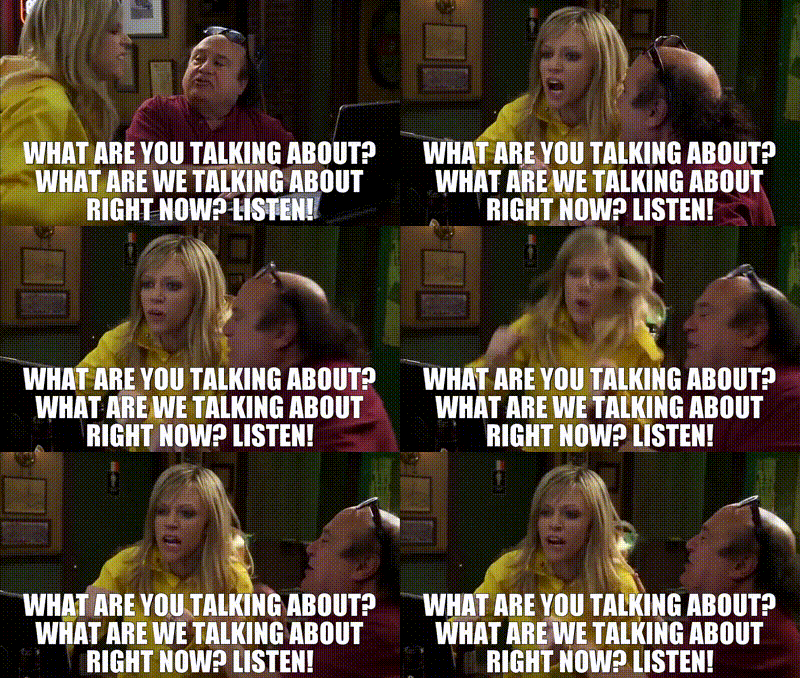
At the end of the day, it’s about two people navigating their flaws together – that’s what makes a real relationship.
In a perfect world, maybe. Don’t take this as discouragement, BOIS and GALS; quite the opposite.
Communication: The Silent Killer
Just because I haven’t experienced something first-hand doesn’t mean I shouldn’t search for it.
That brings me to the following: why do we need to talk about the things that concern us?
One of the biggest complaints in relationships is a lack of communication. We expect our partners to read our minds, and to understand us the way we understand ourselves – and very likely, they expect the same things.
And when reality hits, frustration appears.
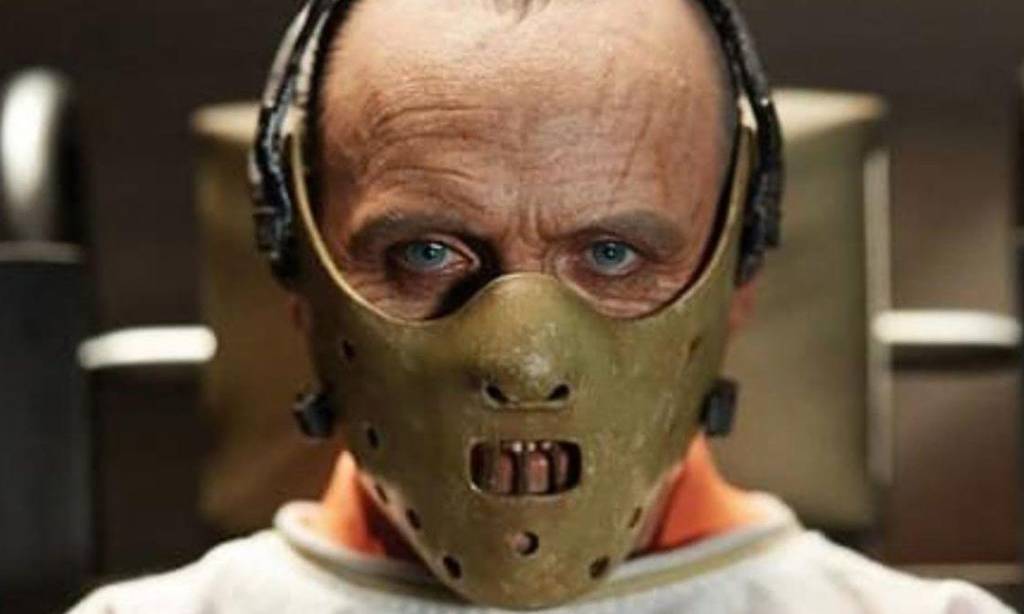
The truth is, people communicate differently.
Some need space to process; others need to talk things through immediately. The key to good communication isn’t just talking. Listening plays a crucial role.
People say a lot, but the real message is often between the lines. It’s about understanding each other’s needs and expectations without assuming they should be obvious. It’s about learning to read body language, tone, and silence.
It’s about real listening, not just waiting for your turn to speak; it’s about compromise, but not winning.
We chase passion, but it burns out; we crave stability, but it can feel suffocating; we want commitment, but we fear losing our freedom.
Relationships don’t just fail because people fall out of love – they fail because people don’t choose love every day.
Take the couple who met in high school, got married, and now, at forty, are standing on the edge of something they can’t name.
Just now, they will start to understand who they are outside of the relationship. Maybe they will want to repair what’s broken, to rewind time, and to say what was left unsaid.
But that’s not how it works. Relationships aren’t static. You either swim or sink – and if you don’t know how to swim, you’d better learn fast.
There’s another side of it: Waiting too long to commit has its own risks.
Those who never take relationships seriously, who assume there’s always more time, end up realising too late that meaningful connections don’t just happen.
Year after year, the odds shrink.
It’s like the stock market – if you don’t act, your value doesn’t stay the same; and if you act in a shady way, and get exposed, it declines.
One day, you’ll find yourself standing in the rain without an umbrella, hoping someone will notice – but everyone else is too busy chasing their own futures to stop and care.
There’s no absolute right or wrong. No one-size-fits-all answer. You do what you can, and if you want something real, you have to prove it.
Stop pretending; stop chasing people who make you feel like you have to earn their attention; stop confusing emotional unavailability with attractiveness.
Find someone who likes you for who you are, not for who you pretend to be.
I know you’ve heard all this before. Everyone points to the problem, but nobody has the cure.
That’s why different ways work for everyone. There’s no universal fix nor a prepackaged solution I’m trying to sell.
This is why you have to listen to yourself and those around you, while remembering that figuring it out is all on you.
Are We All Just Waiting for the Right Person?
And then, eventually, you meet someone. The search was long – maybe even too long – but now, instead of feeling relief, you start questioning everything.
That’s natural, but it shouldn’t concern you at all times.
Relationships can be frustrating, and dating sometimes feels like a never-ending game of chance. But in the end, it’s not about luck; it’s about patience, understanding, and the ability to forgive.
If you stop chasing perfection and start embracing growth, you might just find something deeper than you’ve ever imagined.
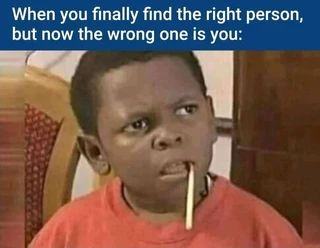
Love – or what we call love these days – is often a mix of timing, chemistry, and convenience. It’s not about finding the one. It’s about finding someone who’s available at the right time.
That’s how I got lucky – the times I actually got lucky… and honestly, somewhere, “love” might have been hiding.
I think of it like seeing a shooting star. Are they real? Yes. Rare? Yes. Impossible? No, but it is highly unlikely to find another one soon.
That’s why the idea of soulmates is comforting, but we have to acknowledge that in reality, people fall in and out of love all the time.
We spend so much time searching for the right person that we forget the most important part of a relationship: growth. Instead of holding out for someone who checks every box, we should follow our gut.
Go for the inconvenient person – not the first crazy one willing to spend time with you, but the one who makes you feel something more than attraction.
This game isn’t about finding someone who fixes you; it’s about finding someone with whom you can evolve.
Maybe what we’re all actually looking for is what Aristotle called philia – the love between friends, built on respect and virtue.
Funny how we chase passion and excitement, only to end up wondering: Is this person really my friend, or just someone I’m trying to impress?
Which brings me to the “friend zone” concept. It shouldn’t even exist. Just because someone is good to you doesn’t mean they’re your friend, and just because someone is friendly doesn’t mean they aren’t looking for something more.
Ask the right questions. See if their answers are real and do as you wish.
If you ask me, love is kind of a myth. You don’t care about someone because you choose to – you care because something in you is triggered by their presence.
Real love – at least the kind that lasts – is rare.
It’s not just some old gibberish; it’s something that sneaks up on you when you least expect it.
I know I do sound like some dude who’s tried everything and failed, but 24 years don’t mean anything to me. And despite everything I say, I still have infinite hope, though much less with every year.
My Personal Love-ish experience
I’ve had sex in my life – during my so-called encounters with women, obviously. And while it matters to me, over time, I’ve realised something about women – since I haven’t slept with men… in case you were wondering.
Many don’t even know why they want sex. It’s always about pleasure, but these days, pleasure is ambiguous. People don’t know how to act before, during, or after the act. They might not even know how to handle themselves in the moment. For me, sex became less about the act itself and more about what happens when you share it with someone.
Lately, it feels like there’s this “Berlin Wall” between sex and emotions. We’re trying to be intellectuals, distancing ourselves from our primal urges or vice versa.
Physical attraction is important, sure. But if the emotional connection is missing, it doesn’t matter how good-looking someone is. Once that barrier is crossed, feelings tend to follow – or maybe that’s just me.
Therefore, if I’m going to waste my own time, I’d rather scratch my soul (⚽⚽).
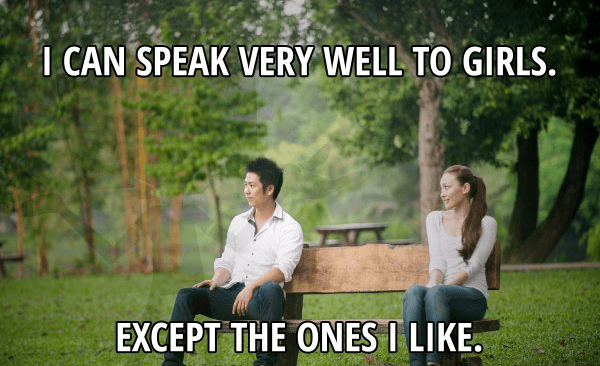
That being said, something was always missing. I kept searching for more, and for something better.
That kept me from asking (myself), “Are we a thing?”
Why? It wasn’t just insecurity or fear, but indeed, they were the two most violent forces I carried on my shoulders.
Over time, those feelings morphed into something worse: prejudice. I thought I had become a better person; thus, I deserved something better.
In short, it’s a self-centred mindset. But for one thing, we shall agree: most women would be into that. We see examples every damn day. Unless they know exactly what they’re doing, but, well…
Being self-centred works for short-term relationships, which are built on status or money. But to play that game, you can’t just be one quality – you have to try and embody all of them to a degree, to be desired.
In other words, I was a jerk without being able to be a complete one. And honestly? It’s a waste of time – but as far as I’m concerned, that’s most of the dating world nowadays.
Conclusion: The Messy Reality of Love
We’re almost at the end of today’s blog, so here’s something to keep in mind: If the dating game has you frustrated, remember that it’s okay to mess up; It’s also okay to not have all the answers. (Personally, I don’t think I have any.)
The best relationships aren’t built on flawless performances or idealised expectations; they’re built on understanding, vulnerability, and a willingness to grow together – even if it means rewriting a bunch of rules.
Stephen Hawking once said, “However bad life may seem, there is always something you can do and succeed at. Where there’s life, there’s hope.” The guy couldn’t even walk or talk, but got married – on top of that, twice. Proof that hope comes in strange forms.
All jokes aside, hope is a powerful thing, but where does love fit into all this?
Is it just another trick we play on ourselves? Perhaps an illusion convincing us that relationships are anything more than emotional performances?
BOIS and GALS, maybe one day we’ll figure it out. Or maybe we won’t. I’m not holding my breath. But I’ll keep fooling myself – because, in the end, that’s what we do best.
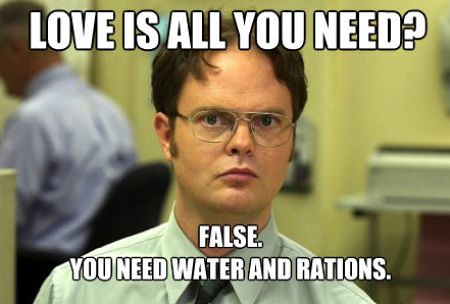
So, is romance dead? Not entirely. But it’s surviving on life support.
The antidote? I’ve laid out what I believe it is. Maybe you should read it again… or find yourself another source.
But hey, if you’re still here: what’s it going to be?
Another round of fooling ourselves, or is the moment to step up and finally face the truth? Which means either do something or rot alone – excuse me for my language.
Maybe this whole message is more of a wake-up call to me than to you.
Thanks for reading!
Yours sincerely,
Ivaniel Georgiev
p.s. And put your phone down once in a while.


Leave a Reply