DABOISASTRGLEDT (phrases) – Ivaniel “Ivo” Georgiev
DABOIS, this time I’m scrolling through the notes on my phone, and because it’s the phrases edition, I’m looking for phrases that made an impression on me at some point. And I don’t know why, but it seems to me that quite a few of the ones I saved over the years were somehow – or rather, just a little bit – missing something.
At the time I didn’t stop to think about what exactly it is. Still, writing this now, I realise it’s the momentary neural connection: the moment you felt and reflected on something in a way specific to the situation and the thoughts that followed.
And there it was, one phrase that didn’t feel bland like the rest. It struck the right chord. It’s not one of those “sugar-coated” lines – it’s the kind of combination of words that brings you back down to earth and makes you think, “Right, and now what?” So I’ll get straight to it. It’s what came out of Rue’s mouth in the final episode of the second season of Euphoria when she was quoting her sponsor and friend, Ali:
“The thought of maybe being a good person is what keeps me trying to be a good person.” (Euphoria, Season 2, Episode 8, 59:54)
The thought of being a good person is truly life-saving. Not for others, of course, but for oneself.
Before I go further: the word “suicide” is going to appear in today’s post more than would normally be considered comfortable (if there’s a normality when considering such an act). I’m not encouraging anyone toward it. Everything in the story that follows is made up – possible, yes, but not true – and if any of it lands close to home for you personally, that’s worth a real conversation with someone, separate from this blog.
· · ·
Before we continue, thank you. (YES, I WILL NOT STOP REPEATING IT!)
I know time can’t be returned, and I’m genuinely glad you’re spending part of it here.

If you’re new: this isn’t a place for preaching or selling. It’s a courtroom with no verdicts – only questions that open more questions. My goal is to reveal what has not been revealed – or if it has been, to at least give a different point of view on it.
I point out the things that we accept, swallow, or hide and pretend daily that they don’t shape us (even though we don’t know what is truly happening). So, if something here makes you feel uncomfortable, then you’re on the right path: discomfort is perhaps the best sign that we haven’t yet learned how to anesthetise it.
- Curiosity lights the match.
- Action keeps the fire alive.
- Effort is what everyone talks about until it becomes necessary.
And here’s our checkpoint for today’s loop on DABOIS’s radio: “Simple Man” by Lynyrd Skynyrd – another of the band’s many hits. It is not associated with the person I’m going to talk about later in today’s story, but then there’s the paradox of a troubled man who is the simplest of all, but he’s scared of that fact.
Plugged in or not, I hope you stay until the end… but that’s up to you.
· · ·
I’ll try to paint a picture of someone who appears not to be strange but who might be the strangest person we ever meet – someone who sees himself as ordinary and problematic but definitely worth a chance to succeed – while there is nothing ordinary about his existence at all.
He is the kind of person who believes in many things while believing in nothing, because the world proved to him, more than once, that nothing makes sense. He could change the world, but he doesn’t know how. Yet he is persistent; he would, and there is nothing to stop him. He is Morse, and yet he bears no resemblance to Morse. He thought of taking his life numerous times because that seemed like the best option at that time. But the truth is, he was never man enough (if I can put it that way) to follow through. And that’s good, right? He could, but he didn’t – which shows a character that’s worth it.
But then: what does the future hold after thoughts that violent?
That’s where “The Maybe” lives. Not as an answer but as the state you have to enter before anything can change at all.
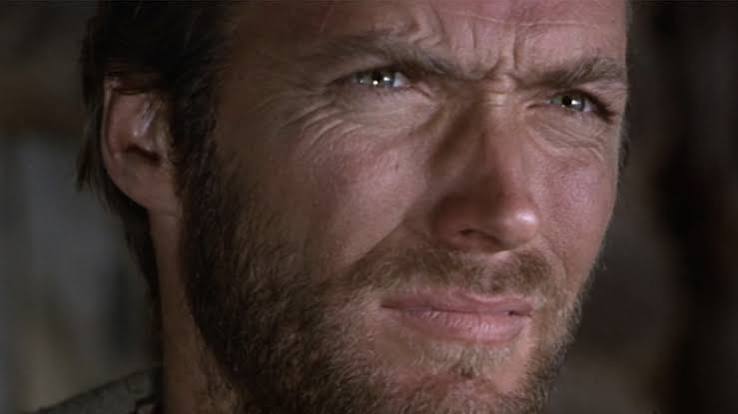
All that lives in between the good, the bad, and the ugly. And I believe that none of this needs explanation. Why? You’ve met all three already – with the first two more than enough times.
Personally, I see “the maybe” as the doubt that chews, swallows, and turns the rest into something else entirely – each time, depending on the hour and the position of the planets. (A little astrology joke.)
But yes, there he is; he still has no name and perhaps, he doesn’t need one. So I ask, isn’t it the idea that the story evokes in us that matters more than what we call him?
· · ·
What a Maybe is
Think of a man born between 1970 and 1980, in a fishing village in southern Italy – in a region that was struggling much worse at the time than the rest of the country. Nobody knows anything about this boy who will eventually turn into a man. He doesn’t talk much about himself. He is focused on his goals, and for him the end justifies the means. He was always polite, but there was a dark force within him that many saw (without understanding it), and only a few were willing to try and work with.
But to get to where he is now, we have to follow his family tree. His father was a construction worker, not ambitious, deeply conservative, and mostly absent through work. When his son was born, he grew afraid for the boy’s future in Italy – he hated the French, he knew the Germans should never be trusted, and he didn’t know much about the rest of the old continent. He was lucky (if we can consider him lucky in that case) because he had a very dear cousin in Australia – and so he moved the family there.
They were poor before, and that changed a little after they moved abroad but they had a deep cultural community that relied on more conservative ways of living. Some of the families have moved there a long time ago and adopted different set of values, but for the sake of the community they parricipated and helped others when they could. And because they had an Italian community there, the son’s clothes were hand-me-downs from older relatives or neighbours – all the way to 9th grade when he moved to live by himself. Nothing he owned had ever been chosen by him outside of one toy he got when he was five-years-old – it was a little bear that represented courage and goodness in him.
But he couldn’t fit in the communal life as well. And that’s where the real struggle began.
No one had prepared him for this move his father ventured. He was put in a scenario where he had to learn and adapt from scratch. He was literally an alien among more humane aliens. So, there he is at his school now, and no one wants to play with him. He was never picked as a partner for trips or after-school activities – even when he was the last one left, someone else would rather go without a partner than go with him. By the end of first grade, the headmaster called his mother in to give her a report on her son’s performance. She knew her son and she knew this wouldn’t be an easy meeting was. She was as conservative as her husband, but when they changed countries, she developed a little more curiosity and open-mindedness. Also, she couldn’t speak the language, but she was able to understand some of it. When she and her son were sitting on the desk in front of headmaster, she was often giving a look at her son. What caught her attention from the meeting was mostly the bad words that echoed in her ears. At that time, she couldn’t acknowledge the few, but very important compliments that the headmaster gave about her son. The summary, in the end, was the usual one after a parent is summoned to school: gentle enough on paper, he was a polite and obedient pupil who is not concentrated; also being targeted by other children, and, not seeming to communicate. The teacher suggested that because of the profound and rapid changes in his daily life, it is the best option for him to go back to kindergarten and learn the basics.
His mother begged for a day to discuss this matter in private, and they left the school. Later, she was waiting for her husband, but because he was often deployed offshore – and unexpectedly he had to report for 2 days extra – she had to deal with this matter right here and now. After they finished their dinner, she asked for her son’s attention and asked him in their native language, “What do you want to do, my dear? You have to know that I won’t be here for you always. Maybe it’s time to start taking decisions for yourself.”
He said he wanted to go to 2nd grade. He was seeing himself as an eight-year-old, and he knew no eight-year-old could fit in kindergarten – and that only dumb children can’t pass a class.
This would turn out to be his very first of many arc-associated decisions that would turn out wrong – and this one felt like the worst (at the time), because the teacher turned out to be right. Instead of becoming the student he thought he could be, he fell further behind every year after that. He became much more insecure, started stuttering (badly enough that if someone pressured him to speak), and sometimes he even wet himself before managing to spill a word. By high school, his life was hell, and his father – who once had dreams of something better across an ocean – had ended up in roughly the same place as his son; the problem is that he was old, and just as unwilling to change. When he had to deal with the boy, he took hits at him instead of talking to him, because he’d never learned how to approach life with the same curiosity that he dreamt of once. And because he lacked that kind of understanding, the same applied in his marriage and at work – passive-aggressiveness and unwillingly obedience.
Somewhere in there, the boy had his first real thought about how to make it all stop – it was the kind of feeling that everyone gets once in a while when things hit rock bottom – and he was living in the rock bottom since he was taken off the piece and quiet of Southern Italy, that was switched for the bustling life in the suburbs of Brisbane.
He wanted it: once and for all. But he knew, even then, that he wasn’t man enough to do it – he knew everybody was seeing eho he is and he had no doubt in it. And, of course, he couldn’t take his own life, because deep down in himslef he knew everyone deserves a good life. And while he lacked the words to explain why, he refused to believe this was all his life would ever be – he lived in a paradox he couldn’t understand, and that felt as if he was dying without the tragedy of such.
And maybe that’s exactly why the second thought arrived at all. Not because the first one failed, but because underneath it there was an epiphany. Something in him still believed there was a version of himself that hadn’t happened yet. He knew he was shy, stuttering, insecure, and probably the last of all people on earth who might be great at it – but he never stopped believing that he might as well turn out great. He saw a light. Standing on a stage in front of people who’d come specifically to hear him. Moving them. He didn’t know where that image came from. He didn’t know if he should believe in it. But he did, and he kept going anyway.
· · ·
Years passed. There was this specific moment in the first half of 8th grade. He already carried a reputation – someone very capable, but far too closed off, which to me translates as “not worth the effort.” Therefore, nobody expected the year to be any different. Then the regular English teacher fell ill, and a substitute walked in until the end of the academic year.
He couldn’t explain the feeling he had, but there was something different when this new teacher entered the classroom. He felt it, as if it was a chance handed to him by something outside of his control – the kind of rare chance to prove himself, to someone with no prior opinion of him, that he could indeed be someone. And that year everything changed for him. He was a different person in her classroom. Focused. Talking. Asking the kind of questions no one else in the room was willing to ask – or thought of. He felt, for the first time in so long, that he could live in the moment.
Just a day before the summer break, at the end of the academic year, she asked him to come by her office.
He was excited and terrified in equal measure – certain, somehow, that all the good months were about to be undone by something he hadn’t even noticed he’d done because that’s what usually happens in life.
He knocked. She told him to sit on the sofa across from her desk and asked if he wanted something to drink – in the meantime, he couldn’t even look her in the eye. She sat beside him and stroked his shoulder. She told him she would be back in a minute. That’s was the first genuine connection he had with a woman and that touch made him explore his mind beyond imagination. In that minute alone, he was simultaneously already in-love while rehearsing his escape. And by the time he decided he should’ve never been born, and already wishing he could disappear rather than face whatever was coming, she came back into the room holding two cups of hot chocolate.
She told him there was nothing to be anxious about. If anything, the opposite. He was still visibly shaking, holding the cup without drinking from it, and when he finally looked up at her, she said the thing he had, without knowing it, been waiting his entire life for someone to say:
“I see something special in you.”
He heard nothing else for the rest of the conversation – some sort of loving feeling he thought he had just took thr control over. At the very end of their interaction, he squeezed the cup so hard it cracked in his hand, and they both ended up wearing hot chocolate all over their clothes.
She grabbed a set of handkerchiefs from her desk. He stood up (without saying a word) and ran. She tried going after him, but he was so fast. Still, she called out loudly as she watched his back and told him there’d be a recommendation letter with his name on it. He stopped and turned around. He nodded and quietly said, “Thank you!” Then he ran the rest of the way down the hall, full of emotions because something felt, for once, like joy.
He had a friend from his science class he got very close with that year. They were spending a lot of time together during the summer, but somehow he was thinking about this day all summer long. And he never saw her again. Within a week after the summer vacation and the start of the new school year, he couldn’t even remember her face. He never once, for the rest of his life, remembered her name – even though he knew he could ask for it, but it didn’t seemed like it’s his business to do.
But what stayed was the sentence she said, “I see something special in you.” and the feeling wrapped around it.
· · ·
That is all folks, for now. Perhaps he’d nearly lose himself entirely one day (more than once), in ways this blog isn’t going to get into today. One day, decisions of his would leave marks on people who’d go on to leave marks of their own, on things much larger than a fishing village or a house in Brisbane. One day he may finally find his peace.
But none of that had happened yet.
At the moment we’re leaving him in, there was only a cracked paper cup, a stain on both their clothes, a very unknowing future, neglected troubles to be dealt with and one sentence doing more work than anyone in his life had managed for sixteen years.
Maybe he becomes a great man. Maybe he becomes a terrible one. Maybe he simply becomes ordinary.
But right now, we are deep in this blog, and the end of this story doesn’t matter.
The point was never knowing what will happen and how his life will unfold.
The point was that tomorrow morning, he would wake up and try again.
And perhaps – in that one particular way – we are all a tiny bit like him.
“The thought of maybe being a good person is what keeps me trying to be a good person.”
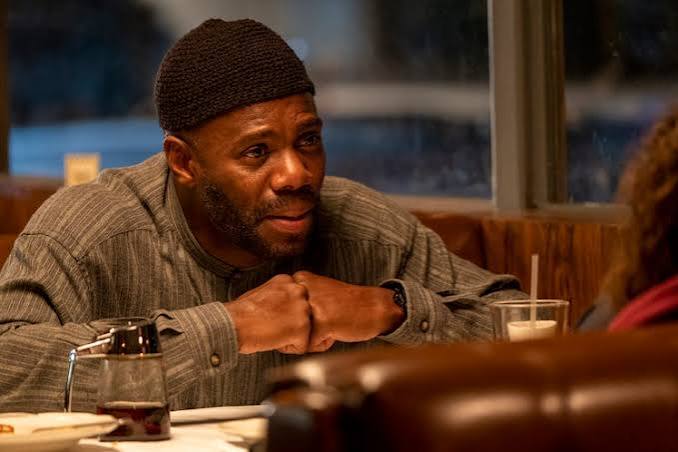
That was a pretty nice ending, no? It was indeed everything that was meant to be.
But. But…
Honestly, I wasn’t sure where to put the poem. And I didn’t know how to come up with a poem that somehow ends more completely than Ali’s words. That is why I decided to portray a character like (in later years of his life) thought process on one’s life.
· · ·
He
More stressed than the innocent,
more puffed‑up than the idle,
more dizzy than the restless,
more‑more‑more… an endless cycle.
He chases praise from the “important one,”
a heap of compliments – each one exaggerated.
The greatest of all secrets… he learned once:
jump high enough, and you won’t need salvation.
To shine among stars, inside glossy magazines –
just as not drinking is the drunkard’s nightmare.
They say less is more than what one ever needs
and those with more get lost in the despair.
Crazier than the blind,
quieter than the deaf,
smarter than the faultless chaps,
more lost than tourists themselves.
Wherever he runs,
the demons, they follow –
a portrait of skulls,
a grand finale of sorrow.
In silence he wanders,
in silence he falls –
he and his monsters,
is it love or remorse?
A mind built for two,
which rightly explains
why he can’t keep a woman:
“But dating is fake.”
A wealth no one could get,
no matter shown or disguised;
a wealth drowned in debt,
a premise without compromise.
More peculiar than the peculiar,
stranger than the strange,
more pleasant than the unpleasant,
as unsettling as underpaid.
No analogue for his foolishness,
no analogue for this absurdity.
Condemned by countless recollects,
yet the darkest one, he kept it purposely.
The kindest soul
in same-but-different world –
though who remembers…
a thing like kindness nowadays?
The greatest bastard,
and the lowest scoundrel:
forever running, no direction –
Odysseus’s blood flowing through his veins.
· · ·
Sincerely yours,
Ivaniel “forever-possible” Georgiev
In case you missed the last blog, you can check it out @ The Concept of Modern Man: The Stranger Within the Stranger…
Oh, and if you find the information here useful, you can subscribe to my newsletter as well – sharp, thought-provoking, and high in fibre.

